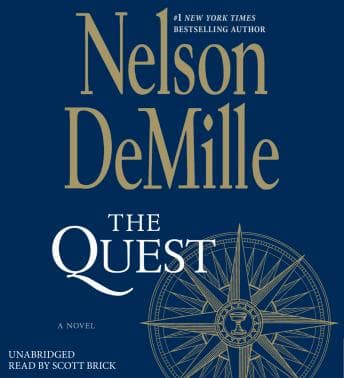

Nelson DeMille wrote a Holy Grail adventure novel set in 1970s Ethiopia, and honestly? I'm kind of here for it.
Let me back up. I was shelving returns at the library on a Saturday afternoon - quiet branch, rain doing its Oregon thing against the windows - and I had this queued up because eighteen hours is a commitment and I wanted to start it during a shift where nobody was going to interrupt me. Good call. The Quest demands your attention in a way that punishes multitasking.
Indiana Jones Meets Graham Greene in the Horn of Africa
Here's the setup: Ethiopian Civil War, a Catholic priest escapes prison after forty years when a mortar round blows the wall open, stumbles into the jungle, and runs into two Western journalists and a photographer. He tells them he knows where the Holy Grail is. In Ethiopia. And they just... go for it.
Now, I spend most of my time neck-deep in horror, so adventure-thriller territory isn't my usual haunt. But DeMille understands something that a lot of horror writers understand too - dread works better than spectacle. The scenes with the rebel leader Getachu are genuinely unsettling. The way DeMille describes the treatment of prisoners, the casual brutality of civil war, the jungle closing in around these characters - that's not popcorn adventure writing. That's someone who served in the military writing violence like it actually costs something.
The problem is that DeMille can't quite decide what book he's writing. The Ethiopia sections crackle with tension and moral complexity. Then the story relocates to Rome and the energy just... deflates. Pages and pages of our characters navigating Roman bureaucracy, having meals, circling each other romantically. I get it - you need the contrast, you need the characters to breathe. But when you've got a psychopathic warlord and a forty-year-old mystery about the most famous relic in Christianity, maybe don't spend three hours on Italian dining.
And look, the female character - Vivian, the photographer - is written like it's still 1975, which is when DeMille first drafted this thing. He rewrote and expanded the novel in 2013, doubled the length, but some of that original DNA is stubbornly present. She's beautiful, she's caught between two men, she exists largely in relation to those men. The "last night on earth" scene between Purcell and Vivian has genuine heat, but Vivian as a character never quite becomes a person the way Purcell and Mercado do. It's the kind of thing that pulls you out of an otherwise smart book.
Scott Brick Does the Heavy Lifting
The narrator commits. That's rare.
Scott Brick is doing real work here, and he knows it. Eighteen hours is a marathon, and Brick paces himself like a professional. His voice for Purcell - dry, sardonic, the classic DeMille protagonist who's seen too much and jokes about it anyway - lands perfectly. There's a weariness in his delivery during the Ethiopia sequences that shifts into something sharper and more restless once they hit Rome. He's tracking the emotional geography of the story even when the plot isn't.
His character differentiation is solid without being showy. You always know who's talking. The priest gets this frail, desperate quality. Getachu gets something genuinely menacing - low and deliberate, like someone who's learned that quiet voices scare people more than shouting. Brick doesn't try to do a full Ethiopian accent and honestly that's the right call. He suggests it, gives you enough to locate the character, and trusts you to fill in the rest.
No sound effects, no music, just Brick and the text. Clean production. For a book this long, that's actually what you want - anything else would feel gimmicky.
The Grail Problem
Here's my issue with Holy Grail stories, and it applies here too: the destination almost never lives up to the journey. DeMille handles the actual quest portions - the danger, the moral negotiations, the question of whether faith or ambition is driving these people - with real skill. But the Grail itself? It's a MacGuffin wearing a crucifix. The book is better when it's about war correspondents trying to stay alive than when it's about finding a magic cup. The journey-over-destination problem shows up in other adventure-adjacent narratives too — I kept thinking about Fairy Ring, which has a similar issue where the mythology at the center never quite matches the atmosphere surrounding it.
DeMille's at his best when he's writing men who are smart enough to know they're making stupid decisions and do it anyway. Purcell is basically a DeMille protagonist template - if you've read the John Corey books, you'll recognize the voice - but the template works because DeMille writes self-aware cynicism better than almost anyone in the thriller space.
Who Needs This (and Who Should Walk Away)
If you love old-school adventure novels - the kind where the setting is half the point and the characters drink too much and make questionable romantic choices in dangerous places - this is your book. If you need tight pacing and can't tolerate a saggy middle section, the Rome chapters will test your patience. If you scare easily... well, this isn't horror, but Getachu's scenes come close.
At 1.25x speed, the Rome sections become bearable and the Ethiopia sections stay tense. I'd recommend it.
Shelving This One Under "Flawed But Worth the Trip"
My podcast listeners probably won't hear about this one - it's not my usual territory. But I respect craft when I see it, even when it's imperfect. DeMille rebuilt a 1975 paperback into an eighteen-hour epic that's about two-thirds excellent and one-third frustrating. Brick makes that ratio more forgiving. Shirley (my cat) slept through the whole thing, but she sleeps through everything that isn't a can opener.