
"The king said he would have no further delay, and if the princess did not appear at the door of the church at the appointed hour, he would have her executed."
I was charting vitals at 4 AM when that line hit, and I actually snorted loud enough that my charge nurse looked over. Because honestly? That's the energy of half these fairy tales. Zero patience, maximum drama, immediate execution threats. Healthcare has nothing on 19th-century children's literature for casual violence.
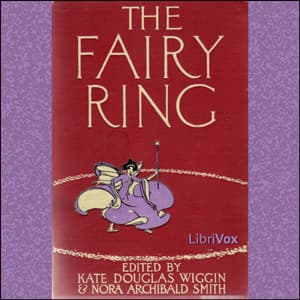
This collection is 17 hours of exactly what it promises: 63 fairy tales from around the world, compiled in 1910 by Kate Douglas Wiggin. You know her from Rebecca of Sunnybrook Farm, but this is her as curator, pulling together stories from German, Norse, English, and other traditions. Some you'll recognize immediately—"The Frog Prince," "Rumpelstiltskin," "Jack the Giant-Killer." Others are completely new, at least to me, and those were the gems I didn't expect.
When the Unit Is Quiet and the Stories Get Weird
Here's the thing about LibriVox volunteer productions—you're getting a rotating cast of narrators, each with their own style, their own recording setup, their own interpretation. It's like a potluck. Some dishes are incredible. Some are... fine. A few make you wonder who brought the jello salad with the olives.
The inconsistency isn't necessarily bad. For a collection this long, the variety kept me awake through multiple night shifts. Just when one narrator's pacing started to lull me, another voice would pop in with completely different energy. It's not polished. It's not professional audiobook quality with a single narrator doing forty distinct character voices. But there's something charming about it—like listening to a community theater production where everyone genuinely loves the material.
Some stories dragged. I'll be honest. By the fifteenth princess who falls in love at first sight with the prince who rescued her from [insert magical creature], I was rolling my eyes so hard I could see my own brain. The repetitive themes get noticeable when you're listening to this many tales back-to-back. Love at first sight. Cruel stepmothers. Tests of worthiness. Youngest sons who are secretly the smartest. It's a genre, and genres have conventions, but 17 hours of conventions can feel like a lot.
The Ones That Actually Got Me
But then—and this is why I kept going—you'd hit a story that was genuinely strange and wonderful. Tales I'd never heard, with moral logic that made absolutely no sense by modern standards but somehow worked in the moment. A story where the hero wins not through strength but through kindness to animals (always be nice to the random old woman or talking fish, people, always). A tale so dark I paused and said out loud, "This was for CHILDREN?"
Carlos asked why I was laughing in the car after one shift. I tried to explain a story where a princess solves her problems through what can only be described as elaborate psychological warfare, and he just stared at me. "That's a kids' story?" Yeah, babe. Kids in 1910 were built different.
The collection works best as a sampler. You're not going to love all 63 stories. Nobody loves all 63 stories. But you'll find your favorites, the weird little tales that stick with you, the ones you want to tell your own kids or nieces or the random coworker who asks what you're listening to. Paris Apartment: A Novel had that same sticky quality for me—one of those stories I kept bringing up in conversation days later.
Perfect for Night Shift Brain (With Caveats)
This is ideal background listening when you need something engaging enough to keep you awake but not so complex that you lose the thread when a patient calls. Each story is self-contained. Miss a few minutes? Just catch the next one. The episodic structure is actually a feature for interrupted listening.
But if you're looking for a cohesive experience, a single narrative arc, professional production values—this isn't it. This is a free LibriVox recording of a 1910 collection. Adjust expectations accordingly.
My mom would love this, actually. She grew up with Filipino fairy tales that have the same energy—casual magic, brutal consequences, happy endings that feel earned through suffering. I might send her the link. She still thinks I should've been a doctor, but at least we can bond over stories where kings execute people for minor inconveniences.
Who Gets the Fairy Dust (And Who Should Skip)
Parents looking for bedtime stories? This works—though preview first, because some of these get dark. Folklore nerds who want to compare tale types across cultures? Goldmine. Need something low-stakes to fill long drives or quiet shifts? It delivers.
If you want a polished, professional audiobook experience with consistent narration and tight pacing? Keep scrolling. This is community-produced, free, and exactly what that implies—imperfect but genuine.
Clocking Out
I finished it over about two weeks of night shifts. Would I listen again? Probably not the whole thing. But I bookmarked a few stories to revisit. And honestly, any collection that makes me laugh at 4 AM while charting is doing something right.