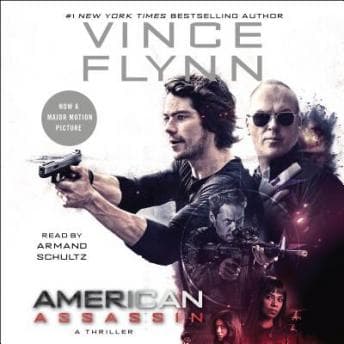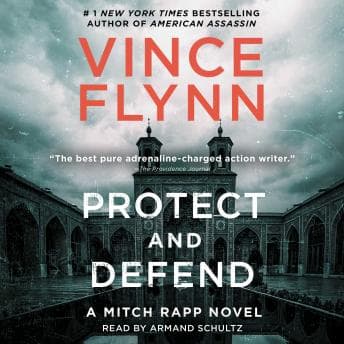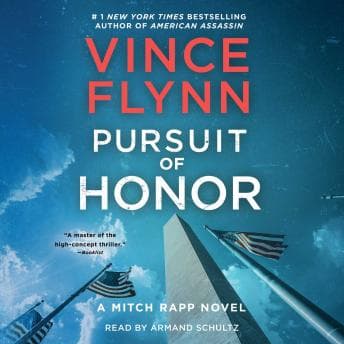

I picked this up on a Tuesday night while reorganizing my horror section at the library—yes, I shelve things by mood, not Dewey Decimal, fight me—and I needed something that wouldn't demand my full attention. Political thriller. Action. Mitch Rapp hunting terrorists. Fine. I can do that.
Here's the honest truth: I'm not the target audience for Vince Flynn. I know this. My comfort zone is Shirley Jackson and Thomas Tryon, not CIA operatives and Senate subcommittees. But I've been trying to branch out on the podcast, and listeners keep asking about thrillers that blur into horror territory—the dread of institutional violence, the horror of bureaucracy letting monsters walk free. So. Here we are.
The Story Is Doing Its Thing (The Narration Is Not)
The plot itself is functional. Competent, even. Three al-Qaeda operatives still at large after a Washington bombing, Rapp operating in that uncomfortable gray zone where the government wants results but doesn't want to know how they got them, and his colleague Mike Nash quietly coming apart at the seams. That Nash thread is actually the most interesting thing in the book—watching a man who's done terrible things in service of his country try to hold himself together while politicians debate the ethics of what he did. There's something genuinely unsettling there, the kind of institutional horror I actually respond to. That slow unraveling of a man trapped between duty and conscience is something Dead Man Volume 1: Face of Evil, Ring of Knives, Hell in Heaven also toys with, though in a much stranger, pulpier key—worth a look if that psychological rot is what you're actually chasing.
But Flynn keeps the pacing tight enough that you don't really sit with any of it. Six hours total, which means this thing moves. Maybe too fast for the Nash material to breathe, but fast enough that predictability doesn't kill you. You can see the ending from about hour three, but the machinery of getting there is well-oiled.
Then there's Armand Schultz.
Okay. I have to be honest because that's the whole point of this. The foreign accent work is—I don't have a polite way to say this—it's bad in a way that pulled me out of the story every single time. Not "charmingly imperfect" bad. Not "you can tell he's trying" bad. More like "I genuinely paused and stared at my ceiling for a moment" bad. The al-Qaeda characters especially. I've heard listeners describe it as laughably bad and I don't think that's unfair. There's a specific kind of damage a narrator can do when the accents are so distracting that you start waiting for them instead of following the plot.
For a genre that lives and dies on tension—and political thrillers need tension the way horror needs atmosphere—that's a real problem. The narrator commits to the wrong things. I want commitment to dread, to urgency, to the weight of a man like Rapp making a decision he can't take back. What I got instead was commitment to accent attempts that did not land.
The Thing About Mitch Rapp
Here's what I'll give Flynn: Rapp is a specific kind of fantasy. He's not a complicated man, and the books don't pretend he is. He's efficient, he's brutal when he needs to be, and he has a code that the politicians around him keep trying to compromise. There's something almost mythological about that archetype—the lone operative who understands the real cost of safety while everyone else argues about optics. I can see why readers return to him across a dozen books.
But this is also book nine in the series, and if you haven't been along for the ride, you're catching up fast. I wasn't lost, but I also wasn't invested in the way a longtime fan would be. The emotional beats around Nash hit harder if you've watched him build to this breaking point across previous entries. Coming in late means you're getting the payoff without the setup, and that gap shows.
The story is predictable in the way comfort food is predictable. You know what you're getting. That's not automatically a flaw—sometimes you want exactly that. But it does mean the audiobook format needs to elevate it, and Schultz doesn't.
Who This Is Actually For
If you're a Flynn completionist or a Mitch Rapp loyalist, you're going to read this regardless of what I say, and honestly? The story delivers what it promises. Read the physical book or find a different narrator.
If you're new to the series, don't start here. Start at the beginning, and maybe check whether a different narrator covered earlier entries before you commit to Schultz's accent work.
If you're a horror listener who was curious whether political thrillers scratch a similar itch—the Nash storyline gets close, but the audiobook experience undercuts it too much to recommend this version specifically.
My podcast listeners are going to love this recommendation: skip the audio, read the text. Sometimes that's the honest call.