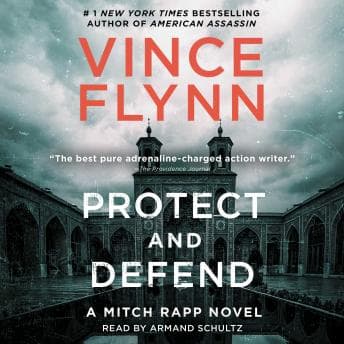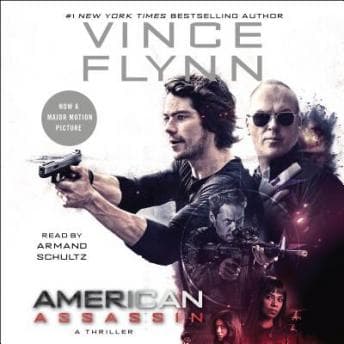

Everyone kept telling me this was THE origin story for Mitch Rapp, the one where you finally understand what made him into the cold, efficient killer he becomes. They weren't wrong. But here's the thing nobody prepared me for—I spent half the audiobook arguing with Armand Schultz's voice in my head.
Not because he's bad. He's not. He's actually quite good at what he does. It's just... Mitch Rapp is supposed to be this young, grief-fueled, rage-driven college athlete turned assassin. And Schultz sounds like a very pleasant NPR host reading me the news about said assassin. There's a disconnect there that took me a solid two hours to get past.
The Revenge Plot That Kept Me Up Past My Bedtime
Okay, so here's where I have to give Vince Flynn his flowers. The man knew how to write tension. Rapp's girlfriend dies in a terrorist attack (Lockerbie-inspired, clearly), and instead of going to therapy like a normal person, he decides to become a one-man revenge machine. The CIA notices. They recruit him. And then the training begins.
Stan Hurley—the grizzled Cold War veteran who trains Rapp—is honestly my favorite part of this whole thing. Flynn writes him with such specificity that even when Schultz's narration goes a bit flat, you can FEEL this guy's decades of experience and barely contained violence. That same barely-contained intensity shows up in Ceremony in Death, where the detective work has that same edge of controlled violence. As someone who's actually worked a code blue with a trauma surgeon who had that same energy—all calm surface, absolute chaos underneath—I believed every word.
The action sequences? The medical details are accurate. Finally. I had the same relief reading Girl Before: A Novel—another thriller that actually bothered to get the details right. When someone gets shot, they don't just dramatically clutch their chest and monologue. They bleed. They go into shock. Flynn did his homework, and after years of yelling at my dashboard about authors who think defibrillators restart stopped hearts (THEY DON'T, PEOPLE), this was refreshing.
Schultz: The Voice That Almost Worked
Here's my honest take on Armand Schultz. His character differentiation is solid—I never confused who was speaking, and his Hurley voice had this gravelly quality that worked. The pacing is consistent. The production is clean. No weird audio glitches or background noise, which matters when you're listening at 3 AM trying to stay awake during charting.
But.
There's a softness to his delivery that doesn't quite match the brutality on the page. When Rapp is stalking targets through Istanbul, when he's executing his first kill, when he's walking into what he doesn't know is a trap in Beirut—I wanted more edge. More hunger. Schultz gives you competent and clear when the material is screaming for dangerous and desperate.
Some listeners apparently love this. And I get it—if you're listening during a commute or doing housework, you don't necessarily want someone screaming intensity at you for six hours. It's... comfortable. Maybe too comfortable for a book about a young man learning to become a professional killer.
The Beirut Trap (No Spoilers, Promise)
The last third of this book is where Flynn really earns his reputation. All roads lead to Beirut, and what happens there—I'm not going to spoil it, but Carlos asked why I was crying in the car. I blamed allergies. It wasn't allergies.
The hunter becomes the hunted, and even with Schultz's measured delivery, the tension ratchets up in a way that had me sitting in my driveway for an extra fifteen minutes because I couldn't pause it. That's the sign of good plotting. When the narration can't quite match the material's intensity but you're still white-knuckling your steering wheel? The writing is doing heavy lifting.
Who Should Queue This Up (And Who Should Skip)
Perfect for post-shift decompression if you want action without having to think too hard. The six-hour runtime is ideal—you can knock it out in a week of commutes, easy. Fans of political thrillers, spy fiction, anyone who wishes Jack Ryan had a meaner younger brother.
Skip if you need your narrators to match the protagonist's energy exactly. Or if you're sensitive to violence—this is not a gentle book. Terrorism, assassination, the ugly realities of that world. Flynn doesn't flinch, even if Schultz occasionally does.
I've heard George Guidall narrates some of the other Rapp books, and honestly? I'm curious to compare. Schultz is good. But this material might need someone with a bit more edge.
Clocking Out
Night shift approved, with reservations. My mom would probably hate this—too much violence, not enough romance. But she still thinks I should've been a doctor, so what does she know.