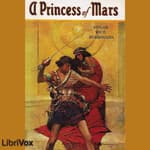

Look, I teach high school English. I've spent twenty years trying to convince teenagers that literature from before their parents were born is worth their time. So when I tell you that A Princess of Mars is both gloriously ridiculous and genuinely important, I need you to understand I'm not just being nostalgic. This is the book that launched a thousand spaceships. Without John Carter, there's no Flash Gordon. Without Flash Gordon, there's no Star Wars. We're talking about the DNA of modern science fiction here.
But let's be honest about what you're getting into.
The Elephant in the Room (It's Green and Has Four Arms)
Burroughs wrote this in 1912. The gender politics are... well, they're 1912. Dejah Thoris is a princess who needs saving. A lot. Like, constantly. My students would tear this apart in a feminist critique essay, and they'd be right to do so. The prose dumps exposition like it's getting paid by the paragraph. And John Carter is essentially invincible from page one—a Civil War veteran who's somehow better at everything than every Martian who ever lived.
And yet. AND YET.
There's something here that still works. Burroughs had an imagination that wouldn't quit. The Tharks—those green, four-armed warriors—feel genuinely alien in a way that a lot of modern sci-fi has forgotten how to do. The world-building is bonkers in the best way. Strange beasts, dying civilizations, ancient technologies nobody understands anymore. It's pulp, sure. But it's imaginative pulp. Burroughs went even deeper into that territory with Pellucidar, though I'd argue this one's the stronger entry point.
The Narrator Roulette
Here's where things get complicated. This audiobook lists "Various Readers," and that's not marketing speak—it's a warning label. The experience you get depends entirely on which version lands in your ears.
Scott Brick brings his usual dramatic polish. The man knows how to sell a sentence. If you've listened to his work before, you know what you're getting—clear, professional, engaging. He adds weight to Burroughs' sometimes overwrought prose without making it feel like a parody.
Mark Nelson's LibriVox version is apparently excellent, and it's free. (Don't tell my principal I'm recommending free alternatives. Actually, do tell her. Maybe she'll finally increase the library budget.)
The same narrator roulette happens with Memoirs of Sherlock Holmes—some versions soar, others just exist.
John Bolen goes full Southern gentleman, which—look, John Carter IS a Virginia gentleman from the 1860s. It's period-appropriate. But some listeners find it distracting. I'd say give it twenty minutes before you decide.
The problem? Some narrators just... read it. They don't perform it. And this material NEEDS performance. Burroughs wrote with all the subtlety of a brass band. A narrator who plays it straight and flat misses the point entirely. The story is melodrama. Lean into it or go home.
What Hemingway Would Say (Probably Nothing Good)
I can hear my grad school professors groaning from here. This isn't Literature with a capital L. The sentences run long and breathless. The adjectives pile up like they're free. Burroughs tells when he should show, summarizes when he should dramatize.
But here's what I've learned after two decades of teaching: sometimes the "rules" of good writing exist to be broken by people who know what they're doing. Burroughs knew exactly what he was doing. He was writing adventure. Pure, uncut, mainline-it-straight-to-your-brain adventure. The pacing never really stops. Even the exposition-heavy sections are building toward the next sword fight, the next escape, the next impossible rescue.
At 1.0x speed—yes, I'm one of those people—the prose has a rhythm to it. It's not Faulkner. It's not trying to be. It's a campfire story told by someone who really, really wants you to stay awake.
Who Gets an A, Who Gets a Hall Pass
For fans of classic sci-fi, absolutely worth your seven hours. This is foundational text. You can trace lines from Barsoom to Arrakis to Tatooine. Understanding where the genre came from makes everything that followed richer. Skip it if you need tight prose and complex characters—the dated elements are real, and the pacing is different from what we expect now.
But if you can meet it on its own terms—if you can let yourself enjoy something that's unashamedly fun—there's real pleasure here.
My recommendation: find a narrator you click with (Brick or Nelson seem like safe bets) and give it a commute or two. If John Carter's first battle on Mars doesn't hook you, nothing will.
Class Dismissed
My students would hate this. I loved it. That's basically my brand at this point.