
I was stuck in an Uber on the 405—classic LA parking lot situation—when I started this. I usually stick to Harvard Business Review or biographies of guys who built railroads, but my wife Jenny told me I needed to "expand my emotional range." Whatever that means. She recommended this because it has "data." (She knows how to sell to her audience, I'll give her that.)
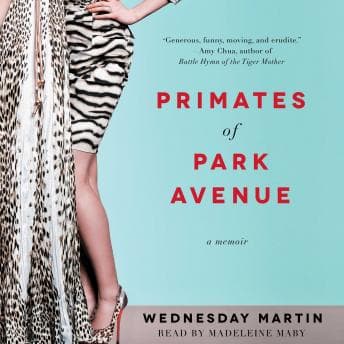
So, Primates of Park Avenue. Wednesday Martin takes her anthropology PhD and points it at the Upper East Side. I went in expecting a hit piece on the 1%. I mean, the title alone screams "eat the rich." But as I listened—at 2.0x speed, naturally, because the narrator's pacing was a bit leisurely for my taste—I realized this isn't just gossip. It's a due diligence report on the social economy of rich moms.
The Unit Economics of Status
Martin breaks down the cost of fitting in with the precision of a forensic accountant. The Birkin bag isn't a bag; it's a weapon. A barrier to entry. A signal to the market that you have liquidity and access. As a consultant, I actually respect the hustle. These women manage their social standing with the intensity of a pre-IPO CEO.
My parents worked 14-hour days pressing shirts for people like this in Koreatown. I have a built-in allergy to entitlement—it makes my skin crawl. But Martin analyzes it so clinically that I couldn't look away. She talks about "costly signaling" and tribal rituals. It's not frivolous; it's survival strategy.
There's a section on the "wife bonus"—essentially a year-end performance bonus based on how well you managed the household and social calendar. (Yes, really.) I almost drove off the road. If I suggested a KPI-based bonus structure to Jenny, I'd be sleeping in the garage. But in this specific micro-economy? It makes terrifying sense. Transactional. Efficient. Devoid of soul, sure, but the ROI is clear.
Why Outsourcing the Voice Actually Worked
Let's talk about the audio. The author, Wednesday Martin, didn't read this. Usually, that's a dealbreaker for me. If you lived it, you speak it. That's the rule. Her work in Fire with Fire had already made the case that she can handle pressure without turning the dial to melodrama. Outsourcing the narration feels like outsourcing your core competency.
But Madeleine Maby? She brings a specific kind of energy. Polished. Almost too polished—which fits the subject matter perfectly. She captures that tone of "I'm stressed but I'm wearing $500 yoga pants" that I hear in Santa Monica coffee shops. She does this thing with her voice—a slight vocal fry, a little lilt at the end of sentences—that screams "old money trying to look casual."
If Martin had read it herself, it might have sounded too academic. Maby makes it sound like you're eavesdropping on a conversation you can't afford to be part of. She sells the comedy, too. There are moments—like the description of the "drop-off" ritual at nursery school—where her delivery is so dry it rivals my own.
The Pivot I Didn't See Coming
Here's where the book messed up my schedule. I planned to finish this in two commutes. But around the 70% mark, the tone shifts. The satire drops. Tragedy strikes. Maby pulling that kind of left turn reminded me why I trusted her in Ashes to Ashes; she knows when to stop performing and just let the loss sit there.
I won't spoil the details—I hate spoilers, they devalue the asset—but the narrative moves from "look at these weirdos" to something genuinely heavy. It stops being a study and starts being a memoir about grief and isolation.
I almost turned it off. I came for the sociology, not the feelings. (Jenny would say that's my emotional avoidance kicking in. She's probably right.) But I stuck it out. And honestly? It explains why the tribe acts the way they do. The Birkins, the bonuses, the insane nursery school applications—it's all risk mitigation. It's fear. They're trying to control an uncontrollable world with money and rituals.
It reminded me of the startups I consult for. They build elaborate projections and five-year plans to pretend they aren't terrified of going broke next month. Same energy, different costume.
Who Gets Value Here (And Who Doesn't)
If you like behavioral economics but find the textbooks dry, this is your workaround. Anyone curious about status signaling, tribal dynamics, or why rich people do weird things with their money—solid investment of your commute time. Actual parenting ROI lives somewhere more tactical, like 1-2-3 Magic, which is basically operations management for small dictators. Skip it if you want parenting advice or can't stomach a tonal shift into grief territory late in the game.
Closing the Books on This One
Look, you don't listen to this to learn how to be a better parent. You listen to understand human behavior when resources are infinite but time and status are scarce.
Is it perfect? No. Some parts drag—I bumped it to 2.5x during the descriptions of apartment layouts. Who cares? But the insight-to-minute ratio is solid. It's a case study in tribal economics masked as a beach read.
Jenny asked if I liked it. I told her it was "educationally sufficient." She rolled her eyes. But I noticed she borrowed my AirPods to listen to chapter 4.