
Somewhere around hour 3, Hari Seldon descends into the caves beneath Trantor for the first time, and I swear the Caltrain car got smaller. Asimov describes these underground warrens where people have lived for generations without ever seeing the sky, and suddenly my cramped commute felt downright spacious. That claustrophobic dread? It stuck with me for the rest of the day.
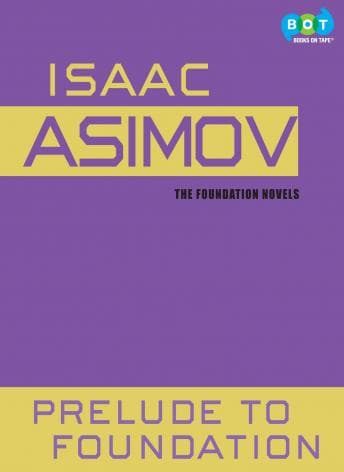
So here's the thing about Prelude to Foundation: it's basically a chase thriller wearing a hard sci-fi costume. Hari Seldon spends 15 hours running around Trantor—this planet-sized city with forty billion people—while everyone from the Emperor to shadowy political operatives tries to grab him for his psychohistory theories. It's less "grand space opera" and more "mathematician on the lam." And honestly? I was here for it.
Scott Brick Does the Heavy Lifting
Look, I know some people find Scott Brick melodramatic. I've seen the Reddit threads. But for Asimov? His dramatic baritone actually works. The man could read a grocery list and make it sound like prophecy, which is exactly what you need when your protagonist is explaining statistical predictions about civilizational collapse.
His pacing is spot-on for a 15-hour listen. I finished this in about 6 commutes (plus one late-night debugging session where I needed something to keep me awake), and I never felt like I was slogging through. The character voices aren't wildly distinct—you're not getting a full cast experience here—but they're differentiated enough that I could follow conversations without rewinding. That's the bar for commute listening, and he clears it.
One thing that bugged some listeners is this hesitant lilt he does at sentence ends. I noticed it maybe twice? It's not Ray Porter levels of perfection, but it's solid work. Brick's range really shines in Great Influenza, where he handles dense historical material with the same gravitas he brings to Asimov's empire-building.
The Worldbuilding Is the Point
If you're coming to this expecting action sequences and space battles, wrong book. This is Asimov doing what Asimov does best: building a world through conversation and ideas. Hari visits different sectors of Trantor—each with its own culture, customs, and political quirks—and you're basically getting a sociology lecture disguised as a thriller.
But here's why it works: the stakes feel real. The Galactic Empire is 12,000 years old and rotting from within, and Hari's the only one who can see it coming. There's this underlying tension of "civilization is doomed and nobody wants to hear it" that hits different in 2024. (No political commentary intended. Okay, maybe a little.)
The slow burn pays off around hour 10 when the political intrigue clicks into place. The Hummin reveal had me sitting on the train like an idiot, doors open, people pushing past me. Literally missed my stop. Had to wait for the next train going back. Worth it.
Who Should Queue This Up (And Who Should Skip)
Perfect for: long commutes, gym sessions where you're on the elliptical and want something engaging but not so intense you fall off. Also great for anyone who watched the Apple TV+ Foundation series and wants to understand where it all started (spoiler: the show takes... liberties).
Skip if: you need constant action, you hate "talking head" sci-fi, or melodramatic narration genuinely bothers you. Also maybe skip if you haven't read any Asimov before—I'd actually recommend starting with the original Foundation trilogy first. Second Foundation is where I started, and it gave me enough context to appreciate all the callbacks here. This is a prequel written decades later, and it assumes you already care about Hari Seldon.
The ROI Calculation
The return on this audiobook is pretty solid if you're into classic sci-fi. It's not Asimov's tightest work—some of the sector-hopping in the middle drags a bit—but the ideas are genuinely interesting and Scott Brick keeps you engaged through the slower parts.
I listened at 1.25x, which felt right. Brick's pacing is deliberate enough that speeding up doesn't lose anything, but I wouldn't go faster than 1.5x or you'll miss some of the philosophical bits.
This is basically a love letter to the power of mathematics to predict the future, narrated by a guy who sounds like he's announcing the end of the world. Which, I mean, he kind of is. If that sounds like your thing, you're gonna have a good commute.