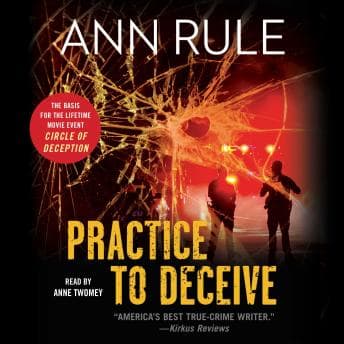

Ann Rule understood something most true crime writers don't: the murder is never really the story. The story is always the psychology of the people orbiting the victim — the ones who smiled at Thanksgiving dinner while plotting something unspeakable. Practice to Deceive is Rule doing what she did best, pulling apart a web of human motivation thread by thread until you're sitting there at midnight in your kitchen, dal burning on the stove, muttering "but WHY would she..." to nobody.
I found myself asking: why does Peggy Sue Thomas really fascinate me more than anyone else in this case? And I think it's because she's a case study in narcissistic reinvention — aircraft mechanic, beauty queen, salon worker, and eventually a key figure in a murder conspiracy. The research actually shows that people who cycle through dramatically different identities like this often share a core emptiness they're trying to fill. Rule doesn't psychoanalyze Peggy Sue in clinical terms, but she lays out the behavioral evidence so clearly that you can do it yourself. Three marriages. The affair with Jim Huden. The way she positioned herself as Brenna Douglas's confidante while apparently helping orchestrate Brenna's husband's death. My therapist would have thoughts about this character.
The Island That Keeps Its Secrets (Until It Doesn't)
What makes this book work — and what separates it from generic true crime — is Whidbey Island itself. Rule treats the setting almost like a character with its own psychology. A place accessible only by ferry, where everyone knows everyone's business but somehow a man gets shot between the eyes the day after Christmas and the initial response is "probably suicide." The protagonist exhibits classic small-community denial: if we don't see the evil, it isn't here. Rule methodically dismantles that denial over nine hours, showing how the island's insularity both enabled the crime and eventually helped unravel it.
The Russel Douglas murder is genuinely strange. A man invited back to his estranged wife's home for Christmas with the kids, then found dead in his SUV in a hidden driveway near an exclusive mansion. No gun. Single bullet. And then the investigation spirals outward into this constellation of relationships — Brenna and Russel's crumbling marriage, her friendship with Peggy Sue, Peggy Sue's affair with Huden, allegations of abuse that may or may not have been true. Rule doesn't rush to judgment on any of it, which I respect. She lets you sit with the ambiguity.
But here's the thing — Rule's meticulous approach is both the book's greatest strength and its occasional weakness. She backtracks. She introduces peripheral figures whose relevance doesn't become clear for another two hours. Around the middle stretch, I was jogging along the Charles River genuinely wondering if we'd lost the thread entirely. We hadn't. Rule was building something. But if you're impatient with true crime that unfolds like actual detective work rather than a podcast script, this pacing will test you.
Anne Twomey Reads Like Your Smart Aunt Telling You Family Gossip
I don't have a ton of specific notes on Anne Twomey's narration, which in true crime audiobooks is actually a compliment. She doesn't dramatize. She doesn't do theatrical voice acting for the suspects. What she does is read with steady, measured authority — the kind of delivery that lets Rule's factual layering do the emotional heavy lifting. It's a documentary approach rather than a dramatic one, and for a book this dense with names, dates, and interconnected relationships, that clarity matters. At nine hours, she keeps things moving without feeling breathless.
Psychologically, this doesn't track as a "one narrator doing voices" kind of book anyway. It's journalism. Twomey treats it that way.
Who This Is For (And Who Should Probably Skip It)
If you want true crime that respects your intelligence — that assumes you can hold fifteen names in your head and follow the connections yourself — this is your book. If you're an Ann Rule reader, you know what you're getting: exhaustive research, empathy for victims, and a refusal to sensationalize even when the material is inherently sensational.
Skip it if you need your true crime served fast and tight. This is a slow burn. Rule gives you the whole picture, including the parts that don't seem relevant until they suddenly, devastatingly are. Burke's Dave Robicheaux novels work the same way — New Iberia Blues in particular buries its most important threads early and trusts you to feel the weight of them later.
Also skip if you're looking for deep psychological analysis from the author herself — Rule observes behavior rather than interpreting it. Which, honestly? Is closer to how good clinical psychology works than most pop psych true crime. Show me what someone did. I'll figure out why.
The Case File Closes
This is a fascinating case study in how ordinary resentments — a bad marriage, financial anxiety, sexual obsession — can curdle into something lethal when the right combination of personalities collides. Rule never lost sight of the fact that Russel Douglas was a real person, not a plot device. That matters. Nine hours well spent, even if the dal didn't survive the experience.