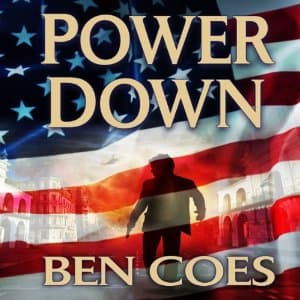

Look, I deal with trauma all night. Real trauma. Messy, loud, unglamorous trauma. So usually, when I listen to a thriller where the hero takes a bullet and then runs a marathon, I'm the crazy lady yelling at her dashboard about hypovolemic shock. (My car has heard things. Terrible things.)
But here's the thing about Power Down—I was too busy gripping the steering wheel to nitpick the triage protocols.
I picked this up because I needed something to keep my eyes open on the I-10 at 4 AM, and honestly? It worked a little too well. Walked into the house with my heart rate at a solid 110, and Carlos asked if the ER was crazy tonight. I just blamed the coffee.
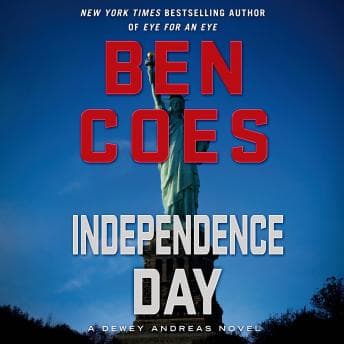
I've already got Independence Day queued up for tomorrow's commute—same narrator, same Dewey, same oh-my-God-don't-stop energy.When the Adrenaline Hits Harder Than Espresso
So we have Dewey Andreas. Former Delta, currently working on an oil rig off Colombia. He's trying to live a quiet life—which in thriller-land is basically code for "everything is about to explode." And it does. Literally.
Terrorists blow up a dam and then hit the rig. The pacing here is relentless. It's not a slow burn; it's a forest fire. Coes doesn't give you time to breathe, which is exactly what I need after a shift where time seems to stand still while I'm waiting for labs.
Dewey is competent. I love competent. There is nothing sexier than competence—ask any nurse. He doesn't whine, he just solves problems. Usually with explosives. Is the plot a little over the top? Sure. It's got that "Die Hard on an oil rig" vibe at the start, then turns into a global manhunt. But unlike some books where the politics bore me to tears, Coes actually worked in the White House, so the suits in D.C. actually sound like suits in D.C.
Peter Hermann's Gravel-Road Voice (Plus Some Loud Surprises)
Let's talk about Peter Hermann. The man has a voice like a gravel driveway in a thunderstorm. Deep, authoritative, tense. He doesn't just read the book; he commands it. Switches accents pretty well, too, which is impressive considering the cast covers half the globe.
But—and this is a big but—the production team made a choice.
They added sound effects. Gunfire. Explosions. The groans of the dying (which, frankly, sounded a little too familiar for my taste).
Now, usually, I hate this stuff. It feels cheesy. But at 3:30 AM on a dark highway? When a bomb goes off in your speakers, you check your rearview mirror. It's immersive, I'll give them that. Just be warned: if you're jumpy, this might not be your "wind down" book. It's loud. It's aggressive. It fits the story perfectly.
A Few Notes for the Triage Tent
Okay, I have to put my nurse hat on for a second. (I can't help it, it's wired into my DNA at this point.)
Dewey takes a beating. Like, a serious beating. In the real world, he'd be in my ICU intubated, not hopping flights to chase bad guys. But you know what? I let it slide. Why? Because Coes sells the grit. You feel the exhaustion. Dewey isn't Superman; he's just too stubborn to die.
I did notice a few technical skips in the audio file here and there—like the recording hiccuped. A little annoying, but not a dealbreaker. The story moves fast enough that you just roll over the bumps.
Who's This For?
If you miss Mitch Rapp, this is your new guy. I immediately grabbed Eye for an Eye next, and let me tell you, Dewey's luck doesn't get any better—but Hermann's narration just gets sharper. Perfect for night shifts, long drives, or anyone who needs pure, high-octane escapism to scrub a rough day from their brain. Skip it if you need something quiet to wind down—this one's loud, violent, and unapologetic about it. My mom would hate the language (sorry, Ma).