
Let me cut to the chase: the source material here is genuinely fascinating, but this audiobook makes you fight for every ounce of it.
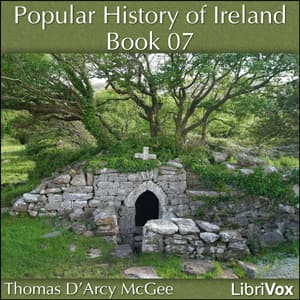
I was up late the other night - couldn't sleep, which happens more than I'd like to admit - and figured a 65-minute listen on Tudor-era Ireland would be just the thing to either educate me or knock me out. Thomas D'Arcy McGee's writing did the former. Sibella Denton's narration nearly accomplished the latter.
McGee Brought the Intel, But the Briefing Went Sideways
Here's what kills me about this one. McGee himself is a remarkable figure - an Irish refugee who fled to North America and became one of the fathers of Canadian confederation. The man had skin in the game when it came to Irish history, and it shows. Book 7 covers the Tudor period, specifically the machinations of Wolsey and Henry VIII before the Reformation, culminating around 1541 when the crowns of England and Ireland were formally unified. This is the period where English policy toward Ireland shifted from casual exploitation to systematic domination, and McGee writes about it with the kind of controlled fury you'd expect from someone whose own family lived the consequences centuries later.
The problem is that 19th-century prose already demands attention. McGee's sentences are long, layered, and full of historical references that require you to track multiple threads - Irish clan politics, English court intrigue, the role of the Catholic Church. That kind of writing needs a narrator who understands the material, who knows where the emphasis belongs, who can guide you through a complex sentence so it lands with clarity.
What you get instead is something closer to a cold read.
When the Narrator Doesn't Know Where the Sentence Is Going
I've sat through bad briefings. I've watched junior officers read intelligence reports aloud without understanding them - pausing in the wrong places, stumbling over terminology, turning critical information into white noise. That's what this narration feels like. There are mid-sentence pauses that break the logic of what McGee is saying, as if Denton is encountering these words for the first time and isn't sure what comes next. Proper nouns and period-specific terms get mispronounced in ways that suggest minimal prep work.
The delivery is flat. Not calm-and-authoritative flat, which can work for history. I mean flat in a way that strips the material of its weight. McGee is writing about the destruction of Irish monasteries, the political manipulation of an entire people, the consolidation of colonial power - and the narration treats it all with the same emotional register as reading a grocery list. When you're describing Henry VIII's agents dismantling centuries of Irish culture, a little fire would be appropriate.
At 1.25x speed, it was tolerable. At normal speed, I imagine it would test anyone's patience.
The Source Material Deserves Better
And that's what makes this frustrating rather than just bad. McGee's twelve-book history of Ireland is a significant work. It was written in the 1860s by someone who understood both the scholarship and the stakes. I ran into a similar problem with True Stories of Wonderful Deeds - solid source material undermined by a presentation that didn't do it justice. Book 7 in particular covers a period that most popular histories gloss over - the decades between Henry VIII's initial interest in Ireland and the full-blown Reformation crisis. There's real substance here about how Wolsey used Irish ecclesiastical appointments as political chess pieces, how English law was imposed over Brehon law, how the "unionization" of the crowns was less a merger than a conquest dressed in legal language.
I've seen this scenario play out in real life - powerful entities rewriting the rules to legitimize control they've already seized. McGee saw it too, and his analysis is sharp even by modern standards. If you're interested in the roots of Anglo-Irish conflict, this series gives you the long view that most contemporary histories skip.
But this particular audiobook version? It's like getting a brilliant tactical briefing read to you by someone who doesn't know what a flanking maneuver is.
Who Gets Something Out of This
If you're already deep into Irish history and can fill in the gaps when the narration stumbles, you might extract value from this - it's only an hour, and the content itself is worth knowing. If you're coming in cold, the narration will actively work against your comprehension. You'd be better served reading the text yourself. It's public domain. Find a print or digital copy.
Worth your time? The book, absolutely. This audio version? Only if it's your only option and you've got the patience of a sniper in a hide site. Ranger fell asleep during this one, and not in the good way.





![Steve Jobs [unabridged audiobook] audiobook cover](/_next/image?url=https%3A%2F%2Fcovers.audiobooks.com%2Fimages%2Fcovers%2Ffull%2F9788499923406.jpg&w=1920&q=75)