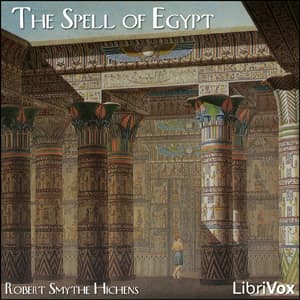

Okay, so I need to be honest here. When I first hit play on this one, I was expecting... I don't know, a history lesson? Maybe some dry British man droning on about pyramids and dates and pharaohs I can't pronounce. But Robert Smythe Hichens wasn't interested in giving me a textbook. He wanted to give me a *feeling*. And honestly? That caught me off guard in the best way.
This book is from 1908, which means Hichens was wandering around Egypt when it was still this wild, mysterious place for European travelers. No tourists with selfie sticks at the Sphinx. No air conditioning. Just a man standing in the desert, trying to put words to something bigger than himself. And I felt that. Like, genuinely felt it in my chest.
When Words Become Watercolors
Hichens writes like he's painting. There's this passage where he's describing the Nile at sunset, and I swear I stopped sketching (I was working on a logo, very boring client) and just... sat there. Eyes closed. Letting Sibella Denton's voice wash over me while my cats judged me from across the room. His descriptions aren't about facts—they're about what Egypt *does* to a person. The weight of all that ancient history pressing down on you. The silence of the desert. The way the light changes everything.
And look, I know that's not for everyone. If you want to know when the Great Pyramid was built or how many stones it took, this is not your book. Hichens barely touches that stuff. He's too busy having feelings about it all. Which, as someone who literally tracks her crying sessions in a spreadsheet, I respect deeply.
Sibella Denton's Firelight Voice
I didn't know her work before this, but now I'm a fan. Her voice has this warm, clear quality—like someone reading to you by firelight. She doesn't try to do anything fancy. No dramatic pauses where they don't belong, no weird affectations. She just... delivers the words with care. And for a book that's essentially one long meditation on place and feeling, that's exactly what you need.
There were moments where her delivery made me catch my breath. When Hichens gets particularly poetic about the temples at Karnak or the tombs in the Valley of the Kings, she leans into the emotion without overdoing it. It's subtle. It's good. (Abuela would have loved her voice, honestly. That gentle storyteller energy.)
The LibriVox production is clean—no weird background noise or audio glitches that I noticed. At just over four hours, it's the perfect length for a weekend of design work. I listened at my usual 1.0x because rushing through this would've been a crime. Some books are meant to be savored like a slow sip of horchata on a hot day, and this is one of them.
The Slow Burn of Ancient Stones
I'm not going to pretend this book made me ugly-cry. It didn't. But it did something else—it made me feel *still*. Peaceful, almost? There's something about Hichens' approach that's almost meditative. He's not rushing to the next sight. He's not checking things off a list. He's just... being present with these ancient places and trying to understand what they mean.
And honestly, in my chaotic apartment with client deadlines and Diego knocking things off my desk, that stillness felt like a gift.
Now, the thing is—this is definitely a niche listen. If you need plot, skip it. If you need action, run away. If you're the kind of person who gets antsy when nothing "happens," this will drive you up the wall. But if you're like me, and you sometimes just want to feel transported somewhere ancient and mysterious while you're doing dishes or sketching or pretending to organize your files? This is a rainy Sunday book. A cup of tea book. A close-your-eyes-and-drift book.
I found myself thinking about my abuela while listening. She never went to Egypt—never left Texas, really—but she had this way of talking about places she'd seen in movies or read about in magazines. Like they were magical. Like the world was full of wonders she might never see but could still feel. That sense of wonder about mortality and what we leave behind reminded me of Being Mortal—different subject, same gentle reckoning with time and meaning. Hichens has that same energy. That same reverence.
A Postcard I'll Keep
Yeah, I'd listen again. Maybe not soon, but someday when I need that particular kind of quiet. When I need to remember that the world is old and strange and beautiful. When I need a break from romance novels that make me sob into my pillow. (Don't worry, I'll be back to those next week.)
This book felt like a postcard from another time. Not flashy. Not demanding. Just... here. Offering itself. And sometimes that's exactly what you need.








![Steve Jobs [unabridged audiobook] audiobook cover](/_next/image?url=https%3A%2F%2Fcovers.audiobooks.com%2Fimages%2Fcovers%2Ffull%2F9788499923406.jpg&w=1920&q=75)