
My therapist says I project my need for justice onto fictional characters because I can't control the chaos of the real world. She's probably right. (She usually is, which is annoying.) So, naturally, I turned to Jack Reacher during my morning run along the Charles River. I needed order. I needed a 6'5" force of nature to punch bad guys so I didn't have to punch my dissertation advisor.
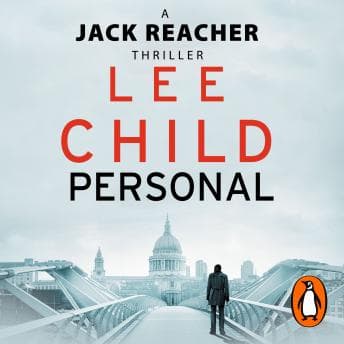
But here's the thing about Personal—it promises intimacy with that title, doesn't it? It implies we're finally going to crack the shell of the most emotionally unavailable man in fiction. Spoiler alert: We don't. Reacher is still a classic case of avoidant attachment style, wandering the earth to avoid intimacy. And honestly? I'm fine with that. I don't need him to have feelings; I need him to find the guy who shot at the French President.
When "Personal" Feels Strictly Business
The premise is solid. Someone took a long-range shot at a world leader, and the US Army drags Reacher back in because he knows the shooter. It's a revenge plot—classic motivation. Psychologically, revenge is a fascinating drive; it's about restoring a perceived imbalance in the universe. Lee Child gets the mechanics of this. He understands that for a character like Reacher, justice isn't about law; it's about algebra. X did Y, so X must be removed.
The setting shifts from Paris to London, and the procedural elements are satisfyingly crunchy. If you like knowing exactly how wind speed affects a bullet, you're in for a treat. I found myself zoning in on the details while cooking dinner (a very spicy vindaloo, eaten alone, blissfully), appreciating the competence on display. Competence is sexy. Or at least, comforting.
But does it feel personal? Not really. Reacher treats this vendetta with the same pragmatic detachment he treats a cup of coffee. He wants it, he consumes it, he moves on. The emotional stakes felt a bit theoretical. If you're looking for a character study, this isn't it. If you're looking for a manual on how to dismantle a criminal network while saying very little, step right up.
The Voice in My Ear (And the Problem with Accents)
Okay, we need to talk about Jeff Harding.
I know, I know. Change is hard. The human brain is wired to resist it—we build cognitive schemas around familiar voices, and when those are disrupted, it creates friction. For a long time, Dick Hill was Reacher. Switching to Harding is like walking into your living room and finding someone rearranged the furniture. It's the same room, but you keep bumping your shins.
Harding has this gravelly, assertive delivery that actually fits Reacher's internal monologue pretty well. He sounds like a guy who sleeps on buses and eats diner food. The "tough guy" vibe? He nails it.
But—and this is a big but—the female voices. Oh, wow.
Every time a woman spoke, I cringed. It bordered on caricature. My mother does better impressions of her neighbors than this. It pulls you right out of the narrative immersion. You're deep in a suspenseful scene, Reacher is calculating angles, and suddenly a female character speaks and sounds like she wandered in from a bad sketch comedy. It's distracting. I actually had to speed up the playback to 1.25x just to smooth out the cadence and make the voices less jarring. Same issue with Midnight Line—Harding's great until a woman opens her mouth.
Who's This For (And Who Should Run)
Listen if: You want procedural crunch, satisfying violence, and a protagonist who solves problems with headbutts. Perfect for runs, meal prep, or any activity where you need competence porn in your ears.
Skip if: You're expecting the title to deliver actual emotional depth, or if bad female voice work will pull you out of the story entirely.
Diagnosis: Functional, Not Transformative
Is this peak Reacher? No. It's the 19th book, and you can feel the formula settling in. But formulas exist because our brains like patterns. We like knowing the bad guy will lose. We like knowing Reacher will walk away.
It's not going to win literary awards, and my academic peers would roll their eyes at it. Then again, they also rolled their eyes when I defended Echo Burning, which Harding also narrates with that same gravelly competence. But Personal got me through three 5-mile runs and a week of meal prep. Sometimes you don't need a psychological breakthrough. Sometimes you just need a drifter to headbutt someone.
If you can get past the narration quirks—specifically the women sounding like cartoon characters—it's a solid ride. Just maybe keep the speed up.