
This book kept me awake on purpose for once.
I'd just finished a brutal twelve-hour shift - two codes, a combative patient, and a resident who kept calling me "sweetie" until I educated him otherwise. I should've gone straight to bed. Instead, I sat in my car in the garage for an extra forty minutes because Marcus Ryker was running through Russia and I needed to know if he made it out.
Carlos found me there. Asked if I was okay. I told him I was fine, just couldn't stop listening. He knows better than to question my post-shift rituals at this point.
When the First Book Was Better (But This One Still Works)
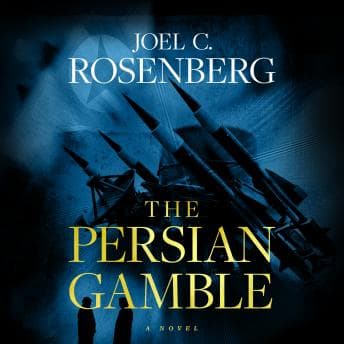
Let me be straight with you: The Persian Gamble is a solid sequel, but it's playing in the shadow of The Kremlin Conspiracy. That first book hit different - tighter, more urgent. This one? Still good. Still a page-turner. But there's a slight case of sequel bloat happening.
The premise is genuinely terrifying: Russia, Iran, and North Korea forming a nuclear alliance while the world's distracted by chaos. Marcus Ryker - former Secret Service, now reluctant international operative - has to work with Oleg Kraskin, the Russian double agent who caused half the problems in the first place. The chase scenes across Russia with Marcus, Oleg, and CIA chief Jenny Morris had me gripping my steering wheel like I was the one being pursued.
Rosenberg knows how to build tension. The man was a political advisor, and it shows - the geopolitical stuff feels authentic, the White House negotiations have weight. When Marcus is negotiating safe harbor for Oleg while simultaneously evading Russian special forces, you feel the impossible math he's doing in his head.
The Technical Details Made Me Twitch
Okay, here's where my night-shift brain started arguing with the audiobook. Rosenberg gets the big picture right - the politics, the stakes, the way intelligence agencies actually talk to each other. But some of the smaller details? Sloppy.
I'm not a diesel mechanic or a weapons expert, but I work with enough former military nurses and paramedics to know when something sounds off. There were moments where the technical descriptions felt like they came from a quick Google search rather than actual expertise. It's the equivalent of a medical thriller having someone "flatline" and get shocked back - defibrillators don't work on flatlines, people. (Yes, I yelled at my dashboard during this one. Different reason than usual, but same energy.)
For thriller readers who don't care about the minutiae, this won't matter. For the detail-oriented folks, it might pull you out of the story.
Adam Grupper Earns His Paycheck
The narration is what kept me in that garage. Adam Grupper has this steady, authoritative delivery that's perfect for action sequences. He doesn't oversell the tension - he lets Rosenberg's pacing do the work. His voice for Marcus has this controlled intensity, like a man who's seen too much to panic but still feels every close call.
The action scenes genuinely felt cinematic. One reviewer said it was like watching a major motion picture during a traffic jam, and honestly? That tracks. Grupper knows how to modulate for chase scenes versus quiet negotiation moments. No complaints about the audio quality, no weird pronunciation issues. Just solid, professional work. Grupper brings that same calm-in-the-burning-building authority to Freezing Order, which may explain why I trust him with Russians behaving badly.
The Religion & Spirituality Tag Explained
If you're wondering why this thriller has a Religion & Spirituality tag - Rosenberg writes what's called "prophetic fiction." There's an evangelical Christian worldview woven through the narrative. It's not preachy in a way that stops the story, but it's definitely present. Marcus prays. Characters discuss faith. The geopolitical stakes have biblical undertones. Rosenberg balances faith and danger a little more cleanly in Auschwitz Escape, where the spiritual pieces feel less like seasoning and more like bone structure.
My mom would love this. She's been after me to read more "uplifting" books, and while I'm not sure a nuclear thriller counts as uplifting, the faith elements would satisfy her. (She still thinks I should've been a doctor. I sent her a photo of my nursing award last month. She said "That's nice, anak, but Dr. Santos would sound better." Love you too, Mom.)
Who This Is For (And Who Should Skip)
Perfect for: Road trips. Long commutes. Anyone who likes Tom Clancy-style thrillers with a faith-based angle. Listeners who want geopolitical tension without graphic content.
Skip if: You need perfect technical accuracy in your thrillers. You haven't read The Kremlin Conspiracy (you'll be lost). You want something with more character development and less plot machinery.
At 12 and a half hours, this is a commitment. But it's the kind of commitment that makes your commute disappear.
Clocking Out
This is not a perfect audiobook. The pacing drags in spots, the technical details are sometimes lazy, and it doesn't quite reach the heights of its predecessor. But when it works - and it works more often than it doesn't - it really works.
I finished it on my next drive home. Sat in the garage again, this time only for ten minutes. Progress.
Carlos didn't even ask this time. Just brought me coffee when I finally came inside.