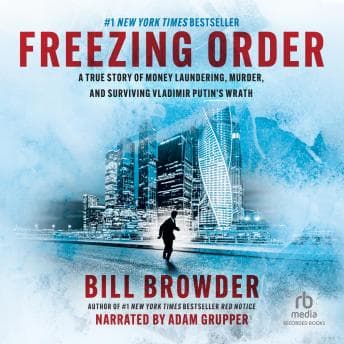

I was up at 0400, couldn't sleep - one of those nights where the brain won't shut off. Made coffee, sat on the back porch with Ranger, and figured I'd knock out a few chapters. Ended up finishing the whole thing before Linda woke up. That's the kind of book this is.
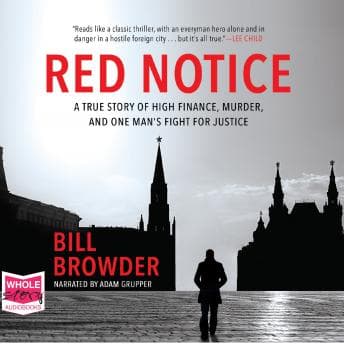
Let me cut to the chase: Freezing Order is the real deal. Bill Browder's first book, Red Notice, was solid intel on how Russia's oligarchy operates. This sequel? It's the after-action report, and it's uglier, messier, and more dangerous than the original mission.
When the Paper Trail Becomes a Kill Chain
I've tracked threat networks in my career. I've seen how money moves through shell companies and how bad actors cover their tracks. The mechanics of power and deception reminded me of The Prince - same ruthless calculus, just with wire transfers instead of Renaissance armies. What Browder documents here isn't fiction - it's operational reality. The $230 million that flowed out of Russia didn't just disappear into the ether. It moved through Cyprus, the Baltics, into real estate in Manhattan, into accounts across Western Europe. I've read plenty of Wall Street case studies - Business Adventures covers twelve of them - but none where the stakes were literally life and death. Following that money got people killed.
Sergei Magnitsky died in a Russian jail cell. Beaten, denied medical care, left to rot because he wouldn't recant his testimony about the theft. Browder could have walked away after that. Most people would. Instead, he turned his entire life into a campaign to make Putin's cronies pay - literally, by getting their assets frozen worldwide.
The Magnitsky Act that came out of this? That's not just legislation. That's a weapon. And watching Browder describe how Putin's machine tried to destroy him for creating it - the honey traps, the Interpol red notices, the lawyers and lobbyists enlisted to take him down - it reads like a counterintelligence case study.
Grupper's Voice Work Sells the Stakes
Adam Grupper narrates, and he earns his pay. His Russian accents aren't cartoonish - they're measured, appropriate to whether he's voicing a bureaucrat, an oligarch, or a thug. There's a distinction between the clipped delivery of official Moscow and the more casual speech of the criminals, and Grupper threads that needle well.
The emotional weight lands too. When Browder describes the moments he learned about another ally being murdered, Grupper doesn't oversell it. He lets the facts carry the horror. That restraint works. I've been in briefings where someone reads casualty reports in a flat tone because that's how you get through it. This felt like that.
The Self-Absorption Question
Look, I've heard the criticism - some folks think Browder comes across as self-important. I get it. The man does spend considerable time explaining how smart and persistent he is. But here's my take: when you've been hunted by a nuclear-armed state for over a decade, when your friends have been murdered and you're still standing, you've earned some swagger.
Does the ego occasionally grate? Sure. But I'd rather have a narrator who's confident in his convictions than one who hedges. Browder believes he's right, and the evidence backs him up. The US, UK, Canada, and the EU all passed Magnitsky Acts. That's not the result of a delusional crusade - that's mission success.
Who Should Listen (And Who Should Skip)
If you want to understand why Russia interfered in the 2016 election - and I mean really understand, not the cable news version - this book connects the dots. Browder makes the case that Putin's rage over the Magnitsky Act was a primary driver. Whether you fully buy that or not, the documented facts about Russian money laundering and state-sponsored murder are irrefutable.
Skip this if you want escapism. This isn't a thriller where the good guys win clean. People die. The bad guys often walk free. It's frustrating and infuriating and exactly how the real world works.
At 10 and a half hours, it's a solid commitment, but the pacing keeps moving. I ran it at 1.25x and never felt lost. Grupper's delivery handles the speed well.
SITREP
Worth your time? Absolutely. Browder's done the work that most journalists and certainly most politicians won't touch. He's named names, followed money, and accepted that his life will never be safe because of it. That kind of moral courage deserves attention.
Ranger slept through most of it, which is his way of saying the narration was steady and professional. High praise from a dog who growls at podcasters who talk too fast.
If you read Red Notice, this is the essential follow-up. If you didn't, you can still track the story - Browder provides enough context. Either way, you'll walk away understanding Putin's Russia better than you did before. And in the current geopolitical climate, that's not just interesting. It's necessary.





![Steve Jobs [unabridged audiobook] audiobook cover](/_next/image?url=https%3A%2F%2Fcovers.audiobooks.com%2Fimages%2Fcovers%2Ffull%2F9788499923406.jpg&w=1920&q=75)