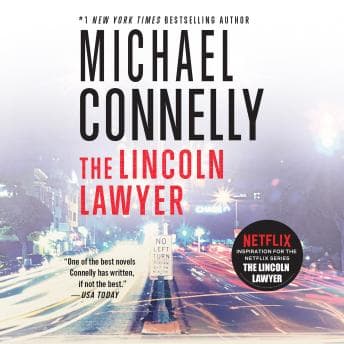

Look, I usually stick to mysteries where the detective is depressed, European, and solving crimes in the rain. It's a comfort zone thing. But my therapist suggested I "broaden my horizons" (code for: stop reading about serial killers, Priya). So, I picked up The Lincoln Lawyer.
Everyone loves the Netflix show, right? But I wanted to see inside Mickey Haller's head without the Hollywood gloss. And let me tell you—it's a messy place. A beautiful, chaotic, morally gray mess.
The Voice of a Charismatic Hustler
Adam Grupper. I couldn't find a ton of background on him—which usually makes me nervous—but honestly? He nailed this.
Mickey Haller is a defense attorney who works out of the back of a Lincoln Town Car. He's not Atticus Finch. He's a hustler. And Grupper plays him with this rapid-fire, street-smart cadence that just works. It's fast. Like, really fast. (I usually listen at 1.5x speed to get through my reading list, but I actually had to dial this one back to 1.25x while I was chopping onions for dinner. Dangerous combination, by the way.)
He captures that specific tone of a guy who thinks he's the smartest person in the room—and usually is—until he realizes he's walked into a trap. The attitude, the wit, the toughness? All there. He doesn't just read the dialogue; he spits it out like he's billing you by the minute.
The Psychology of the "Devil's Advocate"
Here's what fascinates me from a research perspective: Cognitive Dissonance.
Haller defends drug dealers, bikers, scumbags. He knows they're guilty. Most people would crack under the moral weight of that. But Haller? He compartmentalizes like a pro. He views the law not as a search for truth, but as a system of negotiation and manipulation.
It's a classic defense mechanism. If you convince yourself the system is a game, you don't have to feel bad about the pieces you're moving. Connelly explores this same moral territory in Poet, where the protagonist's psychological armor gets tested in equally brutal ways.
But then he gets this "franchise case"—a rich Beverly Hills playboy accused of assault—and the walls start crumbling. Watching (well, listening to) Haller's psychological armor crack when he realizes he might be on the wrong side of "evil as pure as a flame"? That's compelling. I Am Pilgrim gave me that same unsettling thrill—watching someone brilliant navigate moral quicksand. It's a case study in what happens when a narcissist meets a psychopath. (Okay, that's a simplification, but you get my point.)
Skip the Booktrack Edition
We need to talk about the production though.
I listened to a version that had these musical interludes—the "Booktrack" edition, I think? Look, I study how stories shape emotion, so I get the intent. But psychologically, it's intrusive. It's like the producer didn't trust the text to carry the tension, so they added a synthesizer to poke you and say, "Hey! Be scared now!"
Distracting. I'm trying to analyze Haller's motives, and suddenly there's a dramatic crescendo in my ear? No thanks. If you can find a version without the music, grab that one. The narration is strong enough to stand on its own.
Who's This For (And Who Should Run)
If you love morally compromised protagonists and legal procedurals with teeth, this one's for you. Skip it if you need your heroes squeaky clean—Haller will only frustrate you.
Case Closed, Priya Out
Is it high art? No. Is it a fascinating look at a man who has monetized his own moral flexibility? Absolutely.
Connelly understands that the scariest thing isn't the crime itself—it's the negotiation that happens afterward. Adam Grupper brings that hustle to life perfectly. Just be prepared for a protagonist who creates his own problems and then charges you to fix them.
(Now I have to go explain to my mother why I'm rooting for a lawyer who defends drug dealers. Wish me luck.)