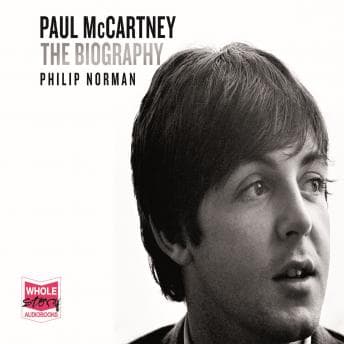

Thirty hours. That's what Philip Norman asks of you. I started this during a red-eye to Chicago for a client engagement, figured I'd knock out a chunk. Landed with maybe four hours done and a newfound respect for just how much life Paul McCartney has actually lived.
Here's the thing—I went in expecting hagiography. The "authorized" label usually means sanitized, corporate-approved pablum. Norman surprised me. This isn't a love letter. It's closer to what my parents would call a proper accounting—everything on the table, debits and credits both.
The Investment Thesis on 30 Hours
Let me be direct: this is a commitment. At 2.0x speed, you're still looking at 15+ hours. Is McCartney's life worth that? Actually, yes—but not for the reasons you'd expect.
The Beatles stuff is fine. We've all heard it. What grabbed me was the business narrative running underneath. The Allen Klein disaster. The Apple Corps chaos. Watching McCartney—barely into his twenties—try to hold together a multi-million dollar enterprise while his partners checked out emotionally. I've consulted for startups with similar dynamics. Brilliant founders, zero governance, everyone thinking they're the visionary. Usually ends in lawsuits. The Beatles were just doing it at stadium scale. The interpersonal dynamics—brilliant people trapped in a structure they've outgrown—reminded me of the relationship tensions in Nick and Charlie, though obviously at very different stakes.
Norman traces the post-breakup depression with surprising honesty. McCartney essentially built Wings as a recovery project—a startup founder pivoting after his first company imploded. The recording of "Band on the Run" in Lagos, Nigeria? Genuine danger, genuine chaos, genuine creative desperation. That's not in the press releases.
Keeble Earns His Keep
Jonathan Keeble does something I didn't think possible—he makes 30 hours feel manageable. His British accent lends authenticity, obviously, but it's the character work that sells it. His Lennon has that nasal Scouse edge. His Linda is warm, American, grounded. When he shifts to Heather Mills—complete with Geordie glottal stop—you immediately understand the tonal shift in McCartney's life.
One error worth noting: Keeble calls Denny Laine's band the "Incredible String Band" when it should be "Electric String Band." Minor, but the kind of thing that makes you wonder what else slipped through. (Jenny would say I'm being harsh. Jenny is right.)
What My Parents Would Recognize
Norman spends real time on McCartney's Liverpool childhood. Father Jim, a cotton salesman who played trumpet. Mother Mary, a midwife who died when Paul was fourteen. The family dynamics—working class, musical, devastated by loss—felt familiar in ways I didn't expect.
My parents never had a TED talk about their work ethic. They just did it. Fourteen-hour days at the dry cleaners, building something from nothing. McCartney's father introduced him to music the same way my dad introduced me to spreadsheets—not as a career path, but as a way of understanding the world. Norman gets this. The biography isn't just about a rock star. It's about how working-class families build legacies.
Who Gets ROI Here (And Who Doesn't)
If you're a casual Beatles fan looking for greatest hits, skip this. Seriously. There are shorter options.
But if you're interested in the business of creativity—how someone builds, loses, and rebuilds a career across six decades—this delivers. The Linda chapters alone are worth several hours. Her death, McCartney's grief, the way Norman handles it without exploitation. Keeble's narration gets genuinely moving here.
Also recommended for anyone who's ever watched a partnership dissolve. The Lennon-McCartney breakdown is a case study in how ego, money, and creative differences can destroy something beautiful. I've seen this play out at three different companies. Usually without the soundtrack.
Closing the Books
Bottom line: this is worth the listen. Norman respects the subject without worshipping him. Keeble delivers a performance that justifies the "authorized" label without making it feel like propaganda.
Is it long? Yes. Did I finish it? Also yes—across three business trips, two delayed flights, and one very long Sunday cleaning out the garage while Jenny pretended not to notice I was crying during the Linda chapters.
A biography that respects your time. Even when it asks for thirty hours of it.