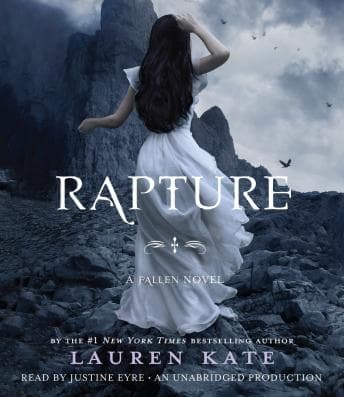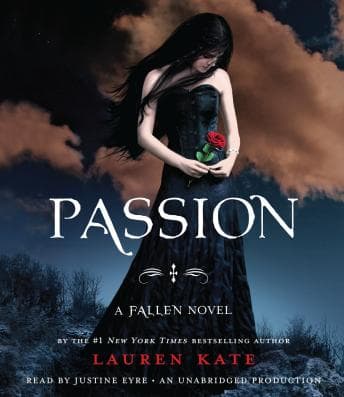

Okay, so here's the thing — I went into Passion expecting to be annoyed. The first two Fallen books had me doing that thing where you keep listening because you're invested but also yelling at your phone because nobody will just EXPLAIN ANYTHING to Luce. Like, the "we can't tell you" trope was approaching meme-level saturation by book two. And then book three opens, and Lauren Kate basically says, "Fine. We're going back through time. You want answers? Let's go get them."
I was reorganizing my board game shelf at 1 AM — my copy of Gloomhaven had somehow migrated behind three boxes of Betrayal at House on the Hill expansions, don't ask — and I just let this run. Nearly ten hours later, the shelf was done and I'd time-traveled through centuries of doomed romance. Productive Saturday? Debatable.
Time-Hopping Through History Is the Progression System This Series Needed
Here's where Passion actually won me over. Instead of another book of Luce wandering around Sword & Cross being confused while angels give cryptic non-answers, she's literally stepping through Announcers (the shadow portals from earlier books) into her own past lives. Moscow during wartime. Renaissance Italy. Ancient Egypt. Each era is basically a self-contained mini-story where Luce watches — or sometimes interferes with — a previous version of herself falling for Daniel and then dying in a burst of fire.
The progression is satisfying. Each past life peels back another layer of the curse, and Luce starts going from passive observer to someone actively trying to understand the mechanics of why she keeps dying. It's not Sanderson-level world-building by any stretch, but there's a structure here that the first two books were desperately missing. You're collecting pieces of a puzzle across millennia, and by the midpoint I was genuinely curious about the pattern rather than just tolerating it. The time-travel-as-revelation structure scratched a similar itch to A Wrinkle in Time, where moving through different planes of existence is doing real narrative work rather than just being set dressing.
That said — and I cannot stress this enough — if you hated the repetitive elements of books one and two, this book is LITERALLY structured around repetition. Luce arrives in a time period. She finds Daniel. They have a beautiful moment. She burns. Rinse, repeat across centuries. Some listeners are going to hit hour five and scream into a pillow. I get it. But the variations between each era and what Luce learns from watching kept me going.
Justine Eyre Carries a LOT of Dead Weight Here
Justine Eyre is an Audie Award winner, and you can hear why. Her pacing is deliberate without dragging, which is critical for a book that could easily feel like watching the same sad movie on loop. She leans into the melancholy of each era's romance without tipping into melodrama, and there's this sort of restrained grief in her Daniel scenes that actually makes the love story land harder than it did on the page for me.
But — and this is where I have to be honest — I didn't find her character differentiation particularly memorable. The supporting cast (Cam, the Outcasts, various historical figures) blend together vocally in a way that meant I occasionally lost track of who was speaking during group scenes. For a book that's mostly Luce experiencing internal conflict and observing past versions of herself, it works fine. If this were an ensemble-heavy fantasy with twelve POV characters, it'd be a problem. Here, it's a minor friction point.
The emotional delivery during the burning scenes, though? Genuinely effective. There's a particular weight she gives to the moments right before each past-Luce combusts that had me pausing my shelf organization to just... listen.
Who Should Step Through the Announcer (And Who Should Stay Home)
If you've read the first two Fallen books and bounced off the "nobody tells Luce anything" frustration, Passion is actually the payoff you were waiting for. This is the book where you finally get the backstory, the why behind the curse, and Luce stops being a passenger in her own story. It's the best of the three so far, and multiple listeners seem to agree on that.
If you haven't read the first two books: absolutely do not start here. You will be hopelessly lost.
If you're coming from harder fantasy — epic world-building, Sanderson magic systems, complex power structures — adjust your expectations. This is YA paranormal romance with angels. The time-travel mechanic is cool but it's serving the love story, not the other way around. My D&D group would not love this. (My D&D group's partners, on the other hand, might.)
And look, this is a book where I turned off my thesis-procrastination guilt and just leaned into the romance-across-time thing. At nearly ten hours, it's a commitment, but Eyre's narration keeps it moving. I wouldn't call it essential listening, but if you're already in this series, this is where it earns your patience.
Worth Burning Through a Credit?
For existing Fallen fans: yes, this is the book where the series starts delivering on its promises. For everyone else, you're three books deep into a YA angel romance and you know whether that's your thing or not. Eyre's narration elevates middling material into something genuinely pleasant to listen to, even if the structure can feel like a beautiful song played on repeat. I read this instead of writing my thesis. Dr. Patel would not approve, but I don't regret it.