
I was sitting on our back porch last Sunday morning - Denise was inside making pancakes, the neighbor's dog was doing its usual rounds through our yard - and I had this odd little five-and-a-half-hour audiobook queued up that I'd been putting off for weeks. A. A. Milne fairy tale? Written in 1917? For adults? I figured it would be a pleasant curiosity, something to fill a lazy morning. By the time Denise called me in for breakfast, I was grinning like an idiot and shushing her so I could hear the Countess Belvane's latest scheme.
Let's talk about what Milne is really doing here.
The Fairy Tale That Doesn't Believe in Fairy Tales
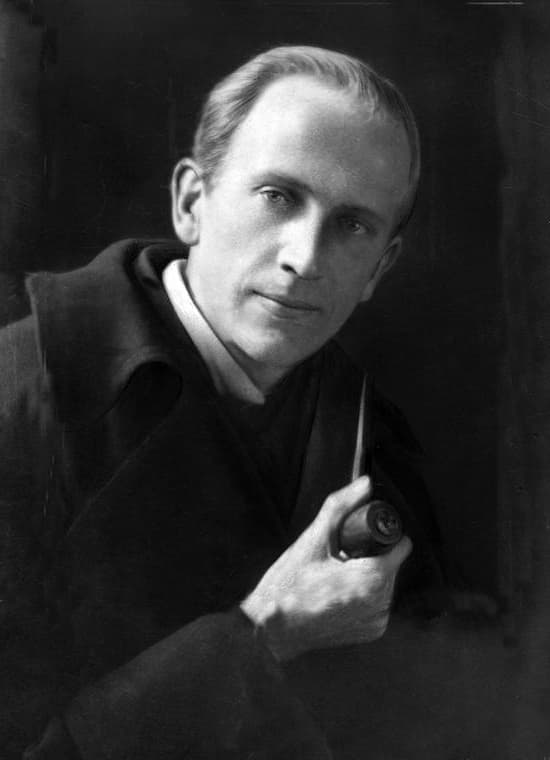
Milne's own introduction calls this "an odd book," and he's underselling it. Once On A Time reads like a man who grew up loving fairy tales, then spent years in the real world watching actual politics and actual marriages, and decided to write a fairy tale where everyone behaves the way people actually behave. The King of Euralia isn't wise - he's petty and easily flattered. Princess Hyacinth isn't helpless - she's competent but frustrated by the fact that nobody takes her seriously. And then there's the Countess Belvane, who is the villain, except she's also the most entertaining person in the room, and Milne clearly adores her. (He apparently based her on his wife Daphne, which - I have questions about that marriage, but also, respect.)
The whole thing is framed as Milne "rewriting" the chronicles of a fictional historian named Roger Scurvilegs, and he uses this conceit to interrupt, editorialize, and argue with his own source material. It's metafiction before metafiction was cool. This reminds me of what Sterne was doing in Tristram Shandy - that same playful refusal to just tell the story straight - but Milne does it in a package that looks like a children's book. The war between Euralia and Barodia starts because one king keeps flying over the other king's castle in seven-league boots during breakfast. The escalation from there is absurd, political, and weirdly recognizable to anyone who's watched two department heads at a faculty meeting go to war over printer access. That same instinct — ordinary human pettiness dressed up in genre clothing — is something I kept chewing on when I reviewed Maze Runner, where the real politics aren't about the maze at all.
My students would hate this. I love it.
A Full Cast Doing Too Much and Just Enough
Here's where things get complicated. The full cast production is ambitious - multiple voice actors handling the various royals, courtiers, and narration. When it works, it works beautifully. The cast captures Milne's wit with real comedic timing, particularly whoever voices the Countess Belvane, who gets this slightly theatrical self-importance that's perfect for a character who writes poetry about herself in her diary. The narrator understands that pause is punctuation - the Scurvilegs interruptions land because the reader gives them space to breathe.
But a full cast for a five-hour fairy tale is a lot of moving parts, and not all of them click. Some of the accents run a little hot - the Barodian characters veer toward caricature in spots, which undercuts the very thing Milne is trying to do, which is make these "types" feel like real people. And with this many voices coming and going in a relatively short book, there are moments where it takes a beat to orient yourself. Who's speaking? Which kingdom are we in? A single skilled narrator might've handled the tonal shifts more smoothly, but I can see why the producers went this direction. The book is structured almost like a stage play - multiple scenes cutting between the two kingdoms, lots of dialogue, very little interior monologue. It's built for voices.
The production quality itself is clean. Good balance between the narration and the cast performances, no audio hiccups that I noticed.
The Book That Falls Between Every Chair
Here's the thing nobody warned me about: this book doesn't quite work as a children's story, and it doesn't quite work as an adult novel, and that's exactly what makes it interesting. Milne wrote this two years before he had his son Christopher Robin, a full decade before Winnie-the-Pooh. You can feel him figuring out his voice - that dry, gentle irony that would later make Eeyore the most honest character in children's literature. But here, the irony has sharper edges. The enchantment subplot is played almost entirely for laughs. The villain gets away with pretty much everything. The prince is handsome but so vain he's practically useless.
If you loved The Princess Bride - the book, not just the movie - this is its spiritual ancestor. That same refusal to play the fairy tale straight, that same affection for the genre even while dismantling it. Goldman was doing in 1973 what Milne was doing in 1917, and I'm genuinely surprised more people don't make that connection.
At five and a half hours, the prose deserves to be savored. Don't speed this up. Milne's sentences are constructed for rhythm and comic timing, and the pauses between clauses are where the jokes live.
Who This Is For (and Who It's Not)
If you're a Milne completist, this is essential - it's the missing piece that shows where Pooh came from. If you love fairy tales that think critically about what fairy tales actually mean, you'll find a lot to chew on here. If you want a short, witty listen that's smarter than it looks - worth pausing the faculty meeting for.
But if you're looking for something to put on for your kids, proceed with caution. The humor is adult in sensibility if not in content. And if a full cast production with occasionally uneven accents is going to bother you, know that going in.
The Lesson Plan I'll Never Actually Assign
I keep thinking about teaching this book. Not because my juniors would enjoy it - they wouldn't, and they'd tell me so loudly - but because it's such a clean example of an author using genre conventions to say something true about power, vanity, and the stories we tell ourselves. Milne knew that fairy tales aren't innocent. He just made that knowledge funny.
This is why we still read the classics. Even the weird, unclassifiable ones nobody remembers.