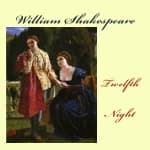

I was supposed to be grading sophomore essays on The Great Gatsby — it was 11:30 PM, Denise had already gone to bed, and I had seventeen papers left that all started with "In the novel The Great Gatsby by F. Scott Fitzgerald..." So I put in my earbuds, told myself I'd just listen to the first scene of Twelfth Night as a palate cleanser, and then two hours and twenty-five minutes later the papers were still ungraded and I was grinning like an idiot at my kitchen table.
This is why we still read the classics. Or in this case, listen to them performed the way they were meant to be experienced.
Shakespeare Was Never Meant to Be Read Silently at a Desk
Here's something I tell my students every year that they ignore: Shakespeare wrote plays, not novels. The words on the page are blueprints. You wouldn't look at architectural drawings and say you've experienced a cathedral. And yet for four hundred years we've been handing teenagers paperback copies of these plays and asking them to silently decode iambic pentameter under fluorescent lights. No wonder they hate it.
A full-cast audio production of Twelfth Night fixes this problem almost entirely. When Viola lands in Illyria and decides to disguise herself as Cesario, you hear the calculation in her voice — that mix of grief for her supposedly drowned brother and the quick-thinking survival instinct that makes her one of Shakespeare's sharpest heroines. On the page, that's just words. In performance, it's a woman making a dangerous, thrilling choice in real time.
The mistaken identity scenes — and there are many, because this play is essentially a farce engine running on diesel — land so much better when you can hear the dramatic irony. Olivia falling for Cesario while you know Cesario is Viola while Viola is pining for Orsino while Orsino is pining for Olivia. It's a romantic Rube Goldberg machine. On paper it reads as confusing. In audio, with distinct actors playing distinct roles, the gears click into place beautifully.
Sir Toby Belch Deserves His Own Podcast
Let's talk about what the author is really saying with the subplot characters, because they're doing about sixty percent of the heavy lifting in this play. The full cast earns its keep most obviously with Sir Toby Belch and the letter scene with Malvolio — a sequence that is, structurally, a perfect prank comedy bit that wouldn't be out of place in a Christopher Guest movie. Malvolio finding the forged letter and reading it aloud, convincing himself that Olivia is secretly in love with him, wearing yellow cross-gartered stockings to prove his devotion — the actors play this with the kind of comedic timing that makes you realize Shakespeare invented cringe comedy four centuries before The Office.
My students would hate this. I love it.
The cast handles the tonal shifts well too. Twelfth Night is classified as a comedy, but there's an undercurrent of melancholy running through it — Feste the Fool's songs, Orsino's obsessive lovesickness that borders on something darker, the cruelty embedded in the Malvolio prank that goes a bit too far. If you loved Much Ado About Nothing for its wit but wanted something with a slightly sharper edge, this is its spiritual successor. Same DNA, different temperament. I keep a short list of books that carry that same bittersweet comedy energy, and Summer Place: A Novel landed on it recently — there's a similar sense of people tangled in relationships they've half-invented for themselves.
The Two-Hour Question
At two hours and twenty-five minutes, this is basically the audiobook equivalent of a long movie. And honestly? That's a feature, not a bug. You get the complete play — no abridgment, no adaptation into modern English (which, look, I understand the impulse, but Shakespeare's puns only work in Shakespeare's language). The narrator understands that pause is punctuation, and the pacing keeps things moving without rushing through the verse.
But — and this is important — the brevity also means this probably isn't worth a full Audible credit. Fifteen dollars for two and a half hours of audio is steep math. If you've got a library card and access to Libby, start there. If you're a teacher looking for a classroom tool, this is genuinely useful. I'm already planning to play the letter scene for my juniors next semester instead of making them read it aloud in their beautiful monotone voices.
The production is clean and professional. No sound effects that I noticed, no musical interludes beyond what the text calls for with Feste's songs. It's actors in a room performing a play, which is exactly what it should be. The prose deserves to be savored — and at 1.0x speed, the iambic pentameter has room to breathe.
Worth Pausing the Faculty Meeting For
If you're a Shakespeare person, you already know whether you want this. If you're Shakespeare-curious but intimidated by the text, a full-cast audio is genuinely the best on-ramp I know. And if you're a high school English teacher slowly losing your mind to essay grading at midnight — well. There are worse companions than Viola and her beautiful, ridiculous mess of a love triangle.
Those seventeen Gatsby essays? I got to them eventually. But I was humming Feste's closing song the whole time.