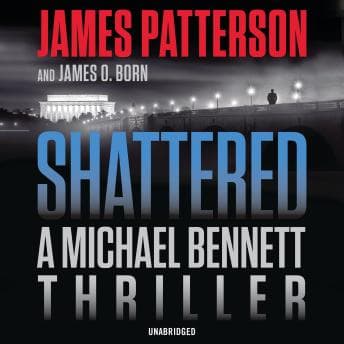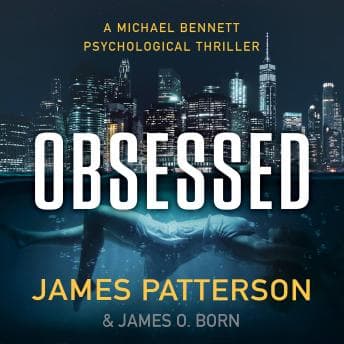

"Narrator Joshua Kane infuses Bennett's first-person narration with solid good-guy energy." That quote from another listener kept rattling around my head while I was chopping onions for a chana masala at 9 PM on a Tuesday, because it perfectly captures both what works and what quietly frustrates about this audiobook.
Let me be direct: this is book fifteen in the Michael Bennett series. Fifteen. And I found myself asking: why does Patterson keep calling these "psychological thrillers" when they're really procedurals with a domestic subplot? Psychologically, this doesn't track as a thriller about obsession in any meaningful clinical sense. The killer targets young female college students, Bennett's oldest daughter is potentially in danger, and New York is... doing its thing. The marketing copy uses the word "obsessed" like a mantra — the killer is obsessed, Bennett is obsessed, you will be obsessed. But obsession as a psychological construct requires specificity, compulsion, an internal architecture that the reader can almost feel closing in on them. What we get instead is a competent detective doing competent detective work while worrying about his kid.
That's not obsession. That's parenting.
The Bennett Problem (Or: Why Good Dads Don't Always Make Good Protagonists)
The protagonist exhibits classic protective-father patterns, and Kane's baritone sells that earnest, I-will-keep-my-family-safe energy pretty well. For about twenty minutes. And then — and I say this as someone who genuinely tried to stay with it through two full cooking sessions and a morning jog along the Charles — that heavy voice starts to flatten. It's like listening to a 1960s TV detective narrate your grocery list. The suspense is there in the writing, technically, but Kane delivers everything at the same emotional register. Tension? Baritone. Tenderness with his daughter? Baritone. Eureka moment cracking the case? You guessed it. Same baritone.
What makes a character compelling is range — the micro-shifts in voice that signal a person is actually feeling something different from one scene to the next. Kane doesn't give us that. He gives us one note, played confidently, but it's still one note.
The "Is This Actually a Psychological Thriller?" Question
This is a fascinating case study in genre mislabeling, honestly. Some listeners outright called this boring, which I think is harsh but not entirely wrong. I had a similar reckoning with Quiet Game, which also promises more psychological weight than it ultimately delivers — though at least that one gives you a villain worth dissecting. The research actually shows that readers who come to Patterson expecting Alex Cross-level intensity tend to find the Bennett books... lighter. More formulaic. And at 7 hours 48 minutes, this one moves quickly enough that you won't be stuck if it doesn't land, but it also doesn't earn the "psychological" label it's wearing like a borrowed jacket.
The mystery itself — killer targeting college women — follows a pretty standard procedural track. There are plot twists, sure, and the writing is clean enough (Patterson's factory is nothing if not efficient). But I kept waiting for that moment where the killer's psychology would crack open, where we'd get inside the obsession in a way that felt genuinely unsettling. It never came. The book stays firmly in Bennett's point of view, which means we're always on the outside of the pathology, looking at it through a detective's clipboard rather than feeling it. My therapist would have thoughts about this character — specifically, that there's not enough character there to have thoughts about.
I don't need every thriller to be Mindhunter. But if you slap "psychological" on the cover, give me psychology.
Who Gets Obsessed and Who Gets Bored
If you're already deep into the Michael Bennett series and you want a quick, competent installment — comfort food, basically — this will do the job. It's fine. It's a hamburger. Nobody's offended by a hamburger. Murder at an Irish Bakery is the same genre of comfort food — and I mean that with the same complicated affection I have for carbs.
But if you're coming to this expecting genuine psychological depth, the kind where you pause the audiobook and sit with the discomfort of understanding a killer's mind? Skip it. If you're sensitive to narrators who lean heavily monotone, maybe try 1.25x speed — it actually helped me push through the middle section where things drag.
And if you're like me — someone who gets genuinely annoyed when character motivations feel thin and genre labels feel dishonest — you'll spend most of this audiobook mildly irritated. Not angry. Just... aware that this could have been so much more.
The Case File Gets Closed
I finished the chana masala before I finished the book. The chana masala was better. Patterson and Born deliver a functional thriller with a likable protagonist and zero psychological insight worth remembering. Kane's narration is solid in the way that a reliable sedan is solid — it gets you there, but you won't remember the drive. At fifteen books deep in a series, maybe that's all anyone's asking for. But I'm a psychologist (well, almost). I'm always asking for more.