
Why do we always wait for a mysterious stranger to fix our lives? Psychologically speaking, we should be able to do this ourselves. We have the tools. We have the cognitive capacity.
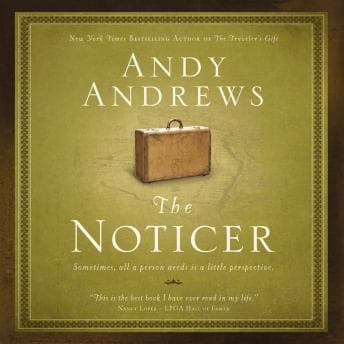
But I was listening to The Noticer while chopping onions for a curry (metaphor alert: I was already crying before I hit play), and I realized something. Sometimes the academic brain needs to shut up and let the heart listen. My dissertation committee would probably roll their eyes at this book—it's not rigorous, it's not data-driven—but honestly? I needed it.
Therapy Without the Co-Pay
Here's the setup: An old man named Jones wanders around a small town giving people "perspective." In my lab, we'd call this Cognitive Reframing or maybe Attentional Bias Modification. Rich Dad Poor Dad does something similar with money mindsets—reframing scarcity thinking into abundance thinking, though I found that one a bit too simplistic for my taste. Jones is basically a walking, talking CBT session wearing a fedora and carrying a battered suitcase.
The characters he helps? Let's be real. They're a little flat. Archetypes—The Struggling Couple, The Depressed Teenager, The Stressed Businessman. If I were grading this as a novel, I'd have notes. So many notes. The dialogue can feel staged, like a roleplay scenario in a Psych 101 textbook.
But—and this is a big but—it works. Because the characters aren't the point. You are the point. The book slips past your defenses. While my critical brain was saying, "This dialogue is unrealistic," my subconscious was going, "Yeah, Priya, why are you focusing on the negative outcomes of that grant proposal?"
The Porch-Sitting Vibe
Usually, I have a hard rule: Authors shouldn't narrate their own fiction. Leave it to the pros. (Looking at you, thriller writers who think they can do accents. You can't.)
But Andy Andrews? He gets a pass. Actually, more than a pass—he's the only one who could've read this. His voice has this warm, Southern, porch-sitting quality that makes the advice go down easy. It doesn't sound like a lecture. It sounds like your favorite uncle telling you a story while peeling an orange.
He believes every word he's saying. You can hear the earnestness in the timbre of his voice. If a professional actor had done this, it might have sounded cheesy or manipulative. With Andrews, it just feels... kind. And in a world that's increasingly sharp-edged, that kindness matters.
Who Needs Jones (And Who Doesn't)
If you're looking for complex character studies or dark, gritty realism, run away. This is pure sugar and light. But if you're feeling stuck—if you're obsessing over the wrong things (guilty)—this is for you. Perfect for anyone who needs a mental reset but can't afford therapy this month.
Closing the Textbook on This One
Is this high literature? No. Is it groundbreaking psychological research? Definitely not. It's simple. Almost suspiciously simple. My therapist would probably say that's the point.
I finished it in one cooking session, and frankly, the curry tasted better for it.