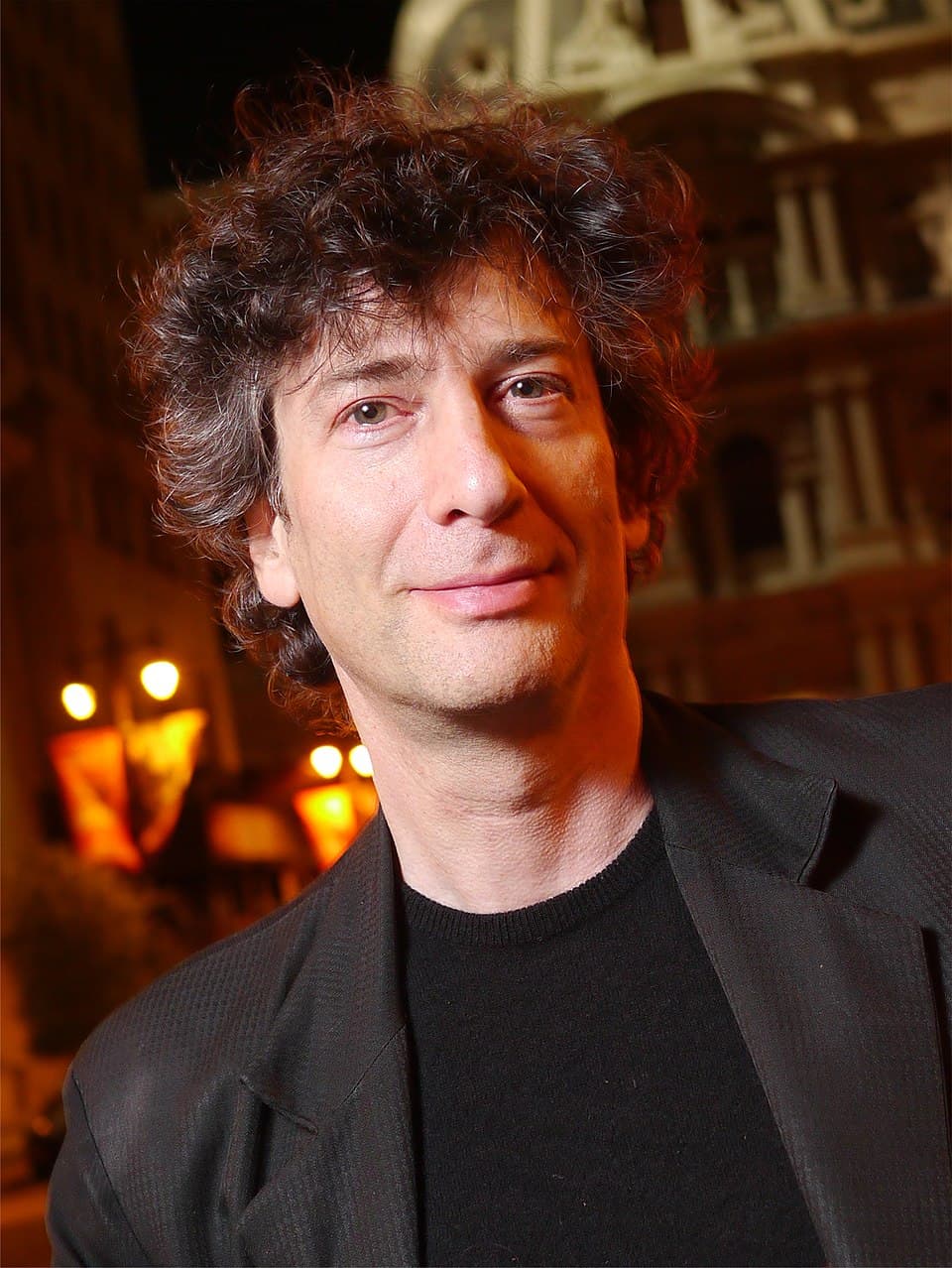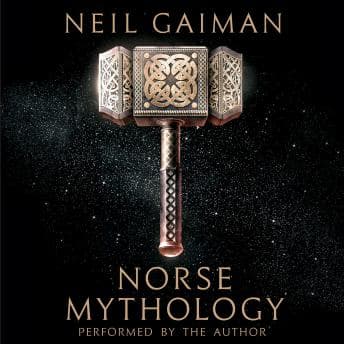

Okay, so here's the thing about Neil Gaiman reading his own Norse mythology book: it's basically what would happen if your cool uncle who actually knows things decided to tell you bedtime stories, except the bedtime stories involve gods getting their hands cut off and the world ending in fire. And you're 100% here for it.
I listened to this instead of writing my thesis. (Dr. Patel, if you're reading this, I was doing research on narrative structure. Promise.)
Look, I grew up on D&D in the back of a Georgia library, rolling dice and pretending to be half-elves. Norse mythology was basically required reading for understanding why Odin only has one eye and why everyone's terrified of Loki. But here's what Gaiman does that my old Monster Manual couldn't—he makes these gods feel like actual characters with actual personalities instead of stat blocks with divine portfolios.
The magic system is chef's kiss. And yeah, I know mythology doesn't technically have a magic system, but the internal logic of how the gods work, their limitations, the rules of the nine worlds—it's all there. Gaiman doesn't just retell these myths, he structures them into something that flows like a novel. You get the creation of everything, the adventures in the middle, and then Ragnarok looming at the end like the world's most metal series finale.
Gaiman Behind the Mic
Some people apparently find Gaiman's voice monotonous? I genuinely don't understand these people. His delivery is like... imagine someone who's been telling stories around campfires for a thousand years and has gotten really, really good at it. There's this melodic quality that echoes actual oral tradition. Steven Pacey walked so other narrators could run, but Gaiman's doing something different here—he's not doing character acting, he's doing storytelling. Capital S.
His Thor voice is perfect. Just the right amount of "I am very strong and not particularly bright but I will absolutely solve this problem by hitting it." His Loki has this sly, almost amused quality that makes you understand why the other gods keep him around even though he's clearly going to betray them eventually. (Spoiler: he does. Like, a lot.)
Six Hours Well Spent
At 6.5 hours, this is basically a long afternoon. I knocked it out during a coding session and a couple of walks around campus pretending to think about my thesis. The pacing never drags because each myth is its own contained story—you get the tale of how Thor's hammer was made, the time Loki turned into a mare (don't ask), the tragedy of Balder. It's episodic in the best way.
Here's my one caveat, and I'm being honest here: if you're coming to this expecting American Gods-level complexity or Sanderson-level world-building, recalibrate. Though honestly, if you haven't experienced American Gods: The Tenth Anniversary Edition yet, that's where Gaiman takes these mythological ideas and goes absolutely wild with them. This is Gaiman doing a faithful, accessible retelling of source material. He's not reinventing the wheel, he's showing you why the original wheel was so good. Some of the myths are simple. Some are brutal. A few are genuinely funny. That's how mythology works.
My D&D group would love this. Actually, I'm probably going to recommend it to them for our next campaign prep. Want to understand why your cleric of Odin acts a certain way? Here's your homework. Want to know what Mjolnir actually means in context? Gaiman's got you.
The production is clean—no weird audio issues, no background noise. Just Gaiman's voice and occasionally the sense that he's genuinely enjoying himself. Which he clearly is. You can hear it.
Roll for Initiative (Or Don't)
Who should skip this? If you don't like info-dumps, this isn't for you (but you're wrong). Mythology IS info-dumps. That's the whole genre. Also if you're sensitive to violence—these are old stories, and old stories don't pull punches. Gods die. Worlds end. A wolf eats the sun. It's not grimdark, but it's not sanitized either.
But if you want to understand why Norse mythology has influenced basically every fantasy thing you love? If you want to hear an actual master storyteller do what he does best? If you just want something that feels like sitting around a fire while someone who knows things tells you about them?
Yeah. This is it.
Now if you'll excuse me, I have a thesis I should probably look at. (I will not be looking at it. I'm starting The Sandman next.)