
Look, I need to talk about the fact that Christine Feehan named her Cajun hero 'Gator.' GATOR. I spent the first hour of this audiobook genuinely distracted by this choice. Was this meant to be subtle? Are we supposed to take this seriously? My therapist would have thoughts about why I couldn't let this go.
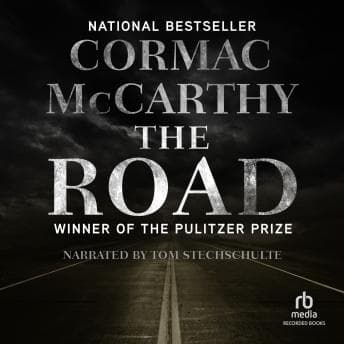
But here's the thing—Tom Stechschulte's narration made me forget I was annoyed. By hour three, I was fully invested in Gator Fontenot and his pursuit of Flame through the Louisiana bayou, psychological implausibility and all.
The Voice That Sold Me on a Man Named Gator
Stechschulte does something genuinely clever with this performance. His Cajun drawl for Gator is slow, easy, dripping with the kind of lazy confidence that—psychologically speaking—signals both danger and attraction. It's the vocal equivalent of a predator who doesn't need to hurry because he knows he'll catch you. The research actually shows that vocal pacing affects our perception of dominance, and Stechschulte has clearly internalized this.
The contrast between his gravelly, mischief-laced delivery for Gator versus the other GhostWalker characters creates immediate hierarchy. You know who's in charge of any scene just by how the voice shifts. That kind of vocal control reminded me of the narrator's work in Sign of The Four (Version 3), where character differentiation through voice alone carries the entire mystery. That's not easy across 13 hours.
Psychic Super-Soldiers and the Women Who Match Them
Gator exhibits classic romance novel alpha traits—enhanced to literal superhuman levels because apparently regular special ops wasn't enough. But what makes this pairing compelling is that Flame isn't positioned as someone who needs saving. She's equally enhanced, equally dangerous, equally damaged by the same shadowy government program.
Power-balanced romantic pairings create different attachment dynamics than damsel-in-distress narratives. Feehan understands this instinctively. Gator and Flame circle each other like two apex predators trying to figure out if they're going to fight or... well. The content warnings exist for a reason.
I found myself asking: why does Flame really keep running when she clearly wants to be caught? The answer involves trauma bonding, institutional abuse, and trust issues that would keep a clinical psychologist busy for years. Nowhere to Run explores similar chase dynamics, though with less supernatural enhancement and more grounded psychological realism. Feehan doesn't explore this with academic rigor—this is paranormal romance, not a case study—but the emotional architecture is sound.
Swamp Gothic as Psychological Landscape
I was cooking something elaborate and unnecessary at 10 PM (dal makhani, since you asked, because apparently I process book feelings through butter and spices) when the bayou descriptions really started hitting. The sultry, oppressive heat. The isolation. The sense of being watched by things that live in the dark water.
This is a fascinating case study in how setting functions as psychological externalization. The swamp isn't just atmosphere—it's a mirror for the characters' internal states. Murky. Dangerous. Beautiful in ways that might kill you. Stechschulte's pacing slows during these descriptive passages, letting the humidity seep into your brain.
Where the Psychology Doesn't Track
I have to be honest: some of the character motivations strain credibility. The villains operate on comic-book logic rather than recognizable human psychology. And the speed at which trauma survivors open up to each other romantically would concern any attachment researcher.
But—and this is important—I don't think Feehan is trying to write a realistic psychological portrait. She's writing fantasy fulfillment. The fantasy of being so powerful that your damage becomes your weapon. The fantasy of finding someone equally broken who fits your jagged edges perfectly. As realism, this doesn't track. As wish fulfillment? It works.
Who Will Love This (And Who Should Run)
If you want paranormal romance with actual heat, military thriller elements, and a narrator who commits fully to Cajun charm, this delivers. The 13-hour runtime means you're getting substantial plot alongside the romance. Skip if you need realistic character psychology, nuanced villain motivation, or subtle naming conventions. Also pass if explicit content isn't your thing—the 'sex and violence entwined' tagline isn't metaphorical.
Case Closed (Sort Of)
I went in skeptical. A man named Gator? Psychic super-soldiers? The bayou as romantic backdrop? But Stechschulte's performance elevated material that could have been ridiculous into something genuinely entertaining. The character dynamics, while not psychologically rigorous, scratch a specific itch. Sometimes you want to analyze human behavior. Sometimes you want to listen to a gravelly-voiced Cajun hunt a dangerous woman through a swamp while you stir dal at midnight.
This was the second thing. And I'm not sorry about it.