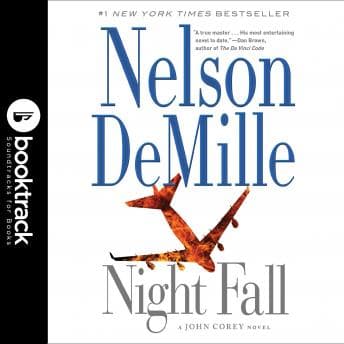

"TWA Flight 800 went down on July 17, 1996, and the FBI wants you to believe a fuel tank blew up all by itself."
That's essentially the premise DeMille drops on you in the first hour, and if you were anywhere near the military or intelligence community in the late '90s, your ears perk up immediately. I was driving back from a client site in San Antonio - two hours of I-35 at dusk, the sky going orange over the Hill Country - and something about that fading light while listening to John Corey stand on a Long Island beach staring at the Atlantic hit me in a way I wasn't expecting.
The Case File Nobody Wanted Opened
Let me cut to the chase: DeMille takes the real-world controversy around TWA Flight 800 and builds a thriller around it that's equal parts conspiracy procedural and buddy-cop tension between Corey and his FBI wife Kate Mayfield. The hook is brilliant - a couple filming their affair on a beach accidentally captures the last moments of the doomed airliner on video. Five years later, that tape is still out there, and somebody powerful doesn't want it found.
What got me is how DeMille - himself a Vietnam vet - understands the institutional machinery of cover-ups. Not the Hollywood version where shadowy men in black SUVs chase you through alleys, but the real kind. The bureaucratic kind. Where your boss tells you to drop it, your file access gets revoked, and suddenly your career is the hostage. I've seen this scenario play out in real life, maybe not with airline crashes, but with inconvenient truths that make senior leadership uncomfortable. DeMille nails the suffocating feeling of knowing something's wrong and having every official channel tell you to shut up and color.
Corey's voice is what carries this book. He's a wise-guy New York cop type who got reassigned to the Anti-Terrorist Task Force, and his internal monologue is half detective work, half standup routine. The sarcasm is sharp without being cute - there's a weariness underneath it that feels earned. Confessions on the 7:45 has a protagonist who carries that same kind of quiet, load-bearing exhaustion underneath her sharper moments - different genre, but the same earned weight. When he's pushing back against FBI brass who clearly want this investigation buried, you feel the stubbornness of a guy who's been told "no" by people with more stars on their shoulders and didn't care then either.
Scott Brick and the Breathing Question
Alright, let's talk about the elephant in the room. Scott Brick is polarizing. I know this because I've listened to him before, and I have feelings.
Here's what works: Brick IS John Corey in this performance. The sarcastic New York edge, the dry delivery when Corey's internally roasting some FBI bureaucrat - Brick handles that tonal balance well. He colors the character with just enough attitude that you can hear the eye-roll without him overselling it. The fight scenes land, and the suspense builds with his pacing in the right moments.
Here's what might drive you nuts: Brick has this breathy, dramatic cadence where sentences rise and fall in almost musical patterns. During the slower investigative stretches - and there are plenty in a 14-hour-47-minute book - that rhythm can start to feel like being rocked to sleep. I bumped to 1.25x (my standard anyway) and it smoothed things out considerably. At normal speed, some of those middle chapters where Corey and Kate are working contacts and reviewing old evidence would've had me nodding off on I-35.
This is the Booktrack Edition, which means there's a musical soundtrack layered underneath. I'll be honest - I barely noticed it most of the time, which is probably the best compliment you can give ambient scoring. It wasn't fighting the narration for attention. A few times during tense sequences I caught a low thrum that added something. But if you're the type who wants pure narration, be aware it's there.
Where the Fuselage Shows Stress Fractures
This is where it lost me a few times: the pacing. DeMille is meticulous with his procedural details, which I respect - the author clearly did his homework on the Flight 800 investigation. But around hours 7 through 10, the book gets bogged down in conversations that could've been tighter. Corey and Kate have the same argument about whether to keep pursuing the case multiple times, and while I get that it's realistic - married couples DO rehash the same fight - it slows the operational tempo.
Also, and this is minor, but Corey's horndog commentary gets old. The man cannot encounter a woman without cataloging her physical attributes like he's filling out a field report. DeMille seems to think this is charming. It's not. It's the literary equivalent of that guy in the unit who couldn't brief without making it weird. Linda walked through while I was listening and caught one of these passages and gave me a look. Thanks, Nelson.
But when DeMille locks in on the conspiracy mechanics - the way evidence disappears, the way witnesses are managed, the institutional pressure to accept the official explanation - the book is genuinely absorbing. The final act picks up speed and delivers.
Mission Debrief
Worth your time? Here's the debrief: if you're interested in the Flight 800 controversy and you like your thrillers wrapped in procedural detail rather than nonstop action, this lands. It's not a book where things explode every chapter (Linda would be surprised I liked it), but the slow burn toward the truth scratches a different itch. Brick's narration will either work for you or it won't - try a sample first if you haven't heard him before.
Skip this if you want fast-twitch military action or if breathy narrators make you want to throw your phone out the car window. Come for this if you like conspiracy thrillers grounded in real events, with a protagonist who's funny enough to keep you company for almost 15 hours.
Ranger slept through the middle third but perked up for the ending. That tracks.