
"The boy-king was surrounded by vipers in human form."
That line hit me somewhere around hour two, sitting in my truck outside a client's office in downtown Austin. I'd finished the security assessment early, had forty minutes to kill, and Patterson's words about court intrigue 3,000 years ago felt uncomfortably familiar. I've seen organizational politics destroy careers—and occasionally lives—in modern institutions. Apparently ancient Egypt wasn't much different. Winston Churchill navigated similar vipers during his political wilderness years, though at least he got to fight back with speeches instead of poison.
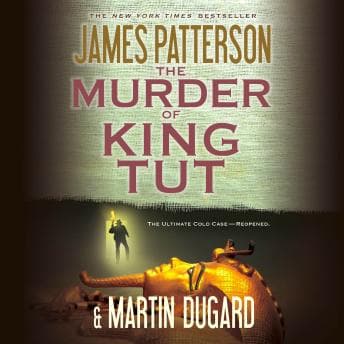
Let me cut to the chase: this is a solid six-hour listen that does exactly what it promises. Patterson and Dugard build a circumstantial case that Tut was murdered, weaving together three distinct timelines—Tut's actual reign, Howard Carter's 1922 discovery, and Patterson's own research process. It's an interesting structural choice that mostly works.
The Three-Front Operation
The book toggles between ancient Egypt, 1920s excavation drama, and modern-day investigation. Patterson's signature short chapters—some barely five minutes long—create a rhythm that keeps you engaged. It's like switching between surveillance feeds. Just when you're deep in palace intrigue with Tut's scheming advisors Ay and Horemheb, you're yanked forward to Carter chiseling through a sealed doorway.
The author clearly did his homework on the forensic evidence. X-rays, bone fragments, the suspicious hole in Tut's skull—they lay it all out like an after-action report. Sergeant York and His People takes a similar investigative approach to historical biography, though Cowan stays more focused on his subject instead of making himself part of the story.
Here's where it lost me occasionally: Patterson keeps inserting himself into the narrative. "I traveled to Egypt..." "I examined the evidence..." Look, I get it. This is nonfiction. But every time we'd build momentum on Tut's story, we'd cut to Patterson being a tourist. Ranger actually lifted his head during one of these transitions, like even he sensed the pacing shift.
Joe Barrett's Mission Profile
Barrett handles the narration competently. He differentiates between the scheming Ay—all oily calculation—and the military man Horemheb with a harder edge that felt right. His female voices are convincing without being cartoonish, which is harder than it sounds.
Fair warning though: his voice for young Tut grated on me. There's a thin, slightly whiny quality to it that—while probably accurate for a child pharaoh who never really got to grow up—made some early scenes feel like nails on a chalkboard. By the time Tut ages into his brief teenage reign, Barrett adjusts, but those first couple hours require patience.
The production is clean. No sound effects or music, just straight narration. I ran it at 1.25x and it flowed perfectly.
Where the Intel Gets Thin
Here's my honest assessment: this reads more like a detailed outline than a fully fleshed-out investigation. Patterson presents compelling circumstantial evidence, but he never quite delivers the prosecutorial slam-dunk the subtitle promises. It's a "nonfiction thriller" that's more speculation than smoking gun.
The strongest sections detail Tut's upbringing—the religious upheaval his father Akhenaten caused, the power vacuum that left a child on the throne surrounded by ambitious men. That's where the book earns its stripes. You understand how a boy-king with no real allies became expendable the moment he tried to exercise actual authority.
The weakest parts? When Patterson tries to manufacture tension about his own research process. "Would the Egyptian authorities grant us access?" Buddy, you're a bestselling author. We know you got the interview.
Who Should Deploy This Book
If you want a quick, accessible introduction to Tut's life and the mystery surrounding his death, this delivers. Six hours is a reasonable commitment—you could knock it out in a week of commutes or a single road trip. Skip it if you're looking for academic rigor or new revelations. The forensic analysis has been largely superseded by later research (DNA analysis, more sophisticated imaging), and Patterson doesn't pretend otherwise. This is history as entertainment, not scholarship. Also skip if Patterson's self-insertion style irritates you. He's very much a character in his own book, and if that's not your thing, you'll be checking your phone constantly.
Mission Debrief
Worth your time? Conditionally. It's a decent introduction to one of history's most famous cold cases, delivered with Patterson's trademark readability. Barrett's narration is professional with minor annoyances. The dual-timeline structure keeps things moving even when the evidence gets thin.
But don't expect the definitive answer the title implies. Patterson builds a plausible case for murder, names his suspects, and... that's about it. No courtroom drama, no confession, no closure. Just 3,000 years of reasonable doubt.
Ranger slept through most of it, which I'm choosing to interpret as peaceful engagement rather than boredom. He's diplomatic like that.








![Steve Jobs [unabridged audiobook] audiobook cover](/_next/image?url=https%3A%2F%2Fcovers.audiobooks.com%2Fimages%2Fcovers%2Ffull%2F9788499923406.jpg&w=1920&q=75)