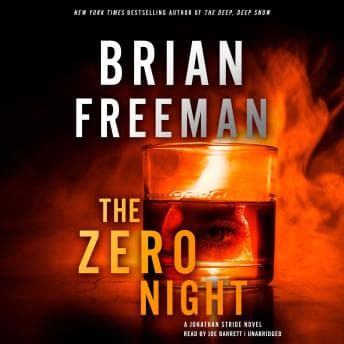

What happens when the detective needs saving more than the victim?
That's the question I kept circling back to during my drives through Austin traffic last week. Zero Night isn't just another kidnapping case - it's a book about people barely holding it together, and Brian Freeman doesn't let you forget it for a second.
When the Case Becomes Personal
Look, I've worked with guys coming back from extended leave. Whether it's medical, combat-related, whatever - that reintegration period is brutal. Freeman nails it with Stride. The man's been out for over a year after taking a bullet, and you can feel the rust. Not just in his investigative instincts, but in everything. His marriage. His confidence. The way he second-guesses decisions that used to be automatic.
The kidnapping plot itself is solid - attorney claims his wife was snatched, pays the ransom, bad guys vanish with the cash and the woman. Classic setup. But here's where Freeman earns his paycheck: you spend half the book wondering if the husband orchestrated the whole thing. And not in a cheap "is he or isn't he" way. The ambiguity feels earned because the evidence genuinely cuts both ways.
Stride's wife Serena is spiraling. Her abusive mother died, and instead of closure, she's drowning. The scene where she pulls her weapon on a fellow cop - that's the kind of moment that ends careers. Freeman doesn't sugarcoat it. Doesn't make excuses. Just shows you a competent woman losing her grip, and it's uncomfortable to witness.
Joe Barrett Carries the Weight
I didn't know much about Joe Barrett before this one. But the man delivers. His Stride has this weathered quality, like someone who's seen too much and is tired of pretending otherwise. The dialogue lands clean, no theatrical nonsense. When Serena's falling apart, Barrett doesn't oversell the emotion. He lets the words do the work.
The pacing stayed steady throughout the ten-plus hours. No dead spots where I zoned out, which - if you've sat through as many audiobooks as I have - you know is rare. Freeman writes tight scenes, and Barrett respects that rhythm. Doesn't drag, doesn't rush.
One thing I appreciated: the distinct voices for each character without going cartoonish. Gavin Webster sounds appropriately slick and evasive. Maggie Bei comes across as sharp but grounded. Ranger perked up during a few of the more intense interrogation scenes. (He's got good instincts.)
Serena's Ghost Hunt
Serena's side quest into the old suicide case could've felt like filler. It doesn't. Freeman ties it into her psychological state so naturally that you understand why she can't let it go. The dead woman's story mirrors Serena's own childhood trauma, and watching her chase that ghost while her marriage crumbles - that's the real tension here.
The conspiracy angle in the main plot builds slowly. Almost too slowly for my taste, but the payoff justified the patience. End Game pulled the same slow-burn approach, and I had the same reaction—impatient during the build, satisfied at the finish. Freeman doesn't cheat with the reveals. Everything connects in ways that make sense when you look back, which is all I ask from a thriller writer. Do your homework, respect your audience, tie up your threads.
Mission Debrief
This isn't a popcorn thriller. It's heavier than that. Nowhere to Run operates in that same weight class—characters carrying damage they can't outrun. Freeman's dealing with addiction, abuse, trauma, and what happens when the people who are supposed to protect others can't protect themselves.
Who's this for: Listeners who appreciate character work alongside their mystery - the kind where you actually care whether these people survive their own bad decisions. If you want wall-to-wall action, this might frustrate you. Skip it if slow-burn investigations test your patience.
The AudioFile Earphones Award isn't just marketing fluff here. The production is clean, Barrett's performance is rock solid, and Freeman's writing rewards attention.
Mission accomplished. Ranger approved this one.