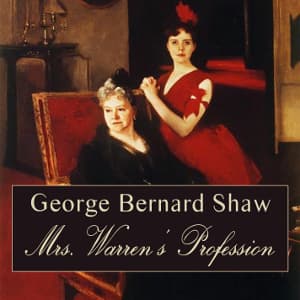

Look, I grabbed this during a particularly brutal stretch of night shifts - three codes in one week, two of them on the same night - and I needed something that wasn't going to require me to remember seventeen character names and a magic system. A two-hour play about Victorian scandal? Perfect. Short enough to finish in two commutes, meaty enough to keep my brain from replaying the sound of chest compressions.
And here's the thing about Shaw that I didn't expect: the man wrote about women's survival choices with more honesty than half the "empowering" memoirs I've listened to this year.
The Gut-Punch That Still Lands
Mrs. Warren runs brothels. That's the big reveal. And yes, in 1893 this was apparently shocking enough to get the play banned. But what actually got me was Vivie's reaction - this Cambridge-educated daughter who has to reconcile her comfortable life with where the money came from.
As someone who's watched families have these conversations in hospital rooms - about end-of-life decisions, about money, about secrets that come out when someone's dying - the dynamic between mother and daughter felt painfully real. Mrs. Warren isn't apologizing. She's explaining. "What else was I supposed to do?" she's basically asking. And Vivie has to sit with that.
The play doesn't give you easy answers. Shaw was apparently a socialist (I had to look that up, don't judge me, I went to nursing school not theater school), and you can feel him poking at the whole system. The men in this play who clutch their pearls about Mrs. Warren's profession? They're profiting from it. The respectable society that would shun her? Built on the same exploitation.
My mom would have opinions about this one. Strong ones. Probably involving the phrase "that's not how a good daughter behaves." But she'd also understand Mrs. Warren's choices more than she'd admit.
The LibriVox Cast (With Caveats)
This is a LibriVox production, which means volunteer readers, which means - look, it's free, and you get what you pay for. But actually? It's better than I expected.
Elizabeth Klett and the rest of the cast do solid work. You can tell who's speaking, the emotional beats land, and the pacing works for a play. Sir George Crofts - the slimy businessman who's been profiting from Mrs. Warren's business while pretending to be respectable - comes across as appropriately gross.
I'm not gonna lie though. There are moments where the audio quality shifts between readers, and if you're used to Audible's polished productions, it might bug you. I've listened to enough LibriVox during overnight charting sessions that I barely notice anymore. Your mileage may vary.
The format actually works here because it's a play. You're supposed to hear different voices. The cast approach makes sense.
130 Years Later, Same Arguments
Here's what I kept thinking about on my drive home: Shaw wrote this over 130 years ago, and we're still having the same arguments.
Women who make uncomfortable choices to survive. Society that judges them while benefiting from their labor. Daughters who have to decide whether to accept their mothers' complicated histories or reject them entirely.
I've had patients - women who've worked jobs they're not proud of, who've made choices that kept their kids fed. And I've watched their adult children struggle with the same thing Vivie does. Do you understand? Do you forgive? Can you do both?
The language is dated, sure. Victorian English takes some adjusting to. But the core of it? Still relevant. Still uncomfortable. Still worth sitting with.
Your Call
If you're into classic plays and you've got a short commute, this is a solid pick. Theater people will appreciate hearing it performed rather than reading it flat on a page. And honestly, if you're interested in early feminist writing that doesn't sugarcoat anything, Shaw delivers. After You tackles similarly complicated choices women make, though with a much lighter touch.
Skip it if you need things to move fast, or if you're not in the mood to think about sex work and class and how they intersect. It's not graphic - this is Victorian theater, not HBO - but the themes are there.
Carlos asked why I was quiet when I got home after finishing this one. I blamed being tired. But really I was just thinking about choices. The ones we make. The ones we judge. The gap between them.
Two hours well spent. Night shift approved.