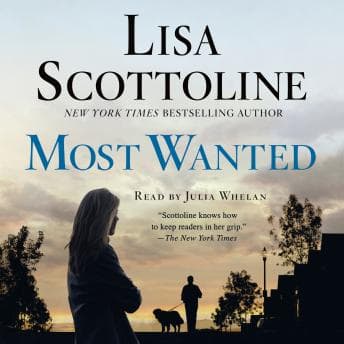

What happens when the thing you wanted most becomes the thing you fear most?
That question kept circling my brain while I listened to this one. I was shelving returns at the library—horror section, naturally—when the premise really sank in. Christine and Marcus finally get pregnant through a donor, they're thrilled, and then... the donor's face shows up on the evening news. Arrested for serial murder. The biological father of your unborn child is a killer.
Look, I consume a lot of dark content. My podcast literally exists to explore the worst things humans can imagine. But this premise? It hit different. Because it's not supernatural. There's no ghost to exorcise, no demon to banish. It's just... genetics. Science. The randomness of who we are and where we come from. That's the real horror here, and Lisa Scottoline understands that horror isn't about gore—it's about dread.
The Slow Burn That Actually Pays Off
I'll be honest—the first chunk of this audiobook tested my patience. Some listeners have called the early chapters monotonous, and I get it. There's a lot of setup. A lot of Christine processing, worrying, spiraling. But here's the thing: that's the point. Scottoline is building something. She's letting you sit in Christine's anxiety, feel the weight of every decision she made that led to this moment.
Around chapter 15, something shifts. The investigation kicks in. Christine stops being a passive victim of circumstance and starts digging. And once that happens? I listened in the dark. Mistake? Maybe. Worth it? Absolutely.
The pacing becomes relentless. Christine's determination to uncover the truth—to know whether her child carries the genes of a monster—drives the narrative forward with genuine urgency. That same relentless energy powers Any Means Necessary, though with higher body counts and international stakes. Is nature vs. nurture a tired debate? Sure. But Scottoline makes it feel personal, immediate, terrifying.
Julia Whelan Does the Heavy Lifting
Let's talk about the narrator. Julia Whelan is one of those performers who commits. That's rare. She creates completely distinct characters through pitch and texture—Marcus with his deeper register, the raspy-voiced Griff, the unsettlingly smooth accused murderer Zach. When the narration is good, it's really good.
But I have to be real with you: some listeners found her male voices annoying. Like, couldn't-continue-listening annoying. I didn't have that problem personally—I thought she navigated the gender shifts pretty well—but if you're sensitive to female narrators voicing male characters, this might pull you out of the story. Sample first. Seriously.
What Whelan does exceptionally well is the emotional delivery. Christine's fear, her desperation, her love for this baby she hasn't even met yet—it all comes through. There's a vulnerability in the performance that makes the ethical dilemma feel real rather than hypothetical. You're not just hearing about Christine's crisis. You're living it with her.
Domestic Horror in a Legal Thriller's Clothes
Here's what my podcast listeners are going to love about this: it's not a traditional thriller. It's domestic horror wearing a legal thriller's clothes. The violence isn't the scary part. The murders aren't the scary part. The scary part is the question Christine can't stop asking: Is evil inherited?
Scottoline doesn't give you easy answers, which I respect. She's not here to tell you that love conquers all or that nurture always wins. She's here to make you uncomfortable. To make you sit with the possibility that some things can't be fixed, can't be loved away, can't be explained by environment or upbringing.
Shirley (my cat) was unimpressed. I was terrified.
Now, some listeners found the plot unrealistic or the execution disappointing. And sure, there are moments where you have to suspend disbelief. Christine makes some choices that had me muttering "girl, no" at my phone. But honestly? People in crisis make stupid decisions. That felt authentic to me.
Who This Is For (And Who Should Run)
If you're into legal thrillers, domestic suspense, or ethical dilemmas that don't have clean resolutions—this is for you. If you appreciate strong female protagonists who refuse to be passive in their own stories—this is for you. If you want something to consume during a long commute that'll make you miss your exit because you're too absorbed—definitely this.
Skip if you need your thrillers airtight and hyper-realistic. Skip if you're impatient with slow builds. And if female narrators doing male voices is a dealbreaker? Sample first, I'm begging you.
Content warning: there's violence, references to sexual assault, murder (obviously), and a lot of emotional distress. This isn't a cozy mystery. This is the kind of book that makes you think about your own family, your own choices, your own fears about what you might pass on to the people you love.
The Librarian's Final Stamp
Horror that respects the genre—even when it's disguised as something else.