
What would you actually do differently if you could split your life at one single decision?
I was editing a video at like 2AM - LED strip on purple, ring light glowing, timeline half-done - and Hannah's two parallel lives were unfolding in my ears simultaneously. Or, well, alternating chapters. And honestly? That structure is what kept me from hitting DNF, because the first half of this audiobook tests your patience like a slow burn that forgot to light the match.
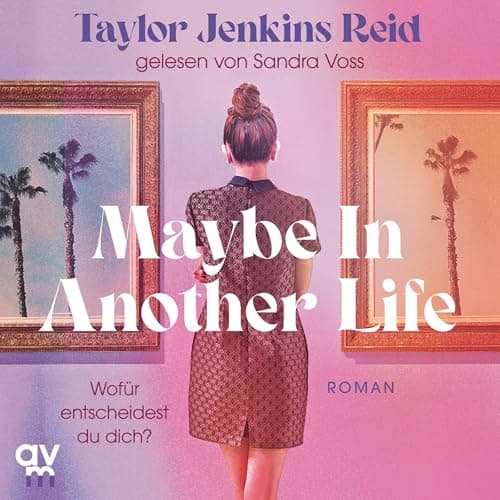
So here's the deal. Taylor Jenkins Reid wrote this before she became the TJR we know from Evelyn Hugo and Daisy Jones, and you can tell. The premise is fire - Hannah runs into her ex Ethan at a bar, and the book splits into two timelines based on whether she stays or leaves. One path gives her Ethan, the other gives her Henry after a brutal accident. Two lives, two loves, same girl. The concept alone had my algorithm screaming. Mistakes Were Made gave me that same dopamine hit from a premise alone — the kind where you're already sold before the first chapter lands.
Two Hannahs, One Problem
The parallel timeline thing sounds like it'd be impossible to mess up, right? Built-in tension. Built-in "what if." But here's where I got frustrated - for the first four-ish hours, both timelines feel weirdly... flat. Hannah in Timeline A is figuring out feelings. Hannah in Timeline B is also figuring out feelings. The contrast isn't sharp enough early on. I kept waiting for the moment where the two lives would feel genuinely different, and it takes way too long to get there.
When it does hit though - the accident timeline specifically - there's real weight to it. The pregnancy, the miscarriage, the way Reid handles what loss does to a relationship when it's brand new. That timeline earned its emotions. The Ethan timeline? Less so. It felt like the safe, predictable rom-com version while the Henry timeline was doing actual heavy lifting.
Sandra Voss Behind the Mic
This is the German translation narrated by Sandra Voss, and I have mixed feelings. Her reading voice is warm and steady - easy to listen to, never grating. But here's my issue: in a book where you're literally living two different lives, I needed more vocal distinction between the timelines. Some shift in energy, in pacing, something to make my brain instantly code-switch between "Ethan world" and "Henry world." Instead it all kind of blends together, which makes those alternating chapters feel less like two separate realities and more like one long story with a guy swap every 20 minutes.
She's solid with the emotional beats in the second half - the hospital scenes, the quiet devastation moments. But the romantic tension? The spice? It's giving "reading aloud nicely" rather than "making me feel this in my chest." I bumped to 1.5x around hour two and honestly that helped the pacing issue significantly. The first half drags at normal speed.
Early TJR vs Peak TJR - You Can Feel the Gap
If you came here because you loved Evelyn Hugo or Daisy Jones & The Six, I need to set expectations. This is Reid before she figured out how to make every single page feel intentional. Maybe In Another Life has a great concept but sometimes reads like a writing exercise - "what if I told the same love story twice?" - rather than the gut-punch storytelling she locked in later. The prose is clean and easy (Babette Schröder's translation flows well), but it doesn't have that signature Reid thing where every detail matters and the ending rewires your brain.
There's something sweet about the core message though. Both timelines eventually land on the idea that Hannah ends up where she's supposed to be regardless of what she chooses. It's comforting in a way that feels earned by the end, even if the journey there needed tighter editing.
The content warnings are real, by the way - miscarriage and cheating are handled with varying degrees of care. The miscarriage storyline genuinely got to me. The cheating stuff felt more like plot mechanics than character exploration.
Who Gets This and Who Bounces
Pick this up if you're a TJR completionist or if the sliding-doors concept is your thing. Skip if you need consistent pacing or if you mostly listen while multitasking - this one requires enough attention to track two timelines but doesn't always reward that attention, especially early on. It's the kind of audiobook that's fine. Not life-changing, not bad. Just... fine. Honestly Infinity Reaper scratched a similar itch for me — decent enough to finish, not going in my top shelf. And sometimes fine is what you need at 2AM when your video export is at 47%.
My Final Take: Worth the Hours?
Ten and a half hours is a lot to invest in a book that only really clicks in the back half. Sandra Voss delivers a clean, professional narration that works but doesn't elevate. The concept carries it further than the execution probably deserves. If you've got an Audible credit burning a hole in your library, there are stronger TJR audiobooks to spend it on. But if you're streaming this on a subscription service? Sure. Let it play. The second half pays off enough that you won't regret sticking around.