
Look, I need to preface this by saying I'm a software engineer. I debug distributed systems for a living. I believe in logs, metrics, and reproducible results. So when I tell you I listened to a book about past-life regression therapy and didn't immediately throw my phone out the Caltrain window? That's saying something.
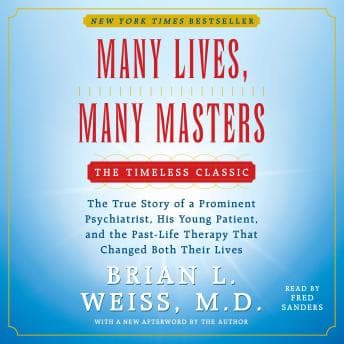
Dr. Brian Weiss opens with his credentials - Yale, Columbia, chairman of psychiatry at Mount Sinai - basically establishing that he's not some woo-woo crystal healer. He's a skeptic. Was a skeptic. And then his patient Catherine started describing ancient Egypt under hypnosis, and things got weird.
The Engineer's Dilemma
Here's my problem with this book, and also why I couldn't stop listening: the data is anecdotal. N=1. No control group. No peer review. If someone brought me this as a bug report, I'd close it as "cannot reproduce."
But.
The way Weiss describes his own resistance, his slow erosion of certainty - that felt honest. He's not trying to convert you. He's basically saying "this happened, I can't explain it, here's the raw output." And when Catherine starts channeling messages that include specific details about Weiss's dead son? Details she couldn't have known?
(I got chills on a packed 6:47 AM train. The guy next to me definitely noticed.)
The book is essentially a case study. Catherine comes in with anxiety and phobias, traditional therapy isn't working, Weiss tries hypnosis, and suddenly she's describing drowning in a flood 4,000 years ago. Then she's a servant in 18th century Spain. Then she's relaying messages from "the Masters" - these entities in the space between lives.
Is it real? I genuinely don't know. But Weiss isn't asking you to believe. He's just... reporting.
Fred Sanders and the Calm Delivery Problem
Okay, so Fred Sanders. His narration is clean. Clear enunciation. Good pacing. Perfect for absorbing information without strain - which matters when you're half-asleep and the train is doing that thing where it lurches every 30 seconds.
But here's the trade-off: the guy is monotone. Like, aggressively calm. When Catherine is describing being burned alive in a past life, Sanders reads it with the same energy as a weather report. "Partly cloudy with a chance of existential terror."
For some people, this will work. The material is already emotionally loaded - you don't need the narrator adding drama on top. For others? It might feel flat. I've seen reviews where people straight up said his voice irritated them.
Personally, I was fine with it. I listened at 1.5x (my default for non-fiction), and the calm delivery actually helped me process the more out-there concepts without feeling manipulated. But if you need dynamic narration to stay engaged, maybe sample first.
The ROI Question
At 5 hours 50 minutes, this is a quick listen. I finished it in three commutes plus one late-night debugging session where the build was taking forever. (Don't ask.)
The question is: what do you get out of it?
If you're looking for scientific proof of reincarnation - not here. If you want a rigorous methodology you can apply to your own life - also not here. This isn't a self-help book with actionable frameworks. It's more like... a puzzle piece. Something that makes you go "huh" and then think about it for the next week.
I found myself Googling past-life regression at 1 AM. Reading about Ian Stevenson's research at UVA. Going down rabbit holes I never expected to enter. That same intellectual curiosity pull—where you end up questioning assumptions you didn't know you had—is what I got from Caste, though it tackles social structures instead of consciousness. So in terms of sparking curiosity? High ROI.
In terms of practical application? Meh. Unless you're a therapist interested in alternative modalities, there's not much to implement.
Who This Is (and Isn't) For
Perfect for: long commutes, gym sessions, anyone who's ever wondered "what if consciousness isn't what we think it is" while staring at a particularly gnarly stack trace at 2 AM.
Skip if: you need hard evidence before entertaining ideas, you require emotionally dynamic narration, or you're going to be annoyed by the lack of scientific rigor.
Closing the Ticket
I'm giving this 3.5 stars. It's not life-changing, but it's interesting. It challenged some assumptions I didn't know I had. And honestly? On a packed Caltrain surrounded by other tech zombies, a book that makes you question the nature of reality is a nice change from yet another startup founder telling you to optimize your morning routine.
Would I listen again? Probably not. But I'm glad I listened once. And I'm definitely going to bring it up at our next team dinner just to see Kevin's face.