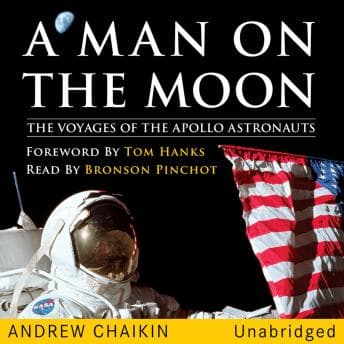

I was stuck at the Millbrae station at 11 PM after a delayed train when I finally finished this monster. Twenty-three hours. That's roughly eleven round-trip commutes, or one really bad on-call week where sleep becomes optional. And honestly? I'd do it again.
Chaikin spent eight years interviewing 23 of the 24 people who actually went to the moon. Eight years. That's longer than the entire Apollo program from Kennedy's speech to Apollo 11. The man basically became a human tape recorder for the most ambitious engineering project in human history, and it shows.
The Engineering Porn Is Real
Look, I debug distributed systems for a living. I understand complex systems failing in spectacular ways. But nothing - nothing - prepared me for the sheer audacity of what these people attempted with 1960s technology. Chaikin doesn't just tell you they landed on the moon. He walks you through the guidance computer that had less processing power than my coffee maker, the fuel margins that would make any modern PM have a panic attack, and the backup procedures that were essentially "if this fails, you die."
The lunar touchdown sequences genuinely had me holding my breath on a packed 6 AM train. There's this moment during Apollo 11 where Armstrong is manually flying the LEM because the computer is taking them toward a boulder field, and he's got maybe 25 seconds of fuel left. Chaikin builds this tension not through dramatization but through the actual radio transcripts, the actual telemetry, the actual sweat on the actual foreheads. The science holds up because it's not science - it's history, painstakingly reconstructed.
Pinchot: A Narrator Who Over-Engineers His Delivery
Okay, here's where I'm genuinely conflicted. Bronson Pinchot won an Audie for this. He's got this warm, engaging timbre that matches Chaikin's prose really well. When he's narrating the human moments - the astronauts' families, the quiet terror of the engineers in Mission Control - he's fantastic.
But.
Every time there's a technical detail, he leans into it like he's reading a dramatic reveal. "The spacecraft was traveling at TWENTY-FOUR THOUSAND miles per hour." "They had SIXTEEN seconds of fuel remaining." After about hour five, I started noticing it. By hour fifteen, I was bracing for it. It's like someone told him "emphasize the important parts" and he decided every number was the climax of the story.
Is it a dealbreaker? No. Did I occasionally want to yell "I KNOW NUMBERS ARE COOL, BRONSON" at my phone? Also yes. (The guy next to me on the Caltrain definitely thought I was losing it.)
Who Should Listen (And Who Should Skip)
Perfect for: Long commutes, road trips, dedicated listening sessions. This is not a background book. You need to pay attention. If you're the kind of person who watches rocket launches live, who stayed up for the Mars rover landings, who has opinions about the SLS program - this is your book.
Skip if: You want gym background noise or something for housework. You'll zone out, miss critical context, and suddenly wonder why everyone's panicking about a fuel cell. Also skip if you want a quick inspirational summary - at 23 hours, Chaikin goes deep on every mission, every near-miss, every political battle that almost killed the program.
Worth the Fuel Budget
I finished this book with a weird mix of awe and frustration - awe at what humans accomplished with slide rules and guts, frustration that we somehow forgot how to dream that big. Chaikin's work is definitive. Pinchot's narration is good with asterisks. The experience is worth every one of those 23 hours. For a completely different kind of deep dive, Being Mortal gave me that same sense of meticulous research transforming how I think about something fundamental—though Gawande's examining end-of-life care instead of rocket fuel margins.
Just maybe bump it to 1.25x during the technical sections. Your sanity will thank you.





![Steve Jobs [unabridged audiobook] audiobook cover](/_next/image?url=https%3A%2F%2Fcovers.audiobooks.com%2Fimages%2Fcovers%2Ffull%2F9788499923406.jpg&w=1920&q=75)