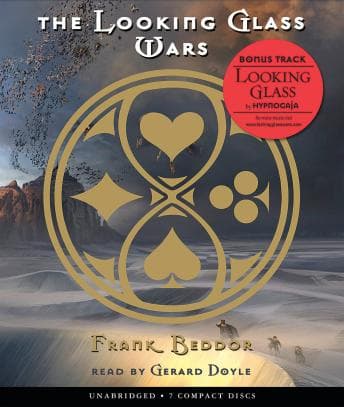

Okay, so here's the thing about reimagined fairy tales - they're everywhere now, and most of them are pretty forgettable. But every once in a while you get one that makes you go "wait, why didn't the original do THIS?" The Looking Glass Wars is that kind of book. And honestly, I should have been writing my thesis the week I listened to this, but instead I was walking around campus with my earbuds in, completely absorbed in a version of Wonderland that actually makes sense as a functioning world.
The World-Building Is Chef's Kiss
Look, I'm a sucker for when someone takes a classic story and builds out an actual magic system around it. Lewis Carroll's original is beautiful chaos - it's supposed to be nonsensical, that's the point. But Beddor asks: what if Wonderland was a real place with real rules? What if "imagination" was literally a power source? What if the Queen of Hearts wasn't just randomly yelling about beheadings but was actually staging a brutal coup?
The answer is you get something that feels like it could sit on a shelf next to Sanderson's cosmere stuff. (Okay, maybe not THAT detailed, but the intent is there.) Imagination as a quantifiable magical ability. The Card Soldiers as an actual military structure. The Cheshire Cat reimagined as Redd's deadly assassin. It's the kind of world-building that makes my D&D brain light up - I kept thinking about how you'd stat out different characters, what their abilities would be.
Alyss Heart as a princess-in-exile is way more compelling than Alice as a confused little girl wandering around. She's got actual stakes, actual trauma, actual character growth. The Victorian London sections where she's trying to convince everyone Wonderland is real, and Lewis Carroll basically steals her story and turns it into nonsense? That's genuinely clever meta-commentary.
Gerard Doyle Brings the Energy
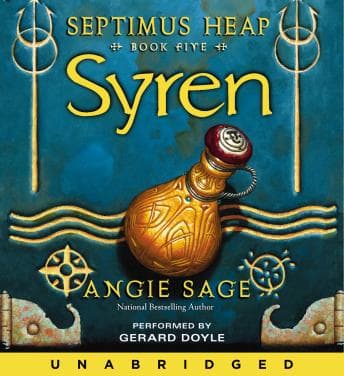
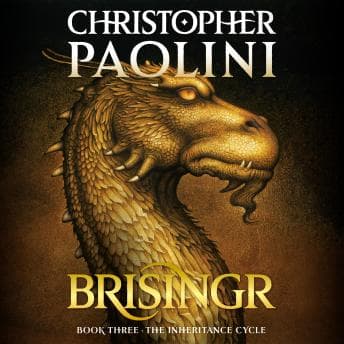
I didn't know much about Gerard Doyle before this. He also narrates the Inheritance Cycle, and his work on Eldest and Brisingr is equally solid—same energy, same commitment to making fantasy worlds feel lived-in. He's not Steven Pacey (but then again, who is?). What he does bring is genuine enthusiasm. The guy sounds like he's having fun, and that energy is infectious. His Redd is properly menacing without going full cartoon villain, and he nails the contrast between Wonderland's fantastical elements and the stiff formality of Victorian England.
Some reviewers apparently found his accent work distracting, but I didn't have that problem. Maybe because I was listening at 1.25x speed while avoiding eye contact with my thesis advisor in the hallway. (Don't judge me.)
The pacing is solid for the most part. There's a middle section in Victorian London that drags a bit - Alyss's years in exile get a little repetitive - but once she's back in Wonderland and the action kicks in, it flies by. The final confrontation with Redd is genuinely exciting.
The "Kids & Family" Label Needs an Asterisk
This is marketed as Kids & Family, and... I mean, technically? It's YA-adjacent at minimum. There's some dark stuff here - Alyss watches her mother get beheaded in the opening chapters. Redd is genuinely terrifying in a way that might be a lot for younger kids. It's not grimdark or anything, but it's definitely not the whimsical tea party vibes of the original.
Also, minor gripe: the book sometimes feels like it's setting up the trilogy a bit too obviously. Certain characters and plot threads are clearly being saved for later installments, which can make the ending feel slightly incomplete. It's not a cliffhanger exactly, but you know there's more coming.
Roll for Initiative (Or Just Hit Play)
The reimagined Wonderland is basically a campaign setting waiting to happen. I'm already thinking about how you'd run a game where imagination is the primary stat. Card Soldier NPCs. The Pool of Tears as a portal mechanic. Redd as a BBEG with actual motivation beyond "I'm evil, lol."
Who should listen: If you're into fantasy world-building, if you like when authors take familiar stories and make them coherent, if you want something action-packed but still has thematic weight about identity and belonging - this is worth your time. Skip it if: you're looking for something that captures Carroll's dreamlike nonsense, or if you want a complete standalone story.
Yes, it's 8+ hours. Yes, there are two more books. Yes, I'm going to listen to them instead of finishing my thesis.
Dr. Patel, if you're reading this somehow, I promise I'm almost done with Chapter 3. Almost.