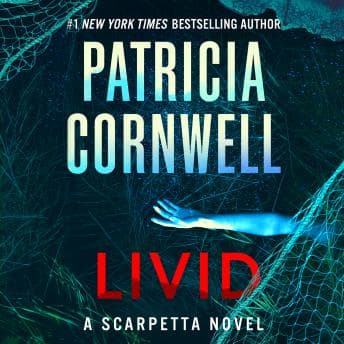

The courtroom scenes in this one hit different when you've spent years watching real medical testimony go sideways.
I was three hours into my shift, unit quiet for once (knock on wood), catching up on charting while Kay Scarpetta took the stand in a sensational murder trial. And I'm sitting there nodding along because Cornwell still knows how to write forensic procedure that doesn't make me want to throw my phone across the nurses' station. The opening chapters are tight—courtroom drama with actual tension, the kind where you forget you're listening to fiction.
Then the judge's sister turns up dead. Garden full of dead plants and insects. Nothing stolen. And Scarpetta recognizes something the rest of us wouldn't—telltale signs of something genuinely terrifying. This is the Patricia Cornwell I remember from the early Scarpetta books. The one who makes you feel like you're learning something while your heart rate climbs.
When the Forensics Actually Make Sense
As someone who's actually worked a code and seen the aftermath of violence that doesn't fit neat categories—the medical details in this book are accurate. Finally. Scarpetta's observations about the crime scene, the way she processes what she's seeing, the clinical precision mixed with human intuition. Cornwell hasn't lost her touch for making autopsy findings feel both scientifically credible and genuinely unsettling.
The mystery itself pulls you back to Scarpetta's past in ways that feel earned rather than manufactured. That same sense of earned tension runs through Terminal List: A Thriller, where the protagonist's past doesn't just inform the plot—it drives every decision. There's a powerful force at work here, and the countdown clock on catching the killer adds genuine urgency. The drive to Rachael's house—that scene had me gripping my steering wheel on the way home even though I wasn't driving yet. Carlos asked why I looked so tense when I walked in. I blamed the coffee.
January LaVoy Gets Scarpetta Right (Mostly)
Here's the thing about LaVoy's narration: her Kay Scarpetta is crisp, clear, authoritative. Exactly how I imagine a chief medical examiner would sound. She nails the regional accents too—there's a Texas drawl that sounds authentic, an Old South smoothness that doesn't veer into caricature, and a flat Midwest tone that made me think of the traveling nurses we get from Ohio.
Each character gets their own cadence and pitch. With a cast this size, that matters. I could tell who was speaking without the attribution, which is harder than it sounds.
But—and this is where I have to be honest—her male voices are weak. Some of them sound almost silly, which undercuts the tension in scenes that should land harder. It's not a dealbreaker, but when you're deep in a tense investigative moment and a male character speaks in a voice that doesn't quite convince, it pulls you out. I noticed it more as the book went on.
The Momentum Problem
This is not how hospitals work—wait, wrong complaint. This is not how pacing should work. Trust me.
The opening chapters are terrific. Gripping courtroom testimony, a shocking discovery, Scarpetta in her element. But somewhere around the middle, the story loses steam. There are political elements and real-world references—Covid, the Ukraine war—that feel shoehorned in rather than organic to the plot. I get that Cornwell wants to ground her books in contemporary reality, but these mentions pulled me out of the story instead of deepening it.
I yelled at my dashboard during this one. Not about medical inaccuracies this time, but about pacing. Unlike Ninth, where I was yelling about both pacing AND the medical stuff that made zero sense. "Get back to the murder!" My car has definitely heard worse, but still.
Who's Going to Love This (And Who Should Maybe Wait)
If you're a longtime Scarpetta fan, this delivers more than some of the middle-series entries. The forensic detail is solid, the central mystery is genuinely intriguing, and LaVoy's narration elevates the courtroom drama. Perfect for that post-shift decompression when you want something engaging but familiar.
If you're new to the series, maybe start earlier. There's enough backstory woven in that you won't be completely lost, but the emotional weight of Scarpetta's past coming back depends on actually knowing that past.
If political asides in your thrillers irritate you, be warned. They're here, and they don't add much.
Night Shift Approved (With Reservations)
This is a solid Scarpetta novel. Not her best, not her worst. The mystery is compelling, the forensics ring true, and LaVoy's performance—despite the male voice issues—keeps you engaged through ten and a half hours. The momentum problems are real, but the payoff is worth pushing through.
My mom would love this. She still thinks I should've been a doctor, but she'd appreciate that at least I'm listening to books about one.