
I was grading sophomore essays on The Great Gatsby at 11:47 PM - the timestamp burned into my brain because I'd just written 'Nick is NOT a reliable narrator, discuss' on the fourteenth paper in a row - when Cedric Errol walked into my headphones and reminded me why I became an English teacher in the first place.
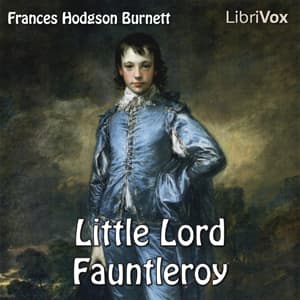
Burnett's Little Lord Fauntleroy is, let me be honest, aggressively sentimental. My students would roll their eyes so hard they'd strain something. But here's the thing about sentimentality that I've learned after twenty years of watching teenagers pretend to read: sometimes sincerity is its own kind of courage. And this book? This book is sincere in a way that feels almost radical now.
The Narrator Lottery (And Why It Matters Here)
This is a 'Various Readers' production, which is LibriVox code for 'your mileage will vary wildly.' The recording features Johanna Ward, Virginia Leishman, Nadia May, and Marilyn Langbehn across different chapters, and the tonal shifts can be jarring. Ward's sections are genuinely beautiful - she has that delicate 19th-century phrasing that lets Burnett's prose breathe. Langbehn brings drama without melodrama, which is harder than it sounds with material this earnest.
But then there's this bizarre thing where American characters from New York's poorer neighborhoods suddenly speak with Cockney intonations? I rewound twice thinking I'd missed something. I hadn't. It's just... a choice someone made. The volume also varies between sections - I found myself adjusting my headphones constantly, which is not ideal when you're also trying to decipher whether a student actually read chapter 3 or just watched the movie.
Virginia Leishman's sections have this quality I can only describe as 'grandmother reading by firelight' - warm, measured, perfect for the material. The inconsistency between narrators means you're essentially getting four different audiobook experiences stitched together.
What Burnett Understood About Goodness
Here's where my English teacher brain kicks in: this novel was doing something in 1885 that we've largely abandoned. Cedric Fauntleroy is good. Not complicated-good, not secretly-good, not good-with-a-dark-past. Just... good. He's kind to the Earl of Dorincourt not because he wants something, but because kindness is simply how he moves through the world.
My students would call him 'too naive' or 'vapid' - and honestly, some listeners have said exactly that. But I think we've become so cynical about virtue that we've forgotten how to recognize it when it's not performed ironically. Cedric's announcement of his inheritance, his interactions with his gruff grandfather - these scenes work because Burnett commits fully. No winking at the audience. No postmodern distance.
Is it corny? Absolutely. But Hemingway said the test of a first-rate intelligence is holding two opposed ideas in mind simultaneously. I can find this corny AND be moved by it. Both things are true.
The Burnett Hierarchy (Let's Be Honest)
If you've listened to The Secret Garden or A Little Princess, you'll notice Fauntleroy lacks their character depth. Mary Lennox has edges. Sara Crewe has steel. Cedric is... well, Cedric is a velvet suit and golden curls and unwavering sweetness. That same kind of uncomplicated goodness shows up in A Man Called Ove, though Ove at least gets to be grumpy about it. The novel set fashion trends when it was published - Reginald Birch's illustrations literally changed how mothers dressed their sons - but it didn't set trends in psychological complexity.
This is Burnett's earlier work, and it shows. The prose deserves to be savored (I listened at 1.0x, as any civilized person should), but the character development is thinner than what she'd achieve later. Worth knowing before you commit six and a half hours.
Who Should Queue This Up (And Who Should Skip)
Best for: bedtime listening, family car trips, or grading papers when you need something that won't demand too much cognitive bandwidth. Teachers of children's literature, Victorian lit enthusiasts, or anyone who wants to remember what it felt like to believe goodness could transform even the crustiest aristocrat.
Skip if: earnest sentimentality makes you itch, or inconsistent audio quality will drive you to distraction.
Denise fell asleep during hour three when I played it on our lakefront walk. But she falls asleep during my Faulkner podcast episodes too, so I'm not taking it personally.
Mr. Williams's Marginalia
This is a historical artifact as much as a novel - a window into Victorian attitudes about class, childhood, and the redemptive power of innocence. The multiple-narrator format means you're getting a patchwork experience. Some patches are silk, some are burlap. But at six hours and no cost through LibriVox, it's worth the listen for anyone curious about where Burnett started before she wrote her masterworks.
My students would hate this. I found it rather charming.