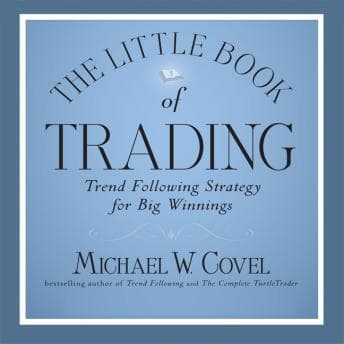

Bottom Line: "The trend is your friend until it ends." Covel drops this about 40 minutes in, and honestly, it's the kind of thing that sounds like a bumper sticker but actually encapsulates the entire philosophy of this book. I listened to this over three commutes - Mountain View and back, plus one gym session - and I kept thinking about how this applies to literally everything in tech, not just trading.
Look, here's the thing: I'm a software engineer, not a day trader. But I've been trying to understand markets better because, well, FAANG stock options and RSUs are a significant chunk of my compensation, and I'd rather not be clueless about what to do with them. Kevin recommended this after I panic-sold during a dip last year (don't @ me, I know).
The System Design of Trading
What grabbed me about Covel's approach is that it's basically systems thinking applied to markets. He interviews traders who've been crushing it for decades, and they all share this common thread: they have rules, they follow the rules, they don't get emotional about the rules. As someone who debugs distributed systems for a living, this hits different. You don't argue with your monitoring alerts because you "feel" like the system is fine. You follow the data.
The book is dense - like, blog-post-that-should-be-a-book in reverse. It's actually packed with useful stuff. Covel covers risk management, position sizing, the psychology of letting winners run and cutting losers fast. Each chapter profiles a different successful trader, which keeps things from getting too theoretical. Real people, real strategies, real results.
But - and this is a big but - Covel can come across as a bit smug. There's this undercurrent of "mutual funds are for suckers" that, while maybe not wrong, gets a little grating after the third time. Like, I get it, you've figured out the secret. You don't need to keep reminding me that everyone else is doing it wrong.
Sean Pratt Does the Heavy Lifting
Sean Pratt narrates, and he's solid. Clear, professional, good pacing. He's not Ray Porter (nobody is), but he gets the job done without getting in the way. Pratt brings that same steady reliability to Body Keeps the Score, though that one requires way more emotional bandwidth. The production is clean - no weird audio issues, no jarring transitions. Perfect for half-asleep 6AM train brain.
Here's what I noticed though: Pratt's delivery can sometimes amplify Covel's smugness. When the author's making a point about how dumb the average investor is, Pratt's professional tone makes it sound even more condescending. Not his fault - he's just reading what's there - but it's noticeable.
At 4 hours 39 minutes, this is a quick listen. I did it at 1.5x and it worked fine. Business books like this rarely need the slower treatment - the concepts aren't that complex, and Covel isn't exactly writing poetry here.
The ROI Calculation
So is it worth your commute time? If you're interested in trading or investing beyond just dumping money into index funds, yeah, probably. The trend following philosophy is genuinely useful, and the trader profiles give you multiple perspectives on how to implement it.
But if you're looking for a step-by-step "here's exactly what to buy" guide, this isn't it. Covel's more interested in teaching you how to think about trading than giving you a fish. That framework-over-tactics approach reminded me of 7 Habits, though Covey was way less smug about it. Which is either frustrating or exactly what you need, depending on where you're at.
For me, the biggest takeaway was the risk management stuff. Position sizing, knowing when to exit, not letting emotions drive decisions. That's applicable way beyond trading - honestly, it's basically incident response for your portfolio.
Would I listen again? Probably not. But I'm glad I listened once. It's one of those books where you absorb the framework and then you're good. The specific trader stories are interesting but not memorable enough for a re-listen.
Who Should Listen (And Who Should Skip)
Queue this up if you're curious about trading philosophy beyond index fund autopilot, or if you've got RSUs and want a mental framework for managing them. Skip if you want specific buy/sell instructions or if smug finance bros make you want to throw your phone out the train window.
Perfect for: train, gym. Skip for: deep work (you'll want to take notes).