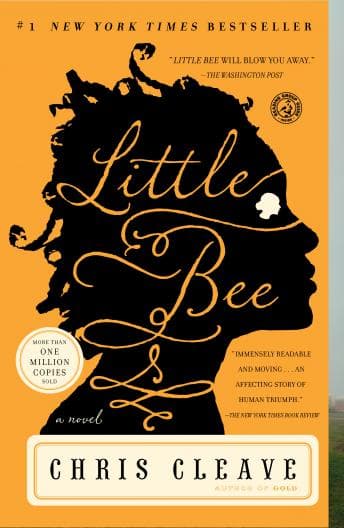

So here's the thing everyone told me about Little Bee: "Don't let anyone tell you what it's about." Which is a great marketing hook and also incredibly annoying when you're trying to decide whether to spend your one precious audiobook credit on it. I'll respect the spirit of that request while still giving you enough to actually make a decision, because we're all busy people here.
I expected a lighter read based on the description's claim that it's "extremely funny." It is funny in places - Little Bee's observations about British life are sharp and weird and wonderful, like when she describes how she'd explain ordinary English things to the girls back home. But funny is not the word I'd use for this book. Gut-punch dressed in a sundress, maybe.
The Book That Made Me Sit in My Driveway for an Extra Twenty Minutes
I started this during Sophie's nap time on a Monday and finished it by Thursday, which tells you something. At 10 hours 41 minutes (closer to 8.5 at my 1.25x), it's the perfect length - substantial enough to feel like you went somewhere, short enough that you don't lose the thread between listening sessions. And you will need that thread, because this book alternates between two narrators: Little Bee, a sixteen-year-old Nigerian refugee, and Sarah, a British magazine editor whose life intersects with Little Bee's in the most devastating way on a beach in Nigeria.
Chris Cleave does something clever with the dual perspectives. Little Bee's chapters are lyrical and strange - she thinks in metaphors that feel both childlike and ancient, always imagining how she'd explain England to the girls from her village. Sarah's chapters are more grounded, messier, full of the chaos of a woman whose marriage is falling apart while she's trying to hold her career together and parent a four-year-old named Charlie who refuses to take off his Batman costume. Charlie in that Batman costume, by the way? That kid is doing more emotional heavy lifting in this story than he has any right to. Every time he showed up I felt something crack in my chest.
The beach scene. I need to talk about the beach scene. It's not where the book opens but it's where everything starts, and when it finally unfolds in full detail, I was parked at the elementary school twenty minutes early and I just... sat there. Windows up. Engine off. The horror of it is that Cleave doesn't make it melodramatic. He makes it quiet and specific and that's so much worse. That same gut-level stillness hit me listening to Absalom, Absalom!—Faulkner makes you sit in the unbearable quiet of a moment until it rearranges something in you. There's a choice that gets made on that beach that haunts every single page after it.
Anne Flosnik Doing the Work of Two Narrators With One Voice
Here's where I might go against the grain. Everyone raves about Flosnik's narration and yes, she's very good - her British accent shifts register between Sarah's educated-but-fraying tone and Little Bee's careful, almost musical English in a way that you always know who's talking. She gives Little Bee this quality that's dreamy and precise at the same time, like someone who learned English from books and is still marveling at the words. It works beautifully for the more poetic passages.
But - and this is me being honest - I sometimes wished for a second narrator. A single voice carrying both a Nigerian teenager and a thirty-something British woman is ambitious, and while Flosnik pulls it off technically, there were moments in the middle stretch where I had to reorient myself after a chapter switch. Survived 47 pauses and still made sense, but barely in a few spots. For a book that depends so heavily on hearing two very different women, I think a dual narration would've elevated this from great to extraordinary.
That said, her emotional delivery in the final act is worth the credit alone. She doesn't oversell it. She lets Cleave's words do the devastating work and just... carries them. I had a completely different experience with Flosnik on Ship of Destiny, where her single-voiced narration across a sprawling cast felt like the only way to hold that world together.
Not the Comfort Read I Thought I Signed Up For
Let me be real: this is not a multitasking book. I tried listening while making dinner once and missed an entire critical conversation because Lucas decided that was the moment to explain Minecraft villager trading mechanics to me. When I went back, I realized this book needs your attention in a way my usual comfort reads don't. The plot isn't complicated, but the emotional layers are. You're tracking guilt and privilege and survival and what it means to actually help someone versus what it means to perform helping someone.
Some people find the second half slow. I get that. Sarah's domestic chaos - the husband situation, the career wobble - feels small next to Little Bee's story of literal survival. But I think that's the point. The discomfort of that imbalance IS the book.
Made me cry at school pickup. Worth it though. (Emma asked why my eyes were red and I said allergies. She did not believe me.)
Who This Is For (And Who Should Steer Clear)
If you want a beach read with a tidy bow, this isn't it. If you can handle content warnings for violence and some genuinely difficult scenes involving refugees and abuse, and you want a book that'll sit in your brain for weeks after - yes. Book club gold, honestly. My book club will love this (if I ever have time for book club again). But save it for focused listening. Car time approved, but only if you're parked.