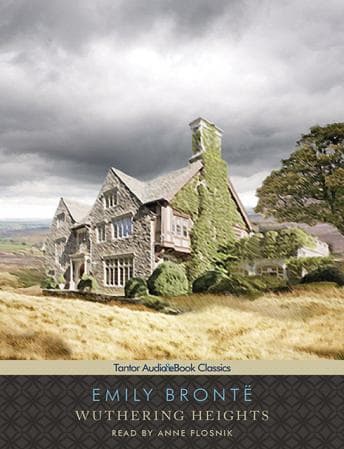

I was grading a stack of junior essays on Jane Eyre - ironic, I know - when I decided to finally give Wuthering Heights another listen. Twenty years of teaching and I still catch new things in Brontë. This time, walking the lakefront with Denise on a particularly gray November afternoon, the moors felt closer than ever. Chicago wind off the lake? Basically Yorkshire weather with better pizza.
Here's the thing about Wuthering Heights that my students never quite get until they're older: it's not a love story. Not really. It's a horror story wearing a love story's clothes. Heathcliff isn't a romantic hero - he's a monster created by cruelty, and Catherine is both his victim and his co-conspirator. The passion between them isn't beautiful. It's destructive. It consumes everyone around them like wildfire. Emily Brontë wrote this at twenty-nine and died a year later, and sometimes I wonder if she knew something about human darkness that takes the rest of us decades to understand.
Why Anne Flosnik Gets It
I've listened to maybe four or five versions of this over the years. Anne Flosnik's narration is the one that finally made me understand why people call this a gothic novel instead of just a romance. She doesn't perform Heathcliff as a brooding Byronic hero - she lets you hear the genuine menace underneath. When he speaks, there's an edge that makes you uncomfortable. Good. You should be uncomfortable.
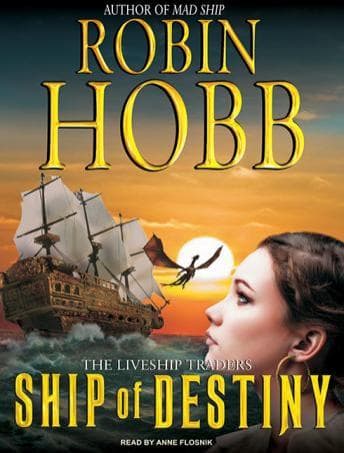
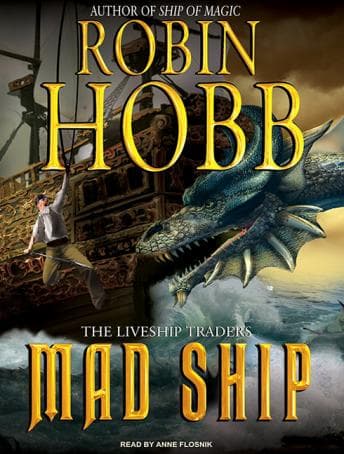
The character differentiation here is genuinely impressive. We've got Nelly Dean as our primary narrator, then Lockwood, then all the Earnshaws and Lintons across two generations - that's a lot of voices to keep straight. Flosnik manages it without going theatrical. She's not doing accents like a one-woman show. Instead, she shifts tone, pace, rhythm. She brings that same nuanced approach to Ship of Magic, where she juggles an entire ship's crew without losing anyone's distinct voice. Joseph's Yorkshire dialect could've been a disaster, but she makes it work without turning him into a caricature.
The pacing deserves mention too. Thirteen hours is a commitment, but Flosnik understands that Brontë's prose needs room to breathe. This isn't a book you speed through. The silences matter. The pauses between Heathcliff's declarations carry as much weight as the words themselves. I listened at 1.0x - yes, my students think I'm ancient for this - and it was exactly right.
Everyone Here Is Terrible (That's the Point)
Look, I'm going to be honest: a lot of people bounce off this book. My students complain every year. "Everyone's so mean." "Why doesn't anyone just talk to each other?" "Heathcliff is toxic." They're not wrong. Every single character in this novel is, at various points, cruel, selfish, or willfully blind. Even Nelly Dean, our supposedly reliable narrator, makes choices that directly contribute to the tragedy.
But that's the point. Brontë isn't giving us heroes to root for. She's showing us what happens when love curdles into obsession, when class systems crush people, when generational trauma goes unaddressed. It's uncomfortable because it's true. I've had former students email me years later saying they finally understood it after their first real heartbreak. (Don't tell my principal I said that. He'd want me to add it to the curriculum objectives.)
Flosnik's narration helps here because she doesn't try to make anyone sympathetic. She trusts the text. When Catherine says "I am Heathcliff," it sounds less like romance and more like possession - which is exactly what Brontë intended.
Who This Is (and Isn't) For
If you're coming to this expecting a cozy romance, you're going to have a bad time. This is gothic literature in the truest sense - wild, uncomfortable, occasionally horrifying. There's domestic abuse, child abuse, emotional manipulation, and what we'd now call stalking. The content warnings are real. Skip this if you need likeable characters or cathartic resolution.
But if you want to understand why we still read the Victorians, why certain novels survive 175 years while others disappear? This is it. The structure alone - the nested narrators, the generational parallels, the way the second half mirrors and inverts the first - it's the kind of thing I spend entire class periods diagramming on whiteboards.
Flosnik's version is particularly good for first-timers because her clarity cuts through the more convoluted passages. And for those of us who've read it before, she finds new emphasis in lines I thought I knew by heart.
Class Dismissed
I finished the last chapter walking past Montrose Harbor at dusk, Denise half a step ahead of me, and I just stood there for a minute watching the water. That ending - the suggestion that maybe, finally, there's peace - hits different when you're older. When you've seen what happens to people who can't let go.
That same quiet devastation about holding on too long shows up in A Man Called Ove, though Backman wraps it in something gentler than Brontë ever would.
My students will hate this recommendation. I love it anyway.