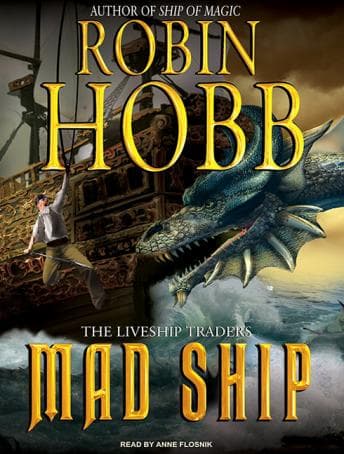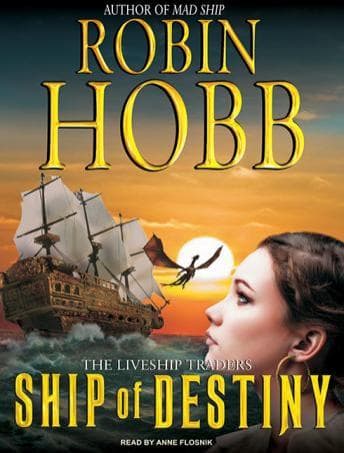

Look, I'll be honest with you. I started this audiobook at 2 AM because I'd just finished a late shift at the library and couldn't sleep. Thirty-three hours later - spread across two weeks of dog walks, dish washing, and one very long power outage - I emerged from the Liveship Traders trilogy feeling like I'd survived something. And I mean that as the highest compliment.
Robin Hobb doesn't write fantasy. She writes horror wearing a fantasy costume, and Ship of Destiny is where she finally takes the mask off.
The Dread That Built for Three Books
Here's the thing about Hobb that horror fans understand instinctively: she's playing a long game. The Liveship Traders trilogy has been building toward something terrible from page one, and this final installment delivers on that promise with the kind of gut-punch revelation that had me pausing the audiobook just to sit with what I'd heard.
The secret of the liveships? I won't spoil it. But when it clicks - when you finally understand what these ships are, what they've always been - it recontextualizes everything. Every moment of connection between ship and sailor becomes something else entirely. Something that sits in your chest like a stone.
This book understands that horror isn't about gore - it's about dread. About the slow, creeping realization that something you loved was never what you thought it was. Shirley Jackson walked so Robin Hobb could run, and I don't say that lightly.
Anne Flosnik: A Narrator Who Commits
Okay, so let's address the elephant in the room. Anne Flosnik is polarizing. I've seen the reviews - "grating," "overdrawn," "can't stand her drawing every sentence out." And I get it. Her style is... a lot. She doesn't just read the book; she performs it, sometimes to the point where you can feel her leaning into every syllable.
But here's my take after 33 hours with her voice in my head: the woman commits. That's rare. And in a story this emotionally demanding, that commitment pays off.
By the final book, something shifted for me. Whether it was Flosnik settling into the characters or me just surrendering to her style, I stopped noticing the quirks. The voices she'd built over three books - Althea's stubborn fire, Kennit's oily charm, Wintrow's quiet devastation - they felt like people I knew. When the emotional moments hit (and they hit hard), her delivery landed.
Is she for everyone? Absolutely not. If you're sensitive to narration style, if you prefer your audiobooks clean and understated, sample first. Seriously. But if you can ride with her choices, she brings something real to this story.
Where the Narrative Shifts
Hobb juggles multiple POVs here - Ronica trying to hold Bingtown together, Althea chasing her stolen ship, Wintrow caught between loyalty and survival, and Kennit being... Kennit. (Ugh. That man. The way Hobb writes him is genuinely unsettling, and I mean that as praise.)
The pacing is Hobb's signature style, which is to say: slow. This is not a fast-paced fantasy romp. There are sections that drag, moments where you're deep in someone's internal monologue wondering when something will happen. But when the action comes? It earns every second of that buildup.
I listened at 1.25x for the slower character sections and dropped back to normal speed for the climactic moments. Worked perfectly.
The Horror Underneath
My podcast listeners are going to love this recommendation, because Ship of Destiny does something few fantasy novels attempt: it treats trauma seriously. The body horror of the liveships, the psychological horror of Kennit's manipulations, the existential horror of identity and memory - it's all here, threaded into what looks like an adventure story about pirates and magic ships.
Shirley (my cat) was unimpressed by my 2 AM listening sessions. I was terrified. Not in a jump-scare way, but in that deep, uncomfortable way where the book makes you think about things you'd rather not examine too closely.
Content warning: there's violence, and there are some genuinely dark themes around trauma and abuse. Hobb doesn't shy away from the hard stuff.
Would I Listen Again?
Honestly? I need a break. This trilogy took something out of me. But yes - eventually, I'll return to it. The kind of fantasy that functions as horror, that uses its genre trappings to explore something genuinely dark about human nature? That's my thing. That's always been my thing.
Who Should Listen (And Who Should Skip)
If you've made it through the first two Liveship books, you're already committed. See it through. The payoff is worth it. Horror fans who want dread over gore, character study over jump scares - this is your book. Skip it if you need fast pacing or can't tolerate a narrator with a big, theatrical style (seriously, sample Flosnik first).
If you're new to Hobb - maybe start with the Farseer trilogy? But know that this is where she's heading. Though if you want epic fantasy that wears its genre more comfortably, Elantris delivers world-building without the psychological gut-punch. Ship of Destiny is what Hobb is capable of. Horror that respects the genre, even when it's wearing a fantasy mask.