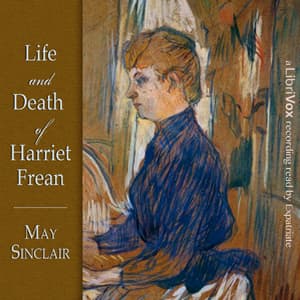

So there I was, 4 AM, the unit finally quiet after a rough code earlier that night, and I'm charting while listening to this tiny book about a woman whose entire life is... waiting. Just waiting. And I'm sitting there thinking about all the patients I've seen who waited too long for something - to call the doctor, to tell someone they loved them, to actually live.
This one hit different.
The Quiet Devastation of Good Behavior
Harriett Frean is raised to be "beautiful and good." That's literally her whole personality. Her parents adore her, she adores them back, and she spends her entire existence trying to live up to this impossible standard of Victorian womanhood. When the man she loves - who's engaged to her best friend - basically offers to leave his fiancée for her, Harriett does the "right thing." She sacrifices her happiness because that's what good girls do.
And then she just... exists. For decades. Caring for aging parents, watching life happen to other people, never really living herself.
May Sinclair wrote this in 1922 and honestly? I've met Harriett Frean. She's the elderly patient who never married, never traveled, never did anything "selfish" in her life, and now she's dying alone in a hospital bed wondering what it was all for. The gentle irony Sinclair uses isn't cruel - it's heartbreaking. She's not mocking Harriett. She's mourning her.
Expatriate Nails the Tone
I couldn't find much about the narrator online, but based on this performance? They understood the assignment. The narration is clear and measured, with just enough ironic distance to let you feel the tragedy without being beaten over the head with it. There's something almost clinical about the delivery that works perfectly - like watching someone's life through a slightly detached lens, which is exactly how Harriett experiences her own existence.
At just over two hours, this is a perfect post-shift listen. I finished it on my drive home and sat in the driveway for a few extra minutes just... processing. Carlos found me there and asked if I was okay. I blamed allergies. (It wasn't allergies.)
The pacing is slow, but intentionally so. This isn't a thriller. It's a character study of a woman who was never allowed to be a full person. If you're looking for plot twists or action, you're in the wrong place. But if you want something that'll make you think about the women in your own family - the aunts who never married, the grandmothers who "sacrificed everything" - this is it.
Who Needs to Hear This (And Who Should Skip)
My mom would love this. She'd also hate it, because she'd recognize too much of her own mother in Harriett - the Filipino Catholic guilt, the expectation that daughters exist to serve, the way women of that generation were taught that wanting things for yourself was selfish.
Perfect for anyone who loves literary fiction with psychological depth. Fans of Virginia Woolf will find familiar territory here - Sinclair was actually pioneering stream-of-consciousness techniques around the same time. If you want that same psychological depth with a more modern setting, Three Sisters explores similar themes of women trapped by expectations. It's a quick listen but not a light one.
Skip it if you need action or if introspective character studies make you antsy. Some listeners find the story slow, and yeah, it is. That's the point. Harriett's life is slow. Uneventful. Wasted.
Clocking Out
I kept thinking about one of my patients from last week - 87 years old, never had kids, spent her whole life taking care of everyone else. She grabbed my hand during vitals and said, "Don't wait to be happy, mija." She'd never read this book, but she lived it.
Night shift approved, but maybe not when you're already feeling fragile. This one stays with you.