
"If an asteroid were heading toward Earth, wouldn't you want to start planning before it arrived?"
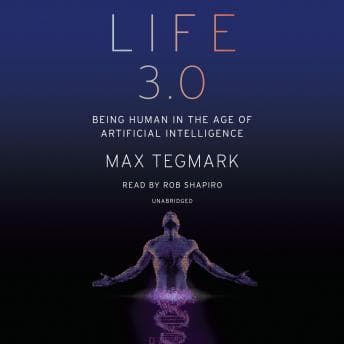
Tegmark drops that analogy somewhere around the two-hour mark, and honestly, it hit different at 1 AM on a Tuesday while I was stress-eating leftover kimchi jjigae and thinking about a client whose entire business model is about to get eaten by GPT wrappers. That's the thing about this book - it was published in 2017, and reading it now feels like finding your dad's journal where he predicted exactly how you'd screw up your twenties.
The Opening Gambit That Actually Earned Its Runtime
Tegmark opens with a fictional scenario - the Omega Team, a group of researchers who quietly build superintelligent AI and use it to take over the world through media companies and financial markets. In 2017, this read like science fiction. In 2024, it reads like a Series A pitch deck I probably evaluated last quarter. The scenario runs for about 45 minutes, and I'll be honest - I almost skipped it because I came here for frameworks, not fiction. Don't skip it. It's the Trojan horse that makes the rest of the book's dense material stick.
What Tegmark does well - and what separates this from the 47 other AI books clogging up Audible right now - is his taxonomy. He breaks AI futures into scenarios with actual names: libertarian utopia, benevolent dictator, zookeeper, 1984. Each one gets serious treatment. He's not cheerleading or doomsaying. He's an MIT physicist laying out possibility spaces like he's mapping a decision tree. This is what my parents did instinctively when they were figuring out whether to open a second dry cleaning location or invest in equipment - they mapped scenarios, they just didn't have fancy names for them. Think Like a Freak operates in that same instinctive-frameworks-with-actual-names sweet spot, and at half the runtime it earns every minute.
Where the Consultant in Me Got Annoyed
Here's my problem: the book is 13 and a half hours long. The core intellectual contribution - the scenario mapping, the alignment problem breakdown, the consciousness discussion - that's maybe 6 hours of material. The rest is Tegmark walking you through physics concepts (entropy, substrate independence, computation theory) that are interesting but feel like he's padding his consulting deck with methodology slides nobody asked for. Chapter 6 on goals and Chapter 7 on consciousness are where the real meat lives. Skip to chapter 5. Thank me later. Or at least skim aggressively through chapters 2-4 unless you need a refresher on how neural networks work, which - if you're picking up this book in 2024 - you probably don't.
The book also suffers from a problem I've seen fail at three different companies: trying to be everything to everyone. It wants to be accessible enough for your uncle who just discovered ChatGPT AND rigorous enough for AI researchers. The result is that technical listeners find it shallow and casual listeners find the physics chapters bewildering. Tegmark is clearly brilliant, but brilliant people sometimes forget that editing is a form of respect. American Icon is a book that figured this out - Mulally's turnaround story is dense with operational detail and it still reads like it was cut by someone who respected your time.
Rob Shapiro Doing Quiet, Professional Work
Rob Shapiro's narration is the audiobook equivalent of a good McKinsey slide - clean, clear, doesn't get in the way of the content. He handles Tegmark's shifts between accessible storytelling (the Omega scenario) and dense technical exposition without making either feel forced. His pacing on the thought experiments - especially the ones about consciousness and what it would feel like to be gradually uploaded - actually helped me process concepts that would've been harder on the page. No vocal pyrotechnics, no dramatic pauses that make you roll your eyes. Just steady, intelligent delivery. For a 13-hour nonfiction listen, that consistency matters more than flair.
Who Gets the ROI Here
If you're a founder or operator trying to figure out how AI changes your industry, this gives you the conceptual vocabulary to think about it seriously. Not the tactical "how to use AI tools" stuff - there are YouTube videos for that. This is the strategic layer. What happens when AI gets better than humans at your core value proposition? What does your contingency plan look like? Tegmark won't answer those questions for your specific business, but he'll give you the mental models to ask them properly.
If you want a technical deep-dive or a practical implementation guide, this isn't it. And if you're already deep in the AI safety community, you've probably absorbed most of these ideas through osmosis.
My wife Jenny would say I'm being harsh when I say a third of this book is skippable. Jenny is right - I'm being harsh. But I'm also being honest. The best parts of Life 3.0 are genuinely excellent, the kind of thing that changes how you think about the next 50 years. The problem is you have to wade through some undergraduate-level physics lectures to get there.
Bottom Line on the Balance Sheet
Bottom line: Tegmark wrote the strategic planning document for humanity's most important transition, then buried it in a textbook. The key takeaway is worth the listen. The other 7 hours? Not so much. At 1.5x speed, you can get the essential insight in a focused afternoon. My 2.0x speed actually worked against me here - some of the consciousness thought experiments need breathing room. Adjust accordingly.








![Steve Jobs [unabridged audiobook] audiobook cover](/_next/image?url=https%3A%2F%2Fcovers.audiobooks.com%2Fimages%2Fcovers%2Ffull%2F9788499923406.jpg&w=1920&q=75)