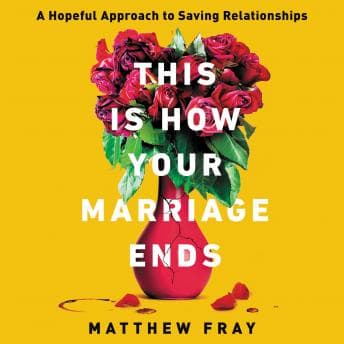

Jenny added this to my Audible queue. No note. No context. Just... there. Between a McKinsey Quarterly audio summary and a book on unit economics. If that's not a message, I don't know what is.
So I listened. At 2.0x first - habit - then dialed it back to 1.5x because Matthew Fray has this way of dropping grenades in the middle of casual anecdotes and I kept having to rewind. The man will be talking about a glass left by the sink and suddenly you're staring at the structural foundation of why marriages collapse. It's disorienting in the best way.
The Dish That Launched Four Million Reads
The famous "She Divorced Me Because I Left the Dishes by the Sink" post - the one that went viral - is basically the thesis compressed into one domestic moment. And Fray's real insight is showing that the dish was never about the dish. It was about what the dish communicated: I don't respect your experience enough to change a small behavior.
As a consultant, I've watched companies die because leadership dismissed small signals from frontline employees. Same pattern. Different scale. Fray is basically doing organizational diagnostics on a marriage, and the diagnosis is: you had all the data, you just refused to read it.
Rob Shapiro narrates, and he makes smart choices. He doesn't try to be Fray - no performative vulnerability, no fake catch-in-the-throat moments. He reads it straight, almost conversational, which lets the content hit harder. When Fray describes the moment he realized his ex-wife had been telling him what was wrong for years and he just... didn't hear it? Shapiro delivers that with a flatness that lands like a punch. Earphones Award winner, and I get why.
I heard shades of that same understated clarity in his narration of Rise and Kill First—a completely different subject, but Shapiro knows how to let facts land without melodrama.Good Guys Make Terrible Husbands (And Managers)
Here's where Fray got me. His core argument is that being a "good person" and being a "good partner" are completely different skill sets. You can be generous, kind, loyal - and still systematically invalidate your spouse because you've never been taught how to listen to someone whose experience differs from yours.
This is what my parents did instinctively. Now it has a TED talk. My mom and dad couldn't articulate attachment theory or differentiate between "dirty pain" and "clean pain." But they showed up. They adjusted. When my mom said something mattered, my dad didn't argue about whether it should matter. He just acted on it. Forty-three years married. No blog required.
Fray takes about three chapters too many to establish his credentials as a reformed bad husband. I get it - credibility matters in this genre. But by hour five I was thinking: okay, I believe you, now give me the framework. And to his credit, he gets there. The sections on what he calls the invalidation triple play - minimizing your partner's emotions, explaining why they shouldn't feel that way, then getting annoyed when they keep feeling it anyway - that's worth the price of admission alone.
I've seen this fail at three different companies. Replace "partner" with "direct report" and it's the same dysfunction.
Who Needs This Book (Be Honest With Yourself)
If you're a guy who's ever said "I didn't know she was that unhappy" after a breakup - this book is your mirror. If you've ever defended yourself with "but I didn't mean to hurt you" as if intent cancels impact - queue this up tonight.
But it's not just for the oblivious husbands. Jenny listened to parts of it with me on a Saturday while we were cleaning the kitchen (the irony wasn't lost on either of us), and she said it helped her articulate things she'd been trying to say differently. So there's that.
The 9-hour runtime is honestly about 6.5 hours of real substance. There's repetition. There's circling back to the same anecdotes with slightly different framing. My 2.0x speed couldn't save the middle section. But the key chapters - particularly where Fray breaks down the concept of trust as a pattern of kept promises, not a feeling - are genuinely sharp.
Skip to chapter 5. Thank me later. Then go back and fill in the earlier stuff if you need the emotional scaffolding.
The Engagement Is Over, Here's the Deliverable
Bottom line: Matthew Fray wrote the relationship book I'd actually recommend to the startup founders I work with. Not because they all need marriage advice (though some definitely do), but because the core skill he's teaching - recognizing that your good intentions don't override someone else's lived experience - is the single most transferable leadership skill I've encountered in self-help.
It's not perfect. It's padded. It occasionally reads like a blog that got stretched into a book, because that's literally what happened. But the raw honesty and the practical framework underneath the personal stories? That's real. That's useful. That's the kind of thing worth slowing down to 1.5x for.
Jenny hasn't said anything about the queue thing. I haven't asked. Some ROI you just accept quietly.