
I started this at 5:47 AM on a Tuesday, wedged between a guy manspreading into my seat and someone's overly fragrant breakfast burrito. By hour three, I'd missed my stop. Twice.
Bottom Line: Worth your commute. This is basically The Big Short but for Detroit, and the ROI on your listening time is genuinely excellent.
The Boeing Guy Who Fixed Cars
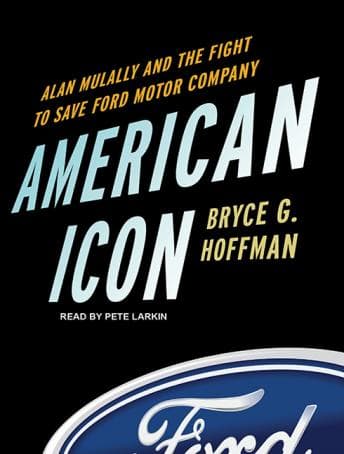
Here's what I didn't expect: this isn't really a car book. It's a systems engineering book wearing automotive paint. Alan Mulally came from Boeing—he literally saved that company after 9/11—and watching him apply aerospace manufacturing principles to Ford's chaos is like watching someone debug a legacy codebase that hasn't been refactored since the 1970s.
The core problem Mulally inherited? Ford had become a collection of warring fiefdoms. The European division hated the American division. Everyone was building different platforms, hiding problems, and playing political games while the company hemorrhaged cash. Mulally's solution was almost embarrassingly simple: weekly Business Plan Review meetings where executives had to show their actual metrics. Red means problem. Green means fine. And for the first time in Ford's history, someone admitted their project was red—and didn't get fired for it.
That moment, when Mark Fields finally put up a red slide about the Edge launch issues, and Mulally started clapping? That's the hinge point of the whole book. Everything changes after that.
Pete Larkin Channels Your Favorite NPR Host
Larkin's got this classic newsman delivery—steady, confident, the kind of voice that makes quarterly earnings sound like war dispatches. He does something clever with the international executives: slight accent variations for the Ford Europe folks versus the Dearborn crowd. Nothing cartoonish, just enough to remind you this is a global company with global dysfunction.
The pacing is relentless. One reviewer said he "never took a breath" and honestly, that's accurate. But for a 15-hour business book, you want that momentum. I bumped it to 1.75x during some of the UAW negotiation chapters—could've been a blog post territory—but the boardroom drama sections? Left those at 1.5x to catch the details.
The Stuff They Don't Put in Business School Cases
Hoffman got unprecedented access here, and it shows. The covert meetings with UAW leadership. Bill Ford calling Toyota and Honda executives to secretly coordinate on keeping suppliers alive during the crash. The family drama when various Fords wanted to just sell their stock and walk away from a century of legacy.
There's a scene where Mulally is negotiating with Congress during the bailout hearings, and he's the only one of the Big Three CEOs who drove to Washington instead of taking a private jet. The optics. The strategy. The fact that Ford ultimately said "no thanks" to taxpayer money while GM and Chrysler took the lifeline. Genuinely gripping corporate theater.
What surprised me most: how much of Ford's turnaround came down to culture, not strategy. Mulally made executives actually talk to each other. He banned the phrase "I'll get back to you on that." He required everyone to know everyone else's business. It's basically implementing code review culture for a 100-year-old manufacturing company. That same tension between transparency and self-preservation drives 48 Laws of Power, though Greene would probably tell Mulally that clapping for someone's red slide violates at least three laws.
Who's This Actually For?
Ideal for anyone who's ever tried to fix a broken organization—or just wondered why big companies make such obviously stupid decisions. If you've read The Big Short or Too Big to Fail and wanted the Detroit version, this is it. Long commutes, gym sessions, anywhere you've got 15 hours to burn.
Skip if: you want car porn. This isn't about the Mustang or the F-150. It's about org charts and quarterly reviews and the boring-but-essential work of making a company function.
The Debug Report
Look, I spend my days fixing distributed systems, and this book reads like a postmortem for a company-wide outage that lasted decades. Mulally's approach—transparency, accountability, forcing people to actually share information—is basically incident response culture applied to automotive manufacturing.
The fact that Ford went from near-bankruptcy to most profitable automaker while everyone else took bailouts? That's not luck. That's someone who understood that the technical problems were secondary to the human ones.
Ray Porter didn't narrate this, but Pete Larkin earns his Audie nomination. And Hoffman's reporting is genuinely excellent—this isn't a puff piece, even when Mulally comes off looking like a management genius. The book acknowledges the luck, the timing, the things that could have gone wrong.
I finished this thinking about my own team's standups and wondering if we're actually being honest about our red slides. Probably not. But now I want to be.