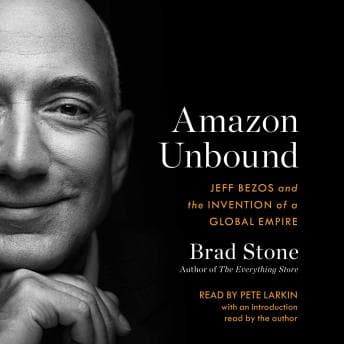

Let me cut to the chase - I've got a bone to pick with Brad Stone. Sixteen and a half hours. Sixteen. And a half. Look, I've sat through briefings that felt longer, but at least those had PowerPoint slides to mock. Stone clearly did his homework - the man's got more inside sources than I had informants in Kandahar - but somewhere around hour twelve, I started wondering if we really needed another deep dive into Bezos's workout routine.
That said? Mission accomplished. Mostly.
The Empire Strikes Everyone
I finished this one during a three-day consulting gig in Houston - lots of highway time between client sites, Ranger snoring in the back seat. And here's the thing about Amazon Unbound: it's not really a business book. It's a war story. Stone maps out how Bezos systematically conquered retail, then streaming, then cloud computing, then logistics, then... basically everything. That kind of relentless strategic thinking shows up in Kybalion too, though applied to mental discipline rather than market dominance. The man runs his company like a military campaign, and Stone documents the casualties.
The sections on AWS and the cloud infrastructure buildout actually grabbed me. Stone explains how Amazon essentially became the backbone of the internet - and how that gives them leverage over competitors who literally can't function without Amazon's servers. Strategic dominance that would make any general jealous. The Whole Foods acquisition chapter reads like a hostile takeover playbook, complete with misdirection and speed of execution.
But then Stone pivots to the tabloid stuff - the divorce, the affair, the leaked texts - and I found myself checking how many hours remained. Some listeners apparently wanted more on acquisitions and innovation, and I'm with them. The personal drama felt like filler in what should've been a tighter operational analysis.
Pete Larkin Holds the Line
Here's where this audiobook earns its stripes. Larkin's narration is professional-grade - emphasis and intonation that actually enhance the content rather than just reading words at you. How to be Heard breaks down exactly why that kind of vocal control matters - it's not just reading, it's communicating with intent. His emotional synchronization with Stone's prose means you feel the tension during the labor disputes, the cold calculation in the boardroom scenes. No weird accent attempts, no stumbling over tech terminology. The man sounds like he could brief a Senate committee.
At 1.25x, Larkin still sounds natural. I'd actually recommend bumping it up - tightens the pacing and shaves a couple hours off that runtime without losing comprehension.
Where It Lost Me
Stone's got access. Clearly. He's talking to executives, board members, people who were in the room. But sometimes that access becomes a liability - he includes everything, whether it advances the narrative or not. There are stretches where you're getting the fourth example of Bezos being demanding when you understood the point three examples ago.
The book also struggles with what it wants to be. Is it a business analysis? A biography? An exposé? It tries to be all three and ends up feeling bloated. I've read after-action reports with better focus. Stone's previous book, The Everything Store, apparently had tighter construction. This sequel has sequel-itis - bigger, longer, but not necessarily better.
Who Should Deploy This (And Who Should Stand Down)
If you're in business leadership, consulting, or just trying to understand how modern tech monopolies operate, this is required reading. The strategic insights are genuinely valuable. If you're fascinated by Bezos specifically - the transformation from geeky founder to tabloid fixture - Stone's got the goods.
Skip it if you want a quick business primer or you've got limited listening time. There's probably a four-hour version of this book trying to escape.
Debrief Complete
Amazon Unbound is a comprehensive intelligence report on the most consequential company of our era. Stone's journalism is solid, his sources are impeccable, and Larkin's narration keeps you engaged even when the material sprawls. It's about an hour too long - maybe two - but the core analysis of how Amazon became Amazon is worth your time.
Ranger approved this one, though he fell asleep during the Washington Post acquisition chapter. Fair enough. Even good intel can have dry patches.