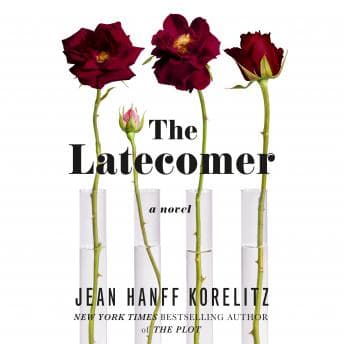

This book is not for the faint of commitment. Sixteen hours and twenty minutes. For context, that's roughly 13 days of my car-in-the-garage sessions, and I felt every single one of them — sometimes in the best way, sometimes in the "wait, which Oppenheimer kid is this again" way.
Let me be honest upfront: The Latecomer is not my usual comfort read. It's dense, it's literary, it's the kind of book where you realize the author is smarter than you and she knows it. But something about the Oppenheimer family kept pulling me back during Sophie's naps (she actually napped this week — I know, mark your calendars).
Three Kids Who Don't Like Each Other? Finally, Some Realism
Here's what got me: Harrison, Lewyn, and Sally are triplets conceived through early IVF, and they genuinely cannot stand each other. Not in the cute sibling-rivalry way. In the "we share a womb but nothing else" way. Korelitz doesn't sugarcoat it. These kids grow up in a Manhattan brownstone with generational wealth and emotional poverty, and each one is quietly, separately miserable. Harrison is rigid and angry, Sally is prickly and secretive in a way that made me want to shake her, and Lewyn is the soft one — the one who gets swept into things because he doesn't know how to hold his own ground.
As someone managing three kids who regularly inform me they wish they were only children, the dynamic hit different. But Korelitz takes it further than relatable bickering. This family is fractured at a molecular level. Salo and Johanna — the parents — met under genuinely tragic circumstances (I won't spoil it, but it sets the tone for everything), and that unprocessed grief just... seeps into every room of the house for decades. American Dirt did something similar to me — that same slow accumulation of dread where the weight of what characters carry never quite leaves the page, or the car.
The September 2001 Birthday Party Scene Will Wreck You
I want to flag one specific scene because it caught me completely off guard during morning drop-off. The triplets' 19th birthday party falls in September 2001. You can probably guess the proximity. The scene itself is ugly — family ugliness, not violence — but the historical backdrop adds this layer of dread that Korelitz handles with a really precise hand. She doesn't exploit the moment. She just lets it sit there while these people are awful to each other, and the contrast is devastating.
Made me cry at school pickup. Worth it though.
The "latecomer" — the fourth child Johanna decides to have once the triplets are off at college — doesn't arrive in the story as quickly as you'd expect. This is a slow build. Like, genuinely slow. The first half is almost entirely backstory and setup, tracing how Salo and Johanna got together, the IVF journey, the kids' childhoods. If you need plot momentum to stay engaged, you might struggle. I paused it probably 60 times over the course of the week (Sophie's teething, Lucas needed help with a puzzle that was clearly designed by sadists) and the slow pace actually helped — I could come back to it without feeling totally lost.
But I won't pretend I wasn't checking how much time was left around the 8-hour mark.
Julia Whelan Carries This Thing on Her Back
Okay, so here's where I got genuinely surprised. Julia Whelan doesn't just read this book — she performs it like a one-woman stage show. Each Oppenheimer gets a distinct emotional texture. Sally sounds clipped and guarded. Lewyn has this softer, more uncertain quality. And Johanna — Whelan plays Johanna with this tight desperation that made me uncomfortable in the best way. You can hear the control fraying.
I've listened to a lot of Julia Whelan (she narrated Evvie Drake Starts Over, which is peak car-time material), and this is her doing something much harder. The book doesn't give her big dramatic monologues. It gives her long, winding passages about family history and art and religion, and she makes all of it land. At 1.25x she still sounds natural, which is my gold standard for narrators.
Who Should Grab This (And Who Should Run)
If you want a quick, breezy listen with a tidy happy ending — this is not it. Not even close. The ending has a twist that I genuinely did not see coming (Korelitz is the author of The Plot, so she knows how to pull the rug), but it's more intellectually satisfying than emotionally warm. I finished it feeling impressed rather than comforted, which is not usually what I'm after.
But if you're in a phase where you want something with real weight — something that treats family dysfunction with honesty instead of wrapping it up in a Hallmark bow — this is excellent. My book club will love this (if I ever have time for book club again).
The Mom Review: Would I Listen Again at 11 PM in the Garage?
Honestly? Probably not. But I'm really glad I listened once. It's the kind of book that makes you feel like you did something with your brain besides remember snack schedules and dentist appointments. Not groundbreaking in a flashy way, but quietly, stubbornly smart. Survived 47 pauses and still made sense — which for a 16-hour literary novel is genuinely impressive. Just know what you're signing up for.