
What happens when the thing you've spent your career protecting - civilization, culture, the accumulated weight of human knowledge - just stops existing? Not metaphorically, the way my students think reading is dead. Actually stops.
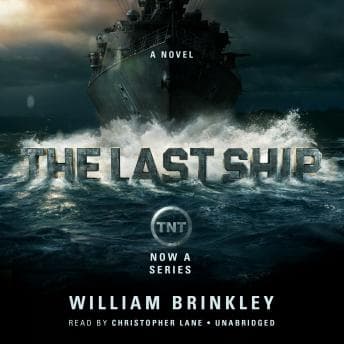
I spent three weeks with William Brinkley's The Last Ship, and I need to talk about it. Thirty hours. That's longer than most of my students have spent reading anything voluntarily in their entire high school careers. And I'm not going to pretend every one of those hours was riveting, because they weren't. But the ones that were? They hit like the last page of On the Beach - that slow, creeping certainty that there's no cavalry coming.
The Captain's Log as American Novel
Brinkley was a reporter - Washington Post, Life magazine - and you feel it in the prose. The novel reads like a captain's log written by someone who studied under Melville and took notes during the Cuban Missile Crisis. I found myself thinking about civilizational weight the same way I did reading Storm Before the Storm — that particular dread of watching an entire order of things come apart from the inside, narrated by someone who understands exactly what's being lost. Captain Thomas narrates with this deliberate, almost ceremonial formality that some readers will find insufferable and others will recognize as exactly how a man trained to command a warship would process the end of everything. I found myself thinking about this the way I think about Faulkner's longer sentences - the density IS the point. The author chose those words, chose that pace, because the weight of what's happening demands it.
The setup is deceptively simple: nuclear war has happened, the USS Nathan James survives, 152 men and 26 women sail looking for habitable land. But Brinkley isn't really writing a survival thriller. He's writing about what happens to human social structures when the structures that gave them meaning evaporate. The chapters dealing with the crew's dawning realization that reproduction might be impossible - that they might literally be watching the species end - those sections carried a quiet horror that stayed with me during a Saturday morning walk along the lakefront with Denise. She asked why I was so quiet. I told her I was thinking about the end of the world. She said, "Again?" Fair enough.
What's really being said here, underneath the naval procedural and the post-apocalyptic framework, is something about the fragility of order. The mutiny threads, the sexual politics that emerge when 26 women become humanity's only hope for continuation - Brinkley doesn't flinch from how ugly and how desperately human those calculations get. My students would hate this. I love it. (Though I'll admit the sex scene everyone mentions is genuinely uncomfortable in audio form - more on that in a moment.)
Christopher Lane at the Helm - Mostly
Christopher Lane has won Audies, and you can hear why in his Captain Thomas. The voice carries command and weariness in equal measure - that particular exhaustion of someone who's been responsible for other people's lives long enough that the responsibility has fused with their identity. Lane IS the Captain in the same way that a great stage actor becomes Lear. When Thomas processes grief, or makes an impossible decision, Lane finds these small pauses - the narrator understands that pause is punctuation - and they land.
But here's where I have to be honest: thirty hours is a long time, and Lane doesn't always sustain the energy. There are stretches, particularly in the mid-section navigation and technical passages, where the delivery flattens into something approaching monotone. I was grading a stack of junior essays around hour sixteen, and I caught myself re-reading the same paragraph of student work three times because I'd drifted. The narration had become ambient. His female characters also lack distinction - the women sound like slightly softer versions of the men, which in a book where the women's biological reality drives the entire third act, feels like a real miss.
That said, the emotional peaks? Genuinely affecting. There's a reason some listeners report tears. Lane earns those moments by playing the restraint so carefully that when emotion breaks through the Captain's composure, you feel the fracture.
Who Should Commit Thirty Hours
This is for the patient reader. The person who picked up Moby-Dick and didn't skip the cetology chapters. The person who listens to podcasts at 1.0x. (My people.) If you loved Alas, Babylon or On the Beach, this is their spiritual successor - slower, more interior, more concerned with the philosophy of survival than the mechanics of it.
If you're coming from the TNT series expecting action set pieces and Michael Bay pacing, you will be profoundly disappointed. The novel and the show share a title and a ship name and that's about where the resemblance ends.
Skip this if you need plot momentum to stay engaged, or if you listen primarily during workouts or errands. This demands focus. Background listening will turn it into white noise, and you'll miss the passages that make the commitment worthwhile.
Worth Pausing the Faculty Meeting For
Thirty hours is an enormous ask. I won't pretend The Last Ship justifies every one of them. But the best stretches - and there are many - accomplish something rare: they make you sit with extinction not as spectacle but as grief. Brinkley wrote this in 1988, before post-apocalyptic fiction became a YA subgenre, and the seriousness shows. It's a flawed, overlong, sometimes plodding novel that also happens to contain passages of genuine power about what we owe each other when there's nothing left to enforce the debt.
The prose deserves to be savored. Even when it tests your patience. Especially then.