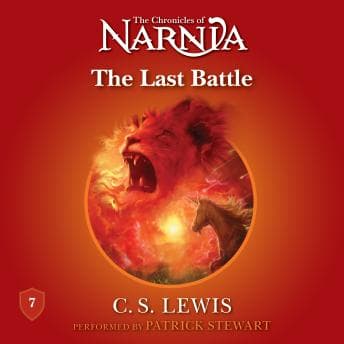

I need to vent about something before we get into this. C.S. Lewis wrote seven Narnia books, and he saved the most theologically heavy-handed one for last. The Last Battle is essentially Revelation for kids, complete with a false prophet (a donkey in a lion skin, which - okay, that's actually pretty clever), the end of the world, and a final judgment scene. My students would roll their eyes so hard they'd sprain something. And yet. And yet here I am, a grown man who teaches Hemingway and Faulkner, getting genuinely emotional during my morning walk along the lakefront because Patrick Stewart is describing the end of a fictional world I haven't thought about since I was twelve.
That's the power of good narration. That's what we're here to talk about.
When Shakespeare's Captain Reads Your Childhood
Patrick Stewart narrating Narnia feels like a gift I didn't know I needed. The man has spent decades on stages performing Shakespeare, and he brings that same gravitas to a children's book about talking animals. But here's what makes it work - he doesn't condescend. Not once. He reads Lewis's prose like it matters, because it does. The sentences are given room to breathe. The pauses land where they should.
His Shift the Ape is particularly inspired - this wheedling, manipulative voice that made me genuinely uncomfortable. (Don't tell my wife I was muttering "you little weasel" at a fictional ape while we walked past the Navy Pier.) And when he voices Aslan, there's this warmth underneath the authority that just... works. It's not booming. It's not theatrical. It's almost gentle, which makes the weight of what's happening hit harder.
At under five hours, this is a short listen. I finished it in two walks and one very long faculty meeting about standardized testing. (Sorry, Principal Martinez. The budget can wait when the world is ending.)
The Allegory Problem - And Why It Doesn't Matter Here
Let's address the elephant in the room. Or the lion. Whatever. This book is not subtle. Lewis basically wrote a children's version of the apocalypse, and if you're allergic to Christian allegory, you're going to have a rough time. The Calormene god Tash is pretty clearly meant to be a false deity, the final judgment scene is... well, it's a judgment scene. Some listeners find this heavy-handed. They're not wrong.
But here's the thing - and this is the English teacher in me talking - allegory isn't automatically bad. It's a tool. And Lewis, whatever you think of his theology, knew how to wield it. The scene where the dwarfs refuse to see the beauty around them because they've decided nothing is real? That's not just religious commentary. That's a meditation on cynicism itself. On choosing not to believe in anything because you've been burned before. Blood of the Covenant explores that same kind of disillusionment, though in a much darker fantasy setting. I've seen that in students. I've felt it in myself.
Stewart reads these moments with such conviction that even the most obvious symbolism lands. He trusts the material, and that trust is contagious.
The Ending That Still Gets Me
I'm going to be careful here because spoilers for a 1956 book feel silly, but also - some people are coming to this fresh. The ending is controversial. Characters die. Not metaphorically. Actually die. And then there's what happens after, which some readers find beautiful and others find disturbing. (The Susan thing still sparks debates in literary circles. Don't get me started.)
What I will say is that Stewart's reading of the final chapters gave me chills. There's a line about going "further up and further in" that he delivers with this building joy that made me stop walking entirely. Just stood there by the lake like an idiot, staring at nothing, feeling something I couldn't quite name.
Is it the best Narnia book? Probably not. The Voyage of the Dawn Treader has better pacing. The Lion, the Witch and the Wardrobe has more iconic moments. But as an ending? As a way to close out a world you've grown to love? It's earned.
Who This Is For (And Who Should Skip)
This is for people who grew up with Narnia and want to revisit it with adult ears. It's for parents who want to share something meaningful with their kids but don't have time to read aloud anymore. It's for anyone who appreciates narration as performance art - because that's what Stewart delivers.
If you're looking for a complex plot with surprising twists, this isn't it. The story is fairly simple, almost rushed in places. The villain is more pathetic than threatening. But the emotional core is solid, and Stewart's voice carries it beautifully.
Skip if you need your fantasy secular, or if heavy allegory makes you itchy. That's fair. Not every book is for every reader.
Class Dismissed
If you're willing to meet Lewis where he is - a man writing about endings, about hope, about what might come after - this audiobook is worth your five hours. I listened at 1.0x because the prose deserves to be savored. My students would call me ancient for that. They'd be right. I don't care.