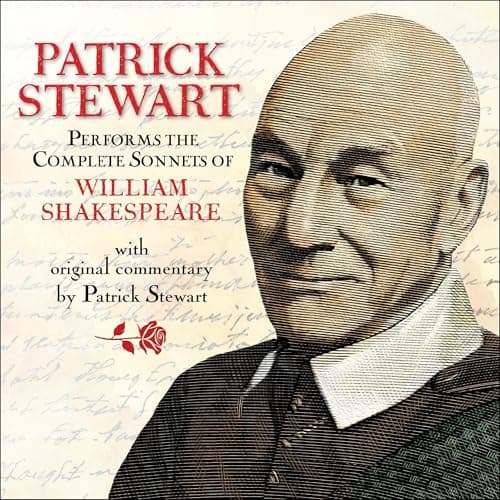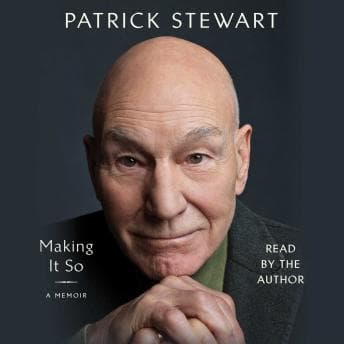

Everyone says this is a must-listen. The Audie Award, the bestseller lists, the Picard superfans losing their minds. I went in skeptical. Nearly 19 hours for a celebrity memoir? That's a commitment I wouldn't make for most McKinsey engagement reports, and those actually pay me.
I was wrong. Mostly.
The Yorkshire Kid Who Outworked Hollywood
Here's what got me: Patrick Stewart's childhood in Yorkshire isn't some quaint British origin story. His father was violent. His mother absorbed the abuse. Stewart grew up in a working-class household where money was tight and tempers were shorter. And he tells you about it with this quiet, measured honesty that hit me harder than I expected.
I was at my desk at 11 PM working through a client's burn rate projections when the early chapters started rolling. Stewart's describing his father's rages, the way his mother would go quiet afterward, and I just - stopped typing. Because I recognized something in those 14-hour days, in that specific brand of immigrant-adjacent hustle where you work until the work is done and you don't complain about it. Stewart's parents weren't Korean dry cleaners in Koreatown, but the economics of survival sound the same in any accent.
This is what my parents did instinctively. Now it has a TED talk. Except Stewart doesn't give you the TED talk. He gives you the memory of being a kid watching his father and not understanding yet what he was seeing. That restraint is worth more than a hundred LinkedIn posts about "resilience."
19 Hours Is a Lot of Memoir (And He Earns About 14 of Them)
Let me be honest: there's padding. Stewart's recounting of every regional theater production in 1960s England gets granular in a way that'll test your patience. There are stretches - particularly in the middle third covering his Royal Shakespeare Company years - where I felt like I was reading someone's very thorough CV out loud. How many times can you hear about a Hamlet run in a different city before you start wondering if you left the stove on?
But then he'll drop something like the story of touring with Vivien Leigh as a young actor, and you remember you're listening to a man who literally stood next to living legends before he became one himself. The Star Trek audition story is gold - the specific anxiety of a classically trained Shakespearean actor walking into a sci-fi casting call, convinced he's about to humiliate himself. You can hear the self-deprecation in his voice when he talks about it, this little Yorkshire dryness that 40 years in Hollywood never quite polished away.
The final third picks up real momentum. His reflections on his third marriage, on finding genuine happiness late in life - Stewart's voice actually changes. Gets warmer. Lighter. It's subtle, but when you've been listening to the man for 15 hours, you notice.
My 2.0x speed couldn't save this one. And I mean that as a compliment. At 2.0x, Stewart sounds like an auctioneer at Sotheby's. I dropped to 1.25x and suddenly I was sitting in a theater listening to a masterclass in vocal delivery. The man's pacing is intentional. He pauses where a lesser narrator would rush. His Yorkshire vowels round out differently when he's describing pain versus joy. You lose all of that at double speed.
Why a Business Guy Cares About an Actor's Memoir
I've spent my career watching founders build things. The ones who last aren't the ones with the best pitch decks - they're the ones who survived something before they ever started a company. Stewart's memoir is basically a case study in career compounding: decades of unglamorous stage work that nobody outside London cared about, followed by sudden explosive mainstream success in his late 40s with Star Trek.
That's not an accident. That's the compound interest of showing up.
Some listeners found his family portrayal selfish, and I get it. He's honest about being a largely absent father during his first two marriages. He doesn't over-apologize, which will bother people who want their memoirists contrite. Personally, I respect the honesty more than I would've respected the performance of guilt. Jenny would say I'm being harsh. Jenny is right. But Stewart's being honest, and that's rarer than you think in celebrity memoirs.
Who Gets the ROI
If you're a Trek fan, obviously. But this isn't a Star Trek book - Picard doesn't show up until well past the halfway mark. If you want behind-the-scenes Enterprise gossip, you'll be waiting a long time.
The real audience is anyone who's interested in what a 60-year career actually looks like from the inside. The boring parts. The doubt. The stretches where nothing works. Founders, artists, anyone building something over decades rather than quarters - there's real value here.
Skip if you need tight editing and a 6-hour runtime. This is a long dinner with a brilliant storyteller who sometimes forgets you might not care about the 1974 Stratford season.
Bottom Line: Worth the 19 Hours at 1.25x
The key takeaway is worth the listen. The other 7 hours? Not so much. But the 12 hours that land? They land like Stewart delivering a soliloquy - with weight, precision, and a Yorkshire accent that reminds you greatness usually starts somewhere small and unglamorous. Burn a credit on this one. The only other memoir in this category that gave me a similar sense of a life genuinely lived outside the comfortable lanes is Life of Honorable William F. Cody, Known as Buffalo Bill — a rougher, less polished book, but the same core thing: a man who built something real before anyone was paying attention.




![Steve Jobs [unabridged audiobook] audiobook cover](/_next/image?url=https%3A%2F%2Fcovers.audiobooks.com%2Fimages%2Fcovers%2Ffull%2F9788499923406.jpg&w=1920&q=75)