
"I killed my first Indian when I was eleven years old."
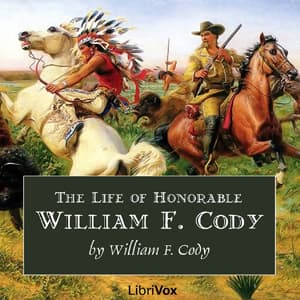
That's not me paraphrasing. That's Buffalo Bill, casually dropping this fact like he's telling you about his first Little League game. I was driving home from a brutal twelve-hour shift—three codes, two saves, one we lost—and this line hit me somewhere around the I-10 merge. I almost swerved into the HOV lane.
This is not a comfortable listen. But it's a fascinating one.
The Showman Who Wrote His Own Legend
Here's what you need to understand about this autobiography: Buffalo Bill published it in 1879, when he was already famous and running his Wild West shows. This isn't a man reflecting on his life with humility. This is a man building his brand. And honestly? Knowing that made it more interesting, not less.
Cody writes about himself the way my patients sometimes describe their symptoms—with a mix of genuine detail and strategic omission. He'll spend pages on a single buffalo hunt, complete with terrain descriptions and weather conditions that feel absolutely real. Then he'll casually mention killing multiple men and move right along to the next adventure. The cognitive dissonance is wild. That same jarring contrast between childhood and brutal reality shows up in Memories of Childhood's Slavery Days, though the violence there wasn't chosen.
What struck me most was how young he was for everything. Pony Express rider at fourteen. Army scout at eighteen. By the time most kids today are finishing college, Cody had already survived more near-death experiences than most action movie protagonists. The chapter where he describes being lost on the prairie for days, nearly dying of thirst, then stumbling into a cavalry camp—that felt true in a way that some of his more heroic accounts didn't.
Barry Eads Does the Work
Look, I don't have a lot of specifics on Eads' performance from what I could find, but I can tell you what I experienced over eight and a half hours: the man commits. Nineteenth-century prose is not easy to read aloud. It's formal, it's wordy, sentences go on for days. Eads keeps it moving without making it feel rushed.
He doesn't try to do voices for different characters, which is probably the right call—this is Cody telling his own story, and it should feel like one man's voice throughout. The pacing is steady, maybe a little too steady in places. Around hour five, during yet another Indian campaign, I caught myself zoning out and had to rewind. But that's partly the source material. Cody loved describing military maneuvers in exhaustive detail.
No audio issues that I noticed. Clean production. Night shift approved for those quiet 3 AM stretches when the unit is stable and you need something to keep your brain engaged during charting.
What's Real and What's Showmanship
The book constantly name-drops military officers—Sheridan, Carr, Merritt, Crook. This isn't just ego. Cody knew these men could verify his claims, and several of them apparently did. The Library of Congress has this catalogued as a legitimate historical document, not just frontier fiction.
But here's the thing—even when Cody is telling the truth, he's telling it like a showman. Every close call becomes a dramatic set piece. Every friendship with a Native American scout (and there are several) gets complicated by the fact that he's also describing killing other Native Americans in graphic detail. It's uncomfortable in ways that feel historically important.
As someone who's actually worked with trauma—medical trauma, not frontier trauma, but still—I found myself thinking about how people process violence. Cody's matter-of-fact tone about killing feels like dissociation to me. Whether that's a coping mechanism or just how men of that era wrote, I couldn't tell you. Probably both.
Who Should Ride Along (And Who Should Stay in Town)
History buffs who want primary sources, not sanitized retellings. Anyone interested in how legends get made in real time. People who can handle violence described without modern moral framing—Cody does not apologize or contextualize. He just tells you what happened.
Skip this if you want a critical examination of westward expansion. Cody was a product of his time, and this book is a product of his ego. If you need your historical figures to be heroes or villains, you'll be frustrated. He's both and neither. Also skip if you need fast pacing. Eight hours and forty-one minutes is a commitment, and there are stretches—especially the military campaign chapters—that drag.
Charting Complete, Heading Home
I finished this one pulling into my driveway at 7:45 AM, sun coming up, Carlos probably already making coffee. Didn't yell at my dashboard once, which for a historical account is actually impressive. (The descriptions of wounds and field surgery ring true enough that I didn't cringe—small victories.)
This is a strange, morally complicated, historically valuable document narrated by a man who clearly believed every word of his own legend. From Plotzk to Boston wrestles with similar questions about memory and self-mythology, though from an immigrant's perspective rather than a frontiersman's. Whether that makes it more or less trustworthy, I still haven't decided. But I'm glad I listened.







![Steve Jobs [unabridged audiobook] audiobook cover](/_next/image?url=https%3A%2F%2Fcovers.audiobooks.com%2Fimages%2Fcovers%2Ffull%2F9788499923406.jpg&w=1920&q=75)