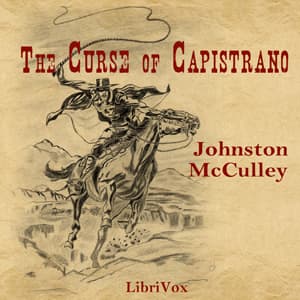

Johnston McCulley invented Zorro in 1919. Let that sink in for a moment.
I was grading sophomore essays on The Great Gatsby at 11 PM—you know, the ones where every student thinks they've discovered something new about the green light—when I decided I needed something completely different in my ears. Something pulpy. Something fun. Something that wouldn't make me think about symbolism for five blessed minutes.
The Curse of Capistrano delivered exactly that. And somehow, a century later, it still works.
The Fox Who Started It All
Here's what struck me first: this is the ur-text. Every masked vigilante, every secret identity romance, every "mild-mannered gentleman by day, hero by night" trope you've ever encountered? It started here. Batman, Spider-Man, the entire superhero industrial complex owes royalties to McCulley.
The setup is elegantly simple. Don Diego Vega plays the bored, effete aristocrat so convincingly that even Senorita Lolita—the woman he's trying to court—finds him insufferably dull. Meanwhile, Zorro rides through the night defending the oppressed and making fools of the corrupt military. The dramatic irony is delicious. Lolita literally swoons over Zorro while dismissing Diego as a waste of good Spanish breeding.
At just over six and a half hours, McCulley doesn't waste time. The prose is lean, the action sequences brisk, the romance appropriately swoony. My students would probably call it "mid"—they'd be wrong, but I understand the impulse. Modern readers expect more swordplay, more spectacle. McCulley gives you something different: atmosphere, tension, the slow build of a community finding its courage.
Barry Eads Goes Full Repertory Theater
This is a LibriVox production, which means volunteer narration, which means your mileage may vary. Barry Eads throws every voice he's got at this book—and I mean every voice. The sneering villain treatment for Sergeant Gonzales and his ilk occasionally tips into Saturday morning cartoon territory. (Denise walked past during one of these scenes and asked if I was listening to a children's program. I was not.)
But here's the thing: it works. The story IS pulpy. The villains ARE cartoonish. Eads leans into the melodrama rather than fighting it, and there's something honest about that approach. His Diego is appropriately languid, his Zorro appropriately dashing. The contrast sells the dual identity better than a more restrained reading might.
The Spanish pronunciations are... inconsistent. "Fray" (as in Friar) gets pronounced like the English word rather than the Spanish throughout. If you speak Spanish, this will bug you. If you don't, you probably won't notice. I teach English, not Spanish, so I noticed but survived.
Why This Still Matters (The Teacher in Me Can't Help Himself)
All superhero fiction comes from this. The dual identity. The mask as liberation. The hero who must hide his competence behind a facade of frivolity. McCulley understood something fundamental about power and performance that we're still exploring a century later.
The George Hamilton Zorro movie apparently follows this book quite faithfully, according to listeners who've done the comparison. I haven't seen it since the early '80s, but now I'm tempted to track it down. (Denise will be thrilled. She loves my "research projects.")
What surprised me most: the romance. Lolita isn't just a prize to be won—she has agency, makes choices, pushes back against both her father's arranged marriage plans and Zorro's presumption. That kind of female agency in historical romance shows up again in Love and Friendship, though Austen's wit cuts considerably sharper. For 1919, that's not nothing.
Who's This For?
If you loved The Count of Monte Cristo, this is its leaner, sunnier cousin. If you've ever wondered where the masked vigilante archetype came from, this is your primary source. If you want something to make a long commute disappear, this will do nicely. Skip it if you need polished production values or can't tolerate occasionally hammy voice work—LibriVox isn't for everyone.
The Lakefront Verdict
I finished this on a Saturday morning walk along Lake Michigan. The fog was rolling in, the joggers were out, and I was listening to a masked swordsman romance a woman who couldn't stand his day job. Perfect.
Is this high literature? No. The prose moves well, but it's not Faulkner. It's not trying to be. It's adventure fiction doing exactly what adventure fiction should do: move fast, charm relentlessly, leave you satisfied.
My students would hate this. I loved it.
Worth pausing the faculty meeting for—though honestly, what isn't?