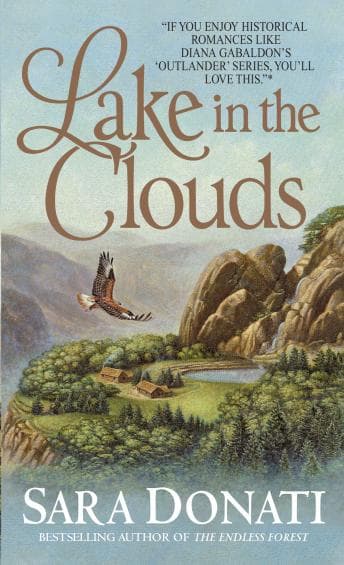

What happens when you teach the same American history curriculum for twenty years and then stumble across a novel that makes you realize you've been glossing over entire chapters of the human experience?
I was up late grading sophomore essays on The Great Gatsby—the usual mix of "Nick is a reliable narrator" takes that make me want to weep—when I decided I needed something to remind me why I love literature. Lake in the Clouds had been sitting in my queue since a colleague mentioned Sara Donati writes historical fiction the way it should be written. Twenty-four hours later, I understand what she meant.
The Underground Railroad Through Mohawk Eyes
Donati does something I've rarely encountered in historical fiction: she centers the story of the Underground Railroad not through the expected lens, but through Hannah Bonner, a young Mohawk woman training as a healer in 1802 New York. When the Bonners shelter an escaped slave named Selah Voyager, the narrative becomes this web of who gets to be free in America and who decides.
This is why we still read the classics—or in this case, why we should be reading Donati alongside them. Their Eyes Were Watching God does similar work, centering voices that the American canon spent decades trying to marginalize. Donati's doing what Stowe attempted but with a century of hindsight and a willingness to sit in the uncomfortable spaces. Hannah's journey to New-York City to learn smallpox vaccination becomes a study in what it meant to be a woman and Indigenous in a nation that saw her as neither citizen nor fully human.
The prose deserves to be savored. Donati writes with the patience of someone who trusts her readers to follow complex family dynamics across multiple generations. If you loved Cooper's Leatherstocking Tales but wished they had actual women with interior lives, this is their spiritual successor.
Kate Reading Understands That Pause Is Punctuation
I've listened to Kate Reading before, but something about this performance felt different. More lived-in, maybe. Her voice for Hannah carries this quiet authority that shifts subtly when Hannah's speaking to white doctors versus her own family. The Mohawk grandmother sounds nothing like Elizabeth Bonner's educated New England cadence, and Curiosity Freeman—the former slave who becomes central to the plot—gets this warm, knowing tone that made me stop grading entirely during her scenes.
What struck me most was Reading's handling of Liam Kirby, Hannah's childhood love turned bounty hunter. She doesn't play him as a villain. There's something wounded underneath, and Reading finds it without excusing what he's become. That's performance art, not just reading.
At 24 hours, this is a commitment. I listened at my usual 1.0x because the author chose those words and I refuse to rush through sentences that took her months to craft. (My students think I'm ancient for this take. They're not wrong.)
The Weight of History Done Right
Here's what I keep thinking about: Donati doesn't let anyone off easy. The Bonners are the heroes, yes, but they're also complicit in ways the novel refuses to ignore. They live on land that belonged to Hannah's mother's people. They benefit from systems they claim to oppose. And Hannah—watching her navigate between worlds, never fully belonging to either—felt more honest than most literary treatments of identity I've taught.
The ending left me staring at my ceiling at 2 AM, which is saying something because I've been reading (and teaching) tragic endings for two decades. This one earned its tears.
Who Should Clear Their Schedule (And Who Shouldn't)
If you need action every chapter, this will test your patience. Donati builds slowly, trusting that you'll care about these people enough to follow them through domestic scenes and medical procedures and long conversations about what freedom means. Skip this if you're looking for a quick, plot-driven listen.
But if you're the type who reads footnotes and wishes novels came with bibliographies—this is your book. If you've ever wondered what happened between the Revolution and the Civil War in the lives of ordinary people caught in extraordinary circumstances—this is your book.
My students would hate this. I love it.
Class Dismissed—I've Got a Series to Finish
I'm already downloading the next book in the series. Principal Martinez, if you're reading this, I promise I'll pay attention to the budget presentation next week. (I won't. I'll be listening to Fire Along the Sky.)
Donati has written something that should be taught alongside the canonical American literature we keep recycling. The fact that it isn't says more about our curriculum than her craft.